The Seoul Museum of Art is worth considering if you are looking for an art exhibition near Deoksugung Palace. During my visit in August 2026, I explored its free Yoo Youngkuk exhibition, which brought together vivid abstract paintings inspired by mountains and nature.
After spending two years traveling around Southeast Asia, I have been rediscovering Seoul through its museums, galleries and restaurants. Visiting exhibitions abroad was part of my routine, but returning home reminded me how much there is to see here, too.
This exhibition stayed with me for two reasons: the intensity of the paintings’ colors and a documentary about the artist near the exit.
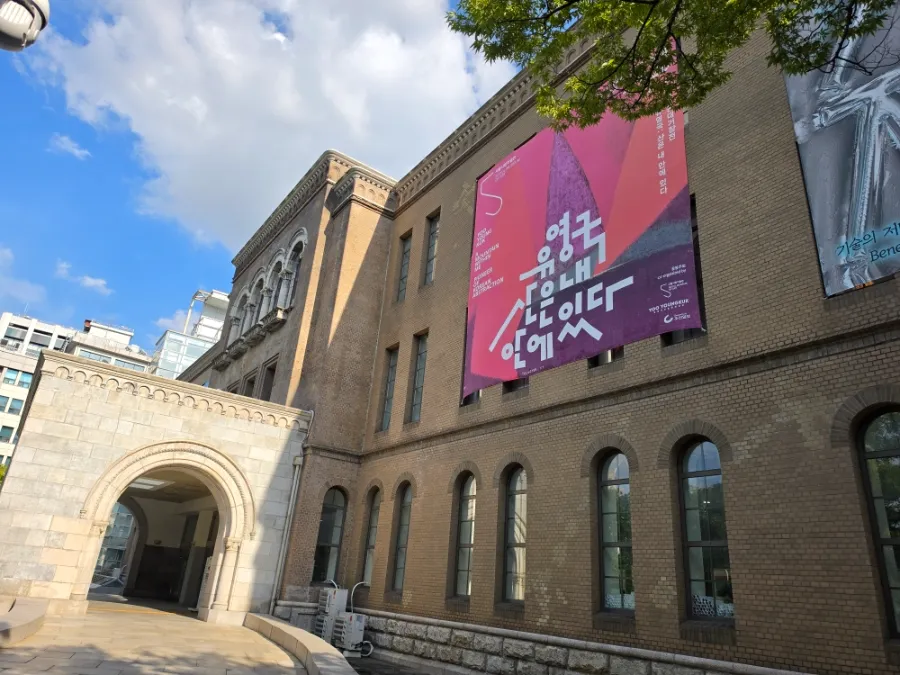
Quick Guide to the Yoo Youngkuk Exhibition
- Museum: Seoul Museum of Art, Seosomun Main Branch
- Korean museum name: 서울시립미술관 서소문본관
- Exhibition: 유영국: 산은 내 안에 있다
- Exhibition end date: October 25, 2026
- Location inside the museum: First floor
- Admission to this exhibition: Free
- Address: 61 Deoksugung-gil, Jung-gu, Seoul
- My visit: A weekday afternoon in August 2026
Find the Seoul Museum of Art on Google Maps
This is a temporary exhibition. If you are visiting after October 25, 2026, check the museum’s current program rather than expecting these paintings to remain on display.
Opening Hours and When I Visited
I arrived around 5 p.m. on a weekday. The museum was open until 8 p.m. that evening, so I could explore without rushing. There were still quite a few visitors despite it being a weekday.
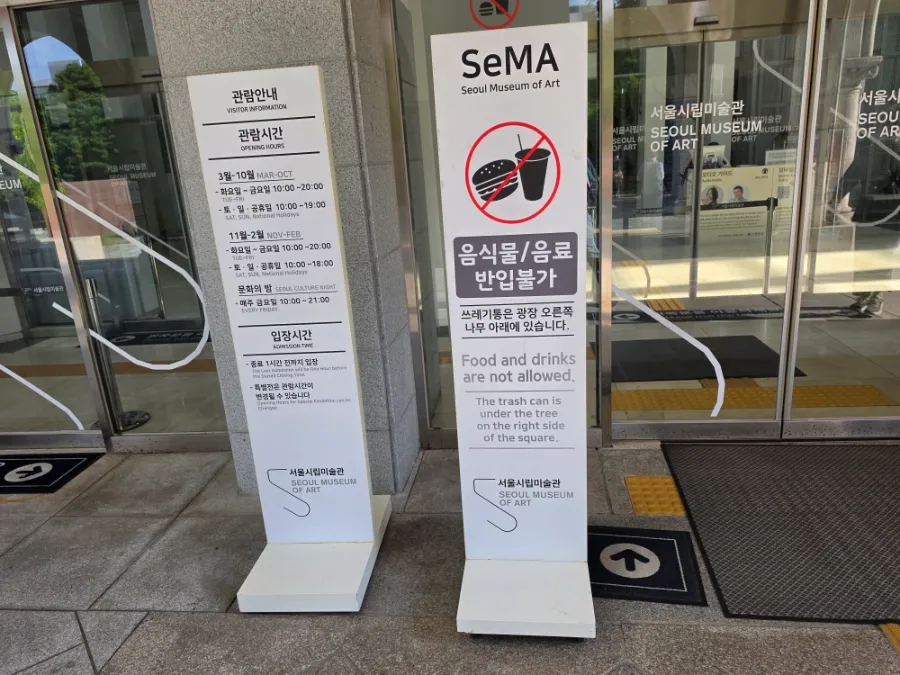
If you plan to visit between August and October 2026, the entrance sign lists the following opening hours:
| Day | Opening hours |
|---|---|
| Tuesday–Thursday | 10 a.m.–8 p.m. |
| Friday | 10 a.m.–9 p.m. |
| Saturday, Sunday and public holidays | 10 a.m.–7 p.m. |
The sign states that admission ends one hour before closing. It also notes that exhibition admission times can differ, so check the current exhibition notice before planning a late visit.
Confirm closure dates and any schedule changes on the Seoul Museum of Art website before traveling.
Free Lockers for Visitors
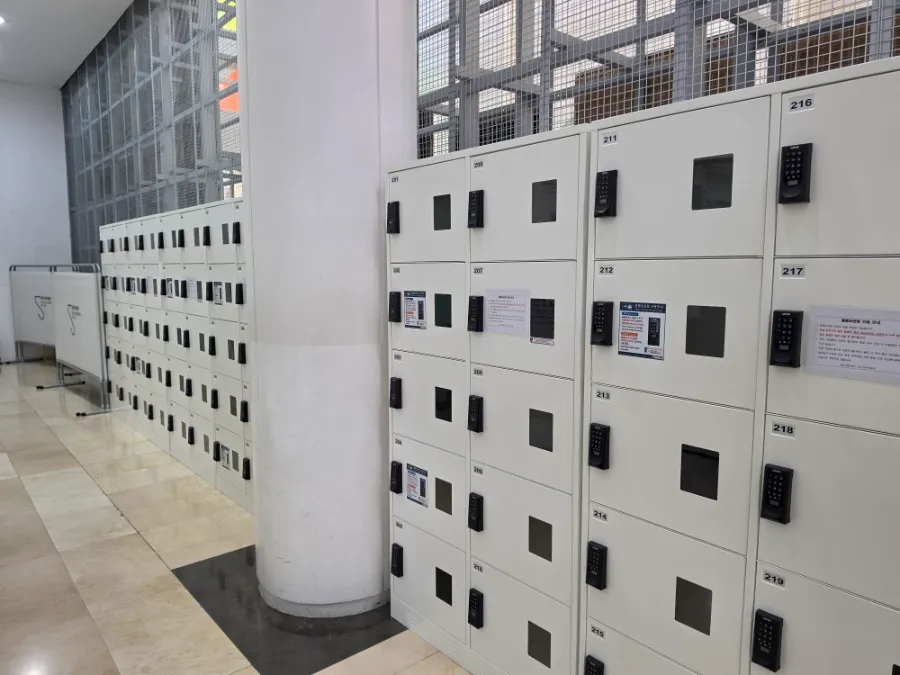
Staff asked visitors with large bags to store them before entering the exhibition. Free lockers were available, and leaving my belongings behind made walking through the galleries more comfortable.
The entrance also displayed a notice prohibiting food and drinks inside. Check the signs and follow staff instructions when you arrive.
Who Was Yoo Youngkuk?
Yoo Youngkuk (1916–2002) was a pioneer of Korean abstract art. Rather than reproducing landscapes exactly as they appeared, he explored nature through color, lines and simplified shapes.
Mountains were a recurring subject in his work. Some paintings suggest recognizable slopes and ridgelines, while others reduce the landscape to geometric arrangements.
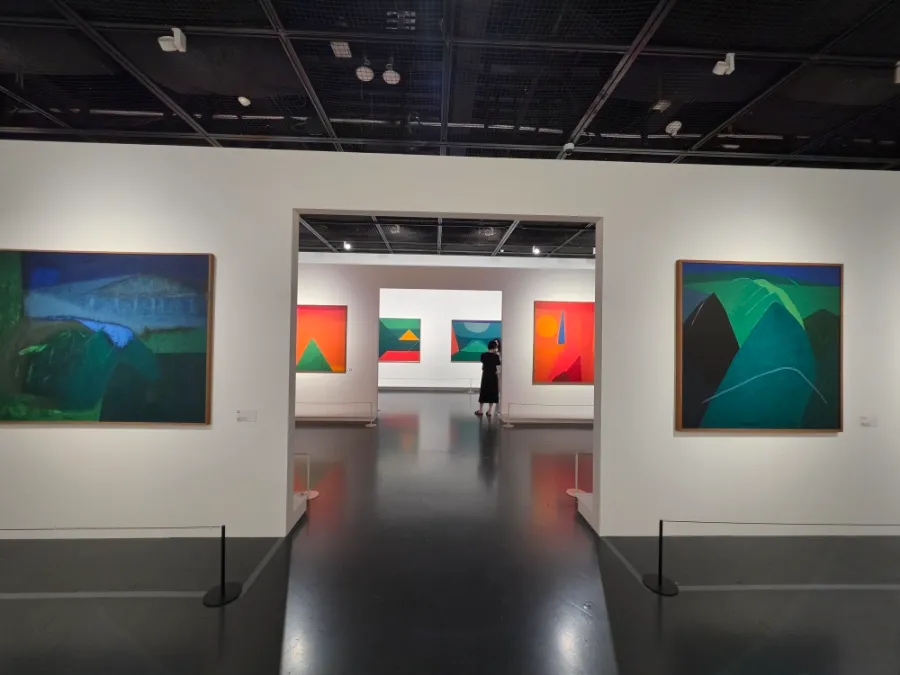
Knowing that mountains were a recurring source of inspiration gave me a useful starting point. I did not always understand what a painting represented, but I could look for a ridge, a peak or the relationship between different shapes.
Mountains Expressed Through Color
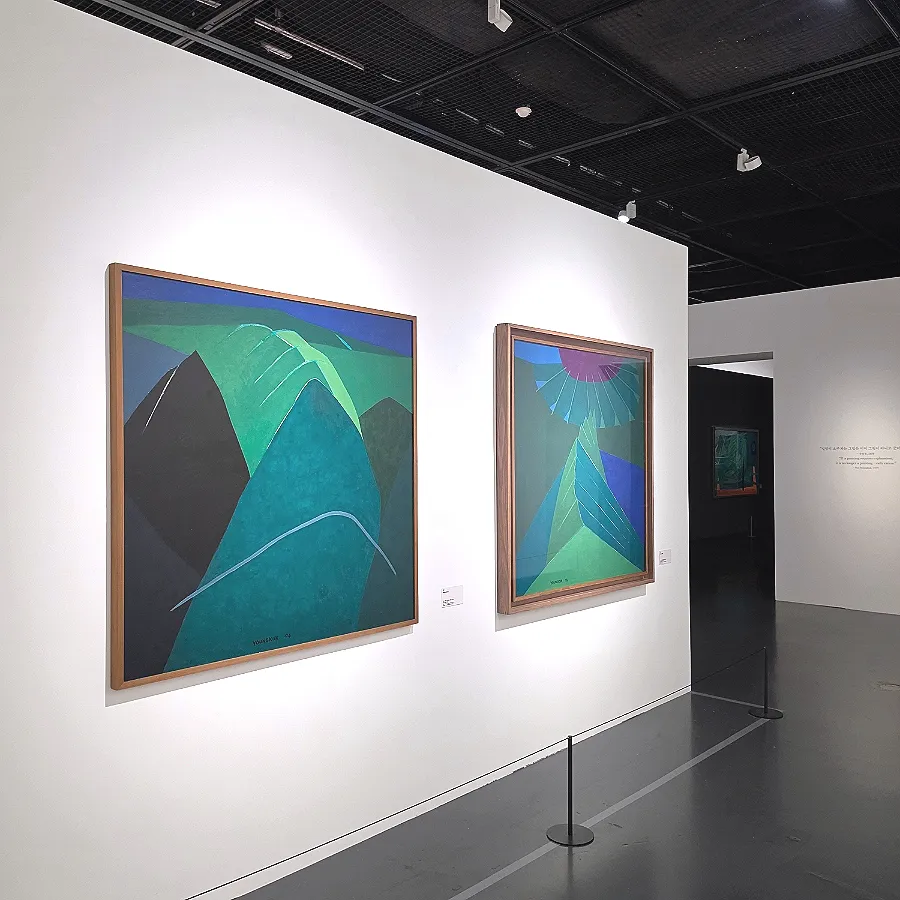
I enjoy visiting art museums, but I am not an art specialist. In front of some works, I found myself wondering what the shapes meant or why the artist had chosen those particular colors.
Even without an answer, the paintings held my attention. The strong colors gave them an energy that was more noticeable in person than in photographs.
The green mountain paintings were especially useful for seeing how a familiar landscape could become something more abstract. The subject was recognizable, yet it felt different from a conventional landscape painting.
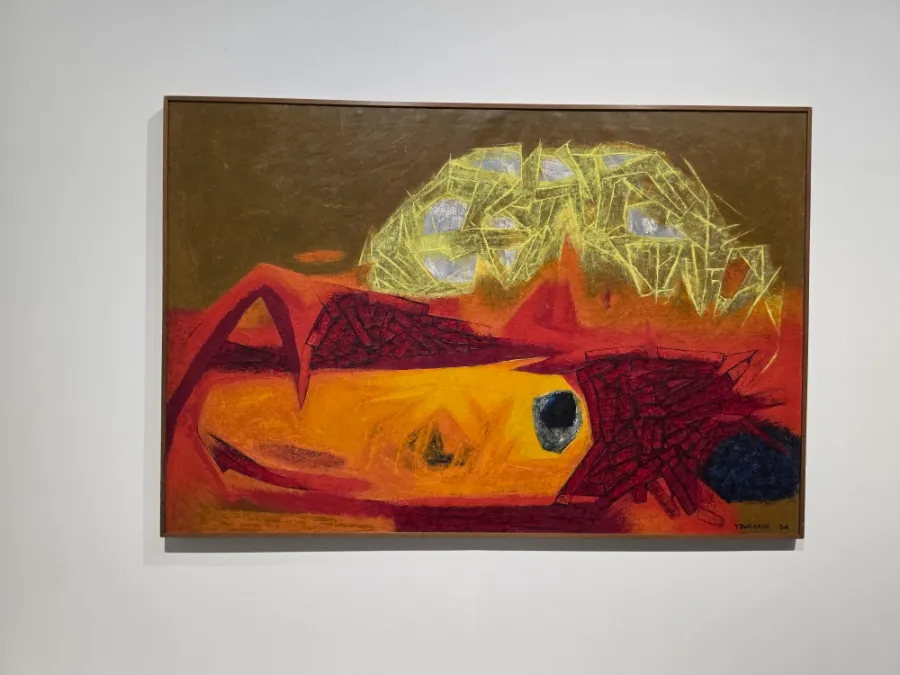
Other paintings offered a very different impression. Reds and yellows stood beside darker forms, and the surfaces had details that were worth looking at slowly.
I was struck by how contemporary some of the paintings felt. Although they were created decades ago, they did not feel distant from the present.
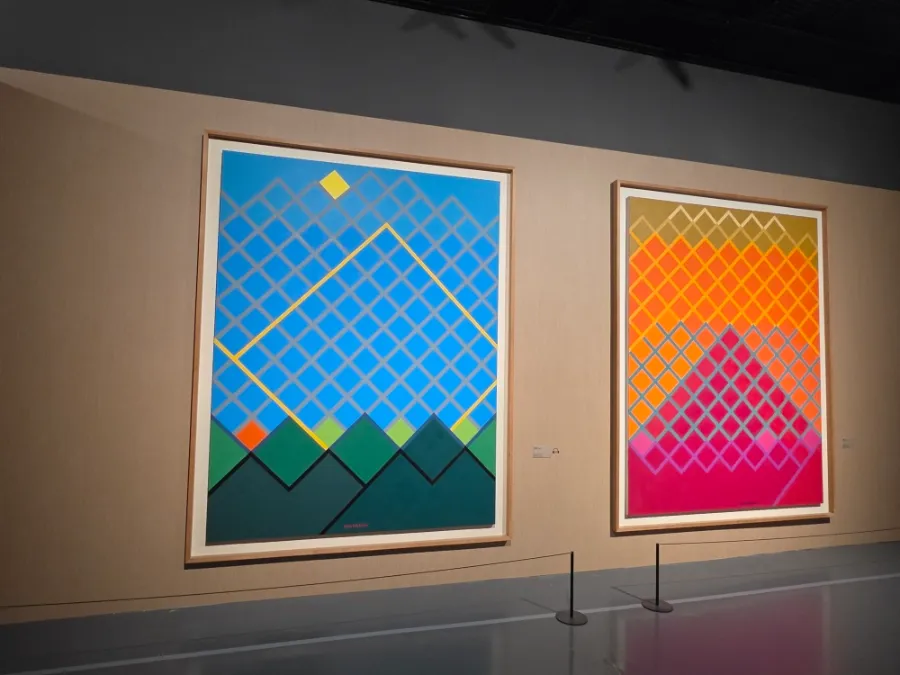
Seeing different works together helped me notice changes in shape, texture and composition. It also reminded me that an exhibition offers something a single photograph cannot: the chance to compare paintings by moving between them.
Audio Guidance and the Artist Documentary
Audio guidance was available for the exhibition. If you would like more context, check the on-site instructions for access and available languages.
For me, however, the documentary near the exit was the most memorable source of background information.
It explored Yoo Youngkuk’s life, including his studies in Japan and the difficulties of continuing to paint during wartime. The account of his longing to work when circumstances made painting difficult stayed with me.
Before watching it, I had mainly been looking at colors and shapes. Afterward, I found myself thinking about the person behind the paintings and the years of work they represented.
sychoi’s Tip: Leave time for the documentary near the exit. Learning about the artist’s life helped me reflect on the paintings I had just seen. Check the screening’s language and subtitle information if you need English support.
Combining the Museum With Deoksugung and Jeongdong
The Seosomun Main Branch is a convenient stop when exploring the Deoksugung and Jeongdong area.
You could plan a visit to the palace, walk through the surrounding streets and spend part of the afternoon at the museum. These are separate attractions, so check palace admission and opening arrangements independently.
For travelers who enjoy taking their time, the area lends itself to a slower day of architecture, art and walking rather than a schedule packed with distant stops.
My own visit was in the late afternoon, which worked well for seeing the exhibition without starting early in the morning.
Is the Yoo Youngkuk Exhibition Worth Visiting?
For me, this was a satisfying exhibition regardless of its free admission.
The paintings were more striking in person than in photographs, and the documentary added a personal dimension to the visit. I did not need to understand every work to find something meaningful in the exhibition.
If you are interested in Korean modern art, or simply want to spend time looking at color and form, it is worth considering before October 25, 2026.
The Seoul Museum of Art also makes a practical addition to a day around Deoksugung Palace. Just remember that this review describes a particular temporary exhibition, rather than a permanent display.
Plan Another Day Trip: Seoul–Nami Island Round-Trip Shuttle
If you would like to spend another day outside central Seoul, consider Nami Island as a separate outing.
Klook has a listing for a shared round-trip shuttle bus between Seoul and Nami Island. This type of transport can suit travelers who prefer a scheduled return journey rather than arranging each transport connection themselves.
The trade-off is flexibility: you need to follow the shuttle’s departure and return arrangements.
Before booking, check the selected package for:
- The exact meeting point and departure time
- The return meeting point and time
- Whether island admission and ferry transport are included or require separate payment
- Cancellation terms and luggage restrictions
Treat this as a separate day trip, rather than an extra stop after the museum. This section is a transport suggestion, not a review of a shuttle I used during my exhibition visit.
This section contains an affiliate link. If you book through it, I may earn a commission at no additional cost to you.
Check Seoul–Nami Island round-trip shuttle options on Klook