I have lived in Seoul for nearly 20 years, but there are still many places in the city that I have never visited. Recently, I have been exploring more museums, art galleries, and historic sites around Seoul.
This time, I visited the Seoul Museum of History and Gyeonghuigung Palace, two free attractions located next to each other near Seodaemun Station.
You can learn how Seoul developed from the Joseon capital of Hanyang into the modern city we see today, then walk directly from the museum to a quiet royal palace.
If you are looking for free things to do in Seoul, this is an easy two-hour itinerary combining history, culture, and a peaceful walk.

Seoul Museum of History Visitor Information
- Address: 55 Saemunan-ro, Jongno-gu, Seoul
- Nearest subway station: Seodaemun Station, Line 5, Exit 4
- Opening hours: 9:00 a.m.–6:00 p.m.
- Last admission: 5:30 p.m.
- Closed: Mondays and January 1
- Admission: Free
- Recommended visit: Approximately 1–1.5 hours
The museum provides audio guides in Korean, English, Japanese, and Chinese. English guided tours may also be available with advance arrangements. Check the official website before visiting because operating hours and programs may change. (museum.seoul.go.kr)
📍View the Seoul Museum of History on Google Maps
Starting at the Seoul Museum of History
When I worked in this part of Seoul in my twenties, I often passed the museum and thought, “I should visit someday.” Somehow, I never found the time.
Only recently did I realize how many interesting museums and historical attractions in Seoul can be visited for free.
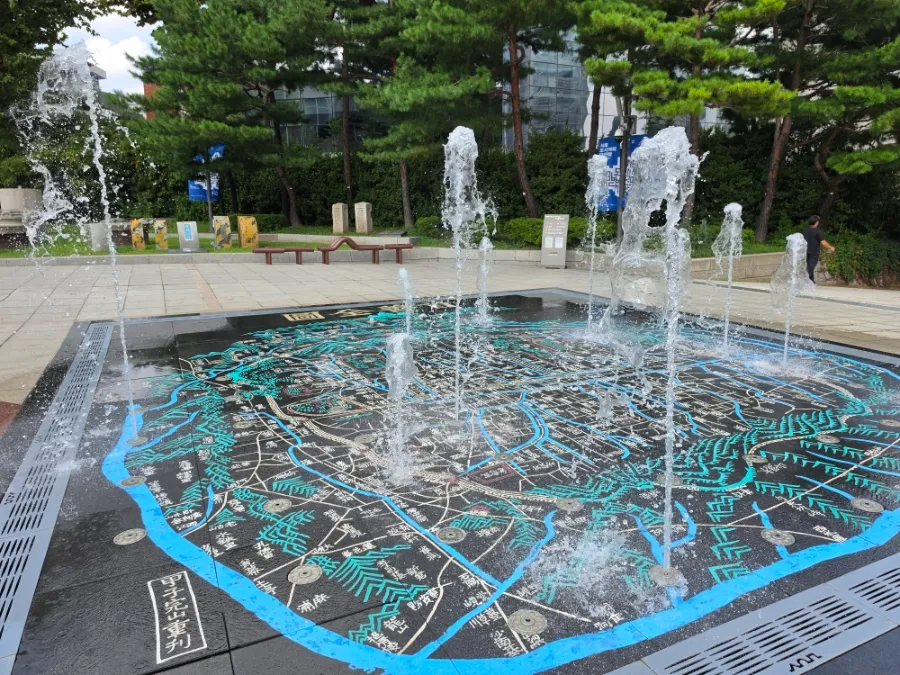
Before entering the building, I noticed a fountain with a map of Seoul covering the ground. It was a small detail, but it immediately introduced the museum’s main subject: the city of Seoul itself.
Inside the Seoul Museum of History
The Seoul Museum of History shows how Seoul developed from the capital of the Joseon Dynasty into the large modern city it is today.
The museum was more spacious than I expected. I explored the permanent exhibitions slowly without joining a guided tour, and it took me about an hour.
Visitors who do not join a docent tour can still use audio guides and QR codes to learn more about the exhibits.
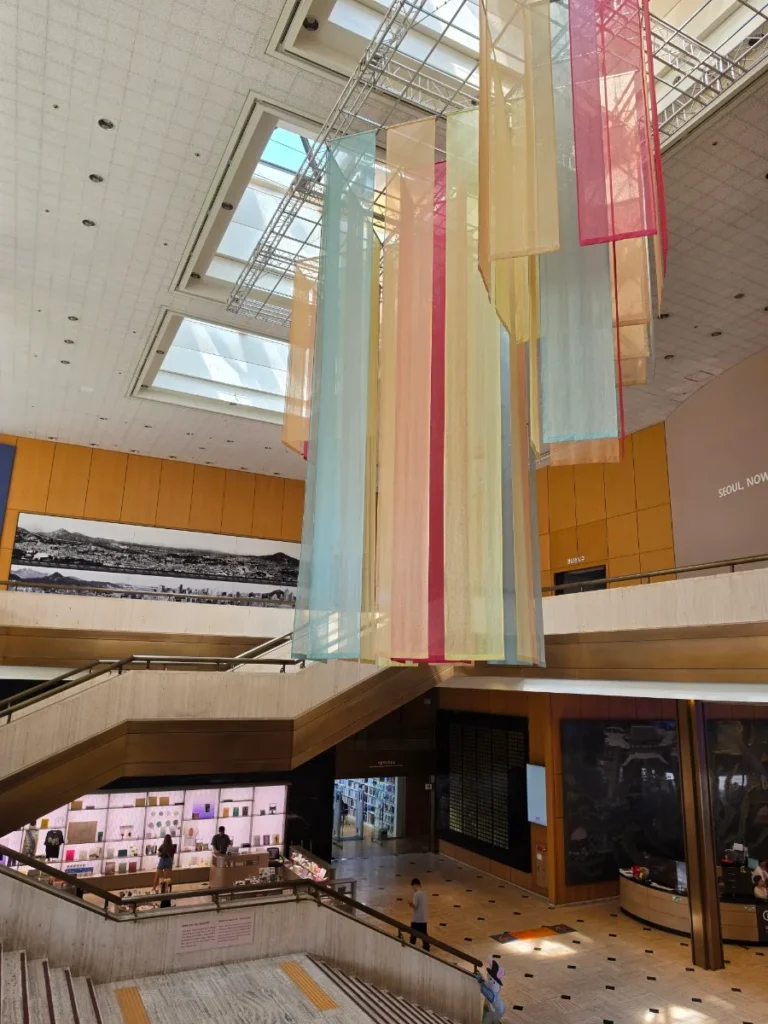
There is also a history reference library on the first floor. I stepped inside briefly and found materials about Seoul as well as general books.
If you enjoy learning about Seoul through its museums, you may also want to visit the Bank of Korea Money Museum near Myeongdong. It is another free indoor attraction where visitors can learn about Korean currency and economic history.
From Hanyang to Modern Seoul
The permanent exhibition follows the history of Seoul in chronological order.
During the Joseon Dynasty, the city was known as Hanyang. It developed around royal palaces, government offices, traditional markets, residential neighborhoods, and the city wall.
The exhibitions include old maps, photographs, household items, architectural models, and objects once used in daily life.

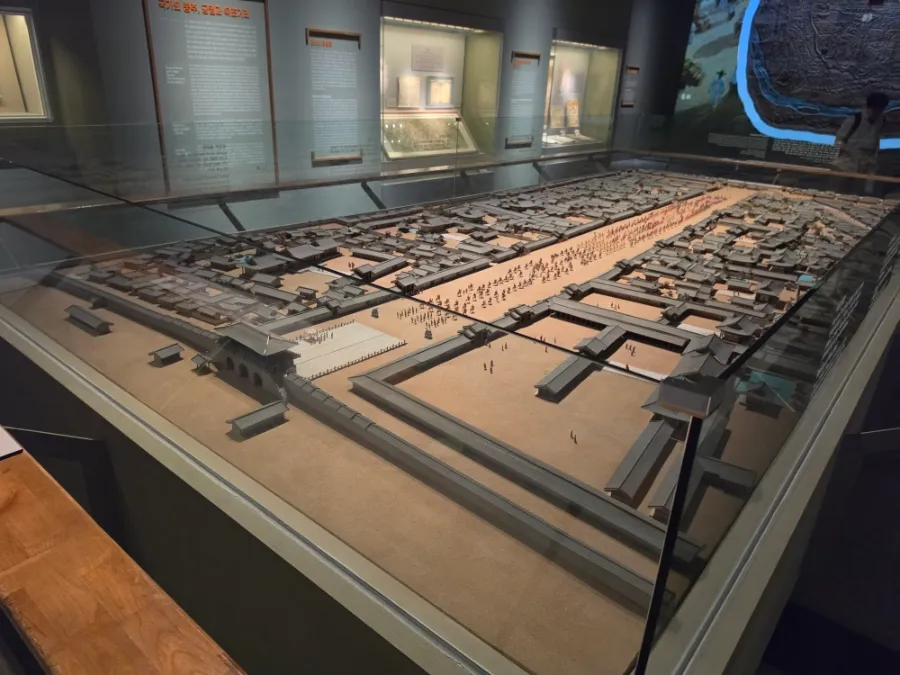
One of the most interesting displays was the detailed model of old Seoul. Looking at the city from above made it easier to understand how its neighborhoods, roads, and major buildings were arranged.
Later galleries cover Korea’s liberation and Seoul’s rapid development during the twentieth century. Rather than focusing only on major historical events, the museum also explains how the lives of ordinary residents changed.
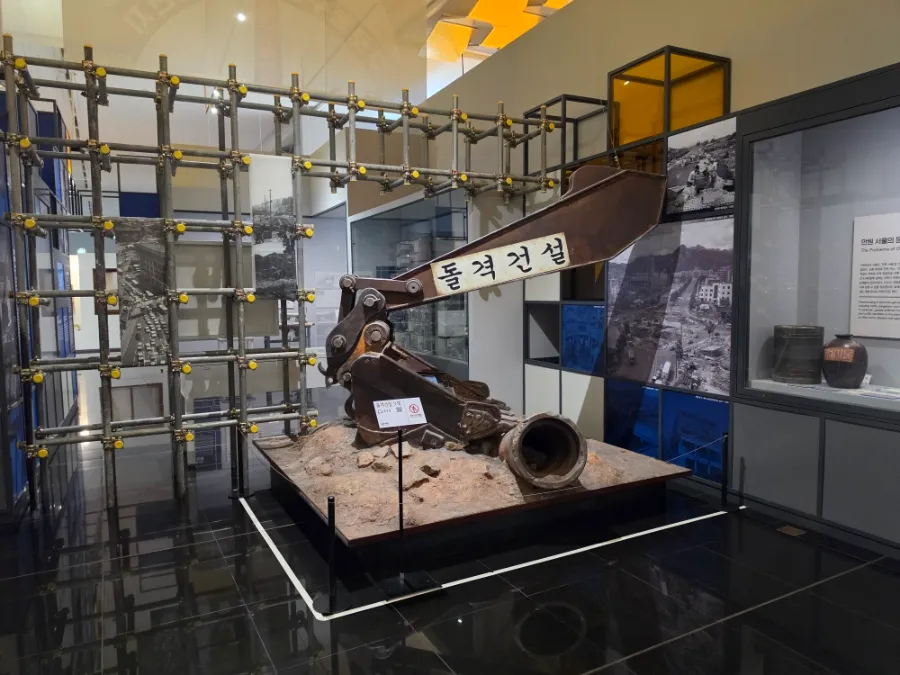
I recognized old washing machines, televisions, and kitchen appliances similar to those my family used when I was young.
Seeing these familiar objects inside a museum made me think, “My own life has become part of history too.”
For first-time visitors, this museum offers useful background before exploring Seoul’s royal palaces, traditional neighborhoods, and markets.
For another place to see traditional Korean art, read my Horim Museum visitor guide. Its collection includes Korean ceramics, paintings, and Buddhist art.
Walking from the Museum to Gyeonghuigung Palace
After completing the museum route, I noticed a sign pointing toward Gyeonghuigung Palace.
You do not need to return to the main road. Follow the signs inside the museum grounds, and they will lead you directly to the palace.
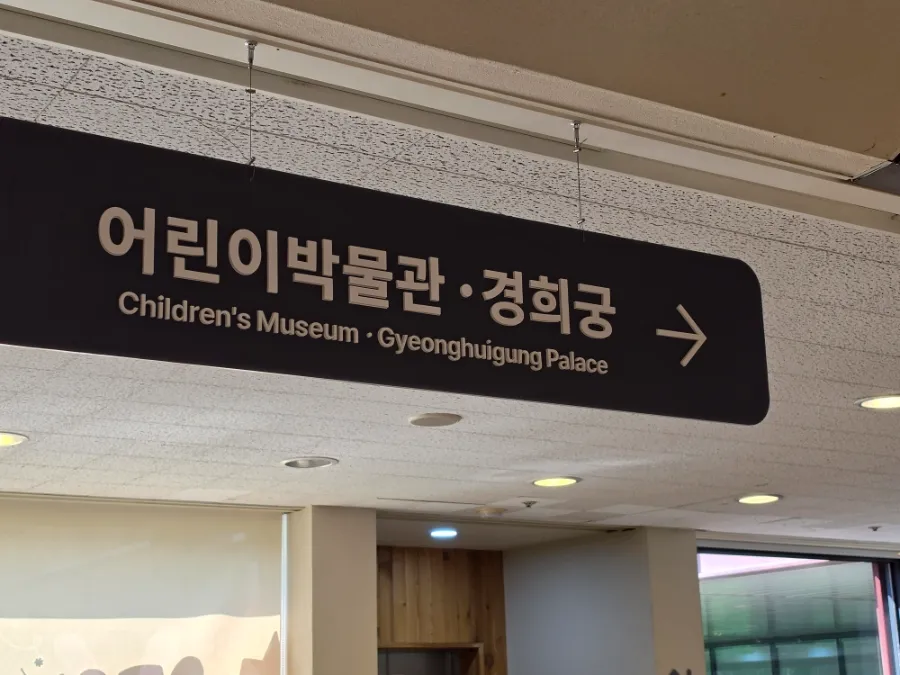
This connection is the main reason I recommend visiting both places together. The museum provides historical context indoors, while the palace allows you to experience part of that history outside.
The History of Gyeonghuigung Palace
Gyeonghuigung is one of the Five Grand Palaces of Seoul, along with Gyeongbokgung, Changdeokgung, Changgyeonggung, and Deoksugung.
Construction began in 1617 during the reign of King Gwanghaegun and was completed in 1623.
The palace was originally called Gyeongdeokgung. Its name was changed to Gyeonghuigung in 1760 during the reign of King Yeongjo because the original name sounded similar to the posthumous name of King Wonjong.
Because the palace stood on the western side of the capital, it was also known as Seogwol, which means the “Western Palace.”
Gyeonghuigung served as a secondary palace where Joseon kings could live and conduct royal duties away from the main palace. Several kings, including King Yeongjo, stayed here.
At its largest, the palace complex reportedly contained around 100 buildings. It was therefore much larger and more important than the quiet historical site visitors see today. (english.visitseoul.net)
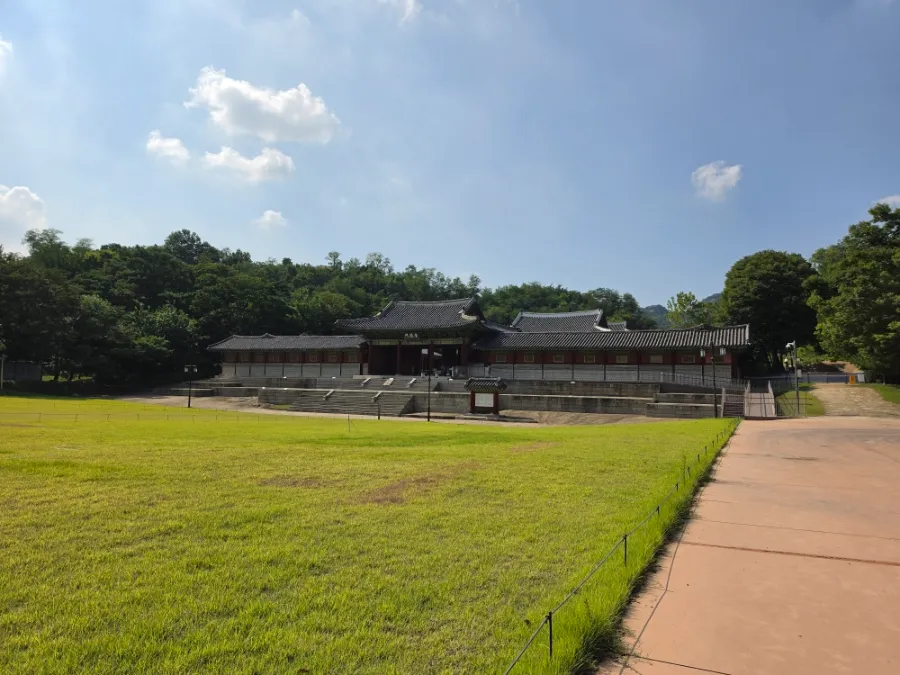
What Happened to Gyeonghuigung Palace?
Gyeonghuigung suffered fires and damage over the centuries, but many of its buildings were lost during the Japanese colonial period.
Palace buildings were demolished, relocated, or used for other purposes. A school was also established on part of the former palace grounds.
As a result, only a small portion of the original palace remains today.
The Seoul Metropolitan Government began excavating the site in 1987. Several buildings, including Sungjeongjeon Hall, were reconstructed, and the restored palace grounds opened to the public in 2002.
Understanding this history explains why Gyeonghuigung feels more open and less architecturally dense than Seoul’s other royal palaces. The empty spaces are also part of the palace’s story.
What to See at Gyeonghuigung Palace
Heunghwamun Gate
Heunghwamun was the main entrance to Gyeonghuigung Palace.
The gate was moved from its original location and later returned to the palace grounds. However, it could not be restored in exactly the same place because another building occupied the original site.
Sungjeongjeon Hall
Sungjeongjeon was the main throne hall of Gyeonghuigung Palace. The king used it for official ceremonies, meetings with government officials, royal banquets, and receptions for foreign envoys.
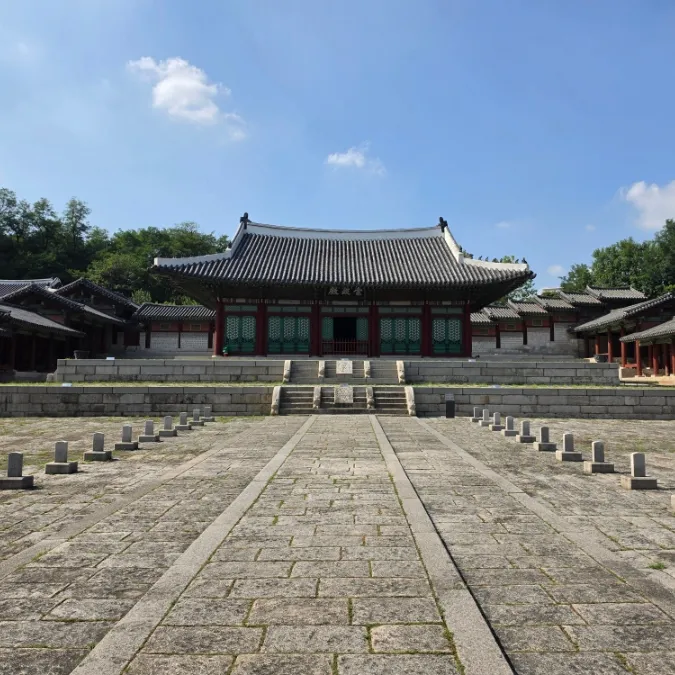
Compared with the main halls at Gyeongbokgung, Sungjeongjeon feels relatively modest. However, there were very few visitors when I went, so I could stop and examine the colorful wooden details, stone courtyard, and traditional roofline.
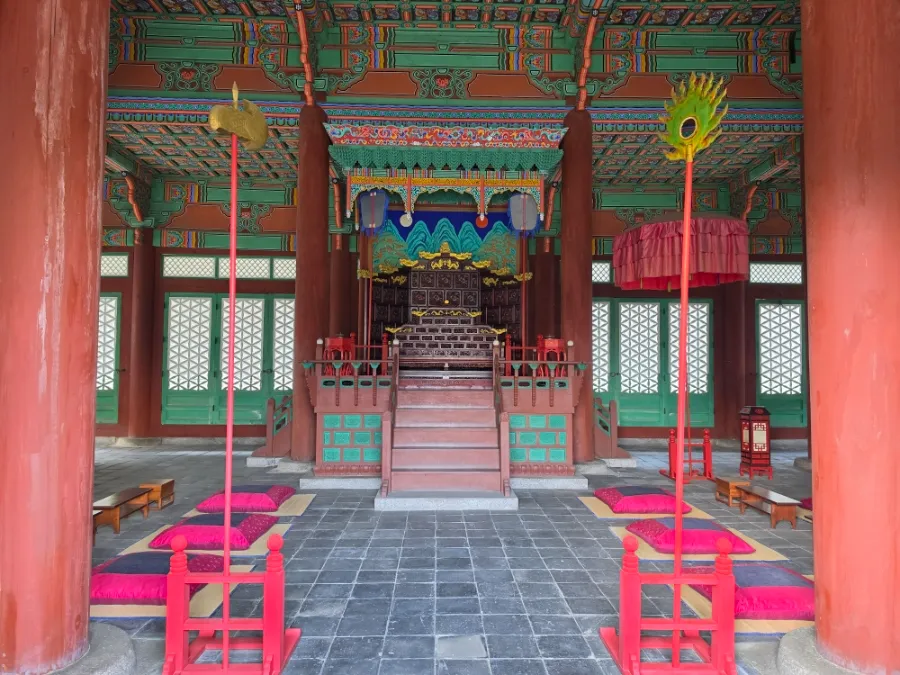
Jajeongjeon Hall
Jajeongjeon was a working space where the king met with court officials and handled royal affairs. It was used for more practical duties than the main ceremonial hall.
Taeryeongjeon Hall and Seoam Rock
Taeryeongjeon was used to store a portrait of King Yeongjo.
Behind the building is an unusual rock formation known as Seoam. Beneath it was a natural spring that was considered one of the notable sights of Gyeonghuigung Palace.
A Quiet Royal Palace in Central Seoul
What surprised me most was how peaceful Gyeonghuigung felt.
Gyeongbokgung and Deoksugung often attract large numbers of visitors, but there were very few people here. For a moment, it did not feel like I was standing in the center of Seoul.
Gyeonghuigung may not be the best choice if you want to see the grandest palace architecture or take photos in a hanbok. Gyeongbokgung and Changdeokgung offer more surviving buildings and better-known photo spots.
However, Gyeonghuigung is a good alternative for travelers who prefer a quiet walk, free admission, and a less crowded historical attraction.
Gyeonghuigung Palace Visitor Information
- Address: 45 Saemunan-ro, Jongno-gu, Seoul
- Nearest subway station: Seodaemun Station, Line 5, Exit 4
- Opening hours: 9:00 a.m.–6:00 p.m.
- Last admission: 5:30 p.m.
- Closed: Mondays and January 1
- Admission: Free
- Recommended visit: Approximately 30–45 minutes
Both the museum and palace are closed on Mondays, so plan this itinerary between Tuesday and Sunday.
📍View Gyeonghuigung Palace on Google Maps
Suggested Two-Hour Seoul Itinerary
A simple route would be:
- Arrive at Seodaemun Station and walk to the Seoul Museum of History.
- Spend approximately 60–90 minutes in the permanent exhibitions.
- Follow the signs connecting the museum grounds to Gyeonghuigung Palace.
- Spend another 30–45 minutes walking around the palace.
- Continue toward Gwanghwamun, Deoksugung, or the Jeong-dong neighborhood.
The museum is indoors and air-conditioned, while the palace section is outdoors. During summer, visit the palace in the morning or late afternoon. On a rainy day, you can spend more time inside the museum and take a shorter walk around the palace.
After your visit, you can continue exploring central Seoul and try a local meal. My Namdaemun Market Kalguksu Alley guide introduces one of the city’s most affordable traditional food experiences.
Make a Traditional Korean Souvenir in Seoul
If you want to experience Korean culture rather than only look at historical objects, consider adding a traditional craft workshop to your Seoul itinerary.
During the Korean Mother-of-Pearl Miniature Table Workshop, participants decorate a miniature soban, a traditional Korean dining table, using shimmering pieces of mother-of-pearl.
You can choose a traditional table style, create your own design, and apply a finishing coat to complete the piece. The workshop takes approximately 90 minutes and is available in Korean and English.
It is a creative way to learn about Korean lacquerware while making a personal souvenir to take home.
▶ Book the Korean Mother-of-Pearl Miniature Table Workshop
Affiliate disclosure: This section contains an affiliate link. If you book through it, I may earn a small commission at no additional cost to you.
Is This Free Seoul Itinerary Worth It?
The Seoul Museum of History and Gyeonghuigung Palace work well as one itinerary because they tell two parts of the same story.
Inside the museum, you can follow Seoul’s transformation from Hanyang to a modern capital. At Gyeonghuigung Palace, you can walk through a quiet section of the old Joseon city and see where kings once carried out their royal duties.
The two attractions are directly connected, admission is free, and you can comfortably visit both in about two hours.
For travelers looking for free museums, hidden palaces, or quiet historical places in central Seoul, the Seoul Museum of History and Gyeonghuigung Palace are worth visiting together.