While spending two years in Southeast Asia, I enjoyed watching both seasons of Netflix’s Korean cooking competition Culinary Class Wars (흑백요리사). Andongjip was the first Netflix Culinary Class Wars restaurant I wanted to visit after returning to Seoul.
One of the restaurants that caught my attention was Andongjip (안동집) at Gyeongdong Market (경동시장). Andongjip is run by chef Kim Mi-ryeong, better known as “Imokase No. 1.” Its handmade noodle soup looked simple but comforting on the show.
After returning to Seoul, I finally visited Andongjip to try its famous son-guksi (손국시), a traditional Korean handmade noodle soup.
How to Find Andongjip at Gyeongdong Market
Andongjip is located inside Gyeongdong Market, a large traditional market in eastern Seoul. Finding the restaurant can be confusing because the market consists of several connected buildings and shopping areas.
Following the map alone may lead you toward the basement of the market’s newer building. I found it easier to search for the Gyeongdong Market Youth Mall (경동시장 청년몰) and follow the signs from there.
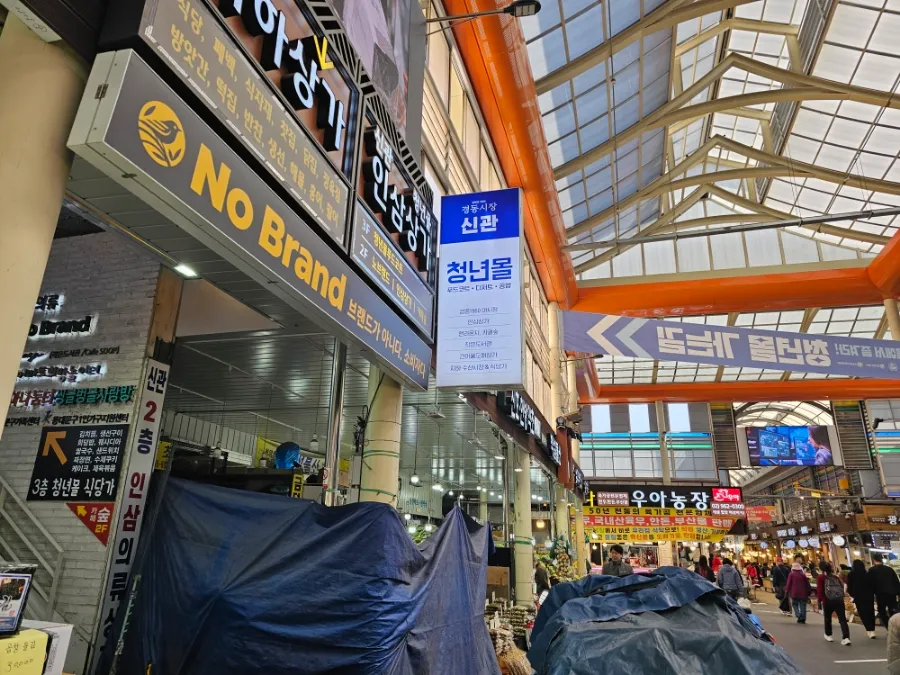
- Address: 3 Gosanja-ro 36-gil, Dongdaemun-gu, Seoul
- Location: Inside Gyeongdong Market
- Map: View Andongjip on Google Maps
- Opening time: 10:00 a.m.
- Best time to visit: Before the lunch crowd arrives
Opening hours, menu items, and prices may change, so check the latest information before visiting.
First Impression of Andongjip
I arrived at approximately 10:20 a.m. A few groups were already eating inside, but seats were still available at the long counter outside the restaurant.
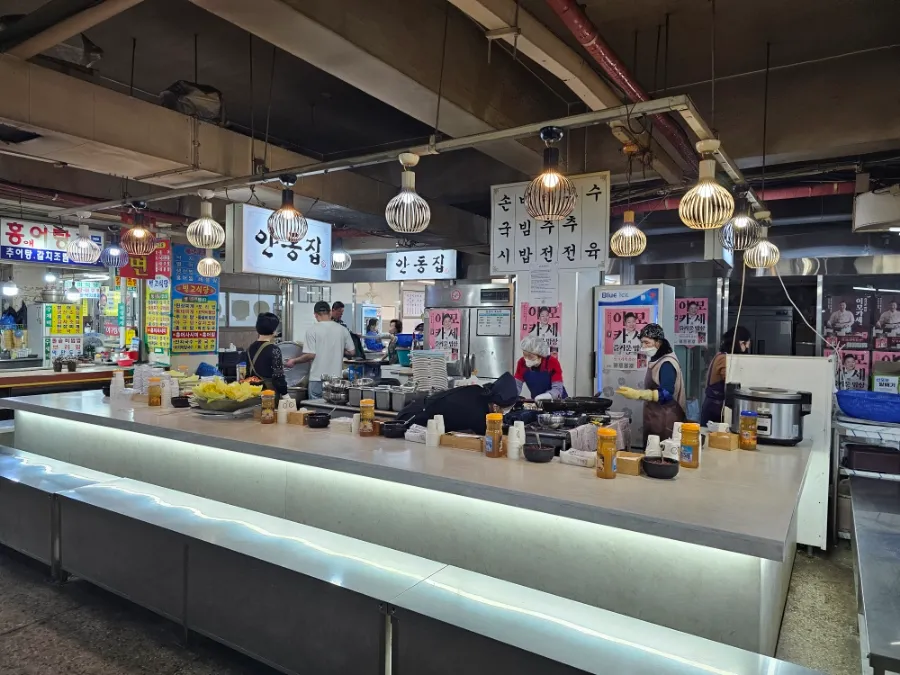
The open kitchen and counter seating made the restaurant feel casual and approachable. It was also convenient for solo diners because I did not need to occupy an entire table.
Two Japanese women arrived after me and asked whether the chef from the television program was there. I had also wondered whether I might see her, but only her husband appeared to be working at the restaurant that morning.
What to Order at Andongjip
Andongjip has a short menu focused on traditional Korean dishes.
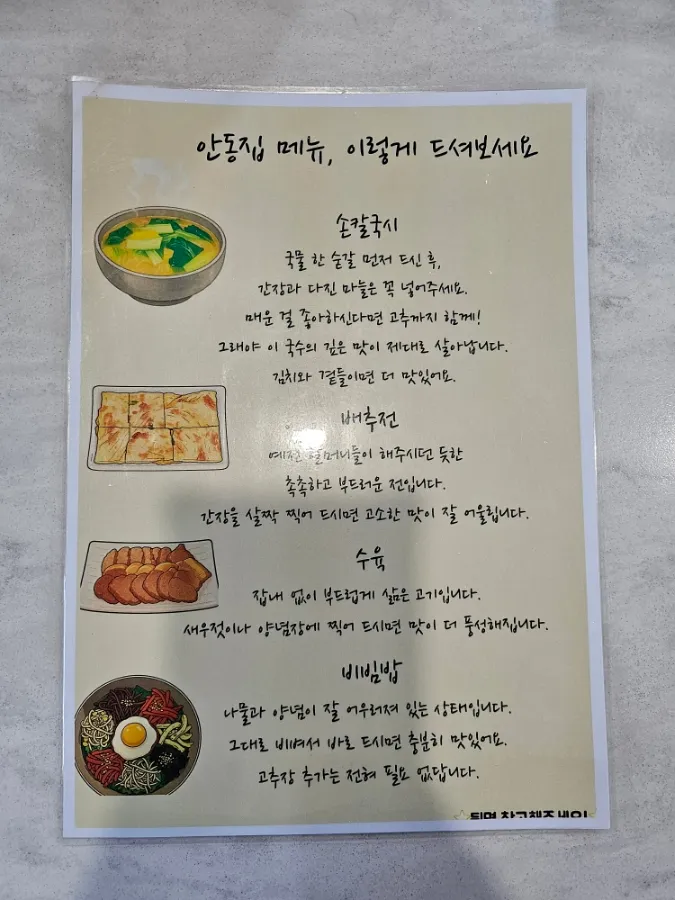
The four main dishes are:
- Son-guksi (손국시), handmade noodle soup
- Baechujeon (배추전), cabbage pancake
- Suyuk (수육), boiled pork
- Bibimbap (비빔밥), mixed rice with vegetables
This limited menu makes ordering easy, but trying everything can be difficult for one person. Fortunately, two women seated beside me ordered all four dishes and kindly offered me a taste of each one.
Side Dishes and Millet Rice
Soon after I ordered, the staff served kimchi, soybean paste, garlic, chili peppers, napa cabbage leaves, and a small portion of millet rice.
The rice had a softer and slightly different texture from the plain white rice commonly served in Korean restaurants. Because I was unfamiliar with millet rice, its texture felt unusual at first.
I wrapped the rice in a cabbage leaf and added soybean paste. This simple combination helped pass the time while I waited for the noodle soup.
Son-guksi: Handmade Korean Noodle Soup
The main reason for my visit was Andongjip’s son-guksi.
Son-guksi (손국시) literally refers to noodles prepared by hand. The word guksi is a regional form of guksu, the standard Korean word for noodles. The dish is closely associated with the Andong region and is known for its mild broth and rustic handmade noodles.
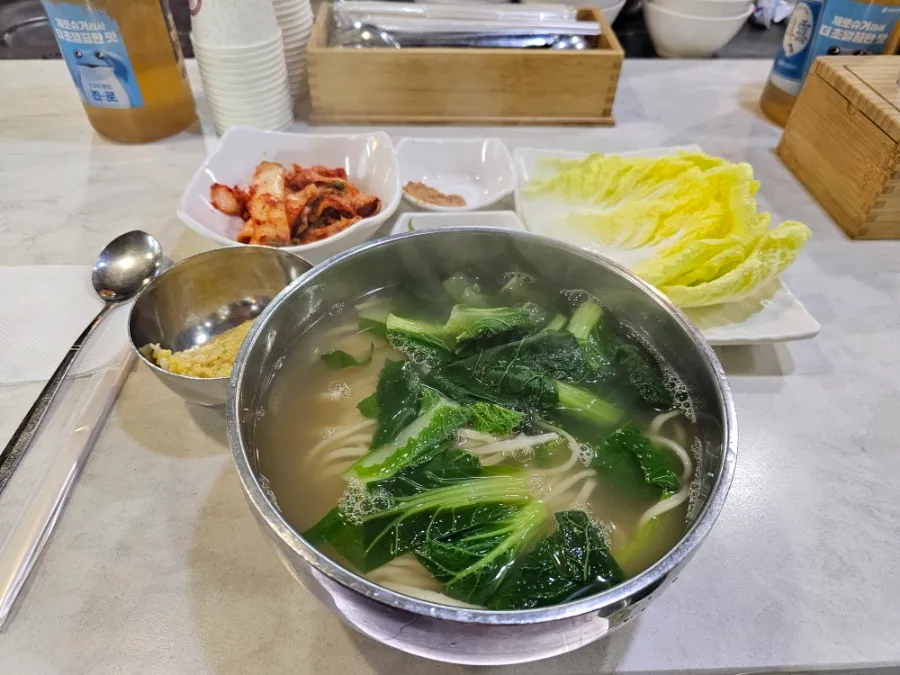
The first spoonful of broth immediately made me smile. It was clean, mild, and refreshing without relying on heavy seasoning. Travelers who find many Korean soups too spicy may appreciate this gentler flavor.
The broth looked simple, but it had enough depth to remain satisfying. Leafy greens added freshness and balanced the soft noodles.
The noodles, however, may divide opinions.
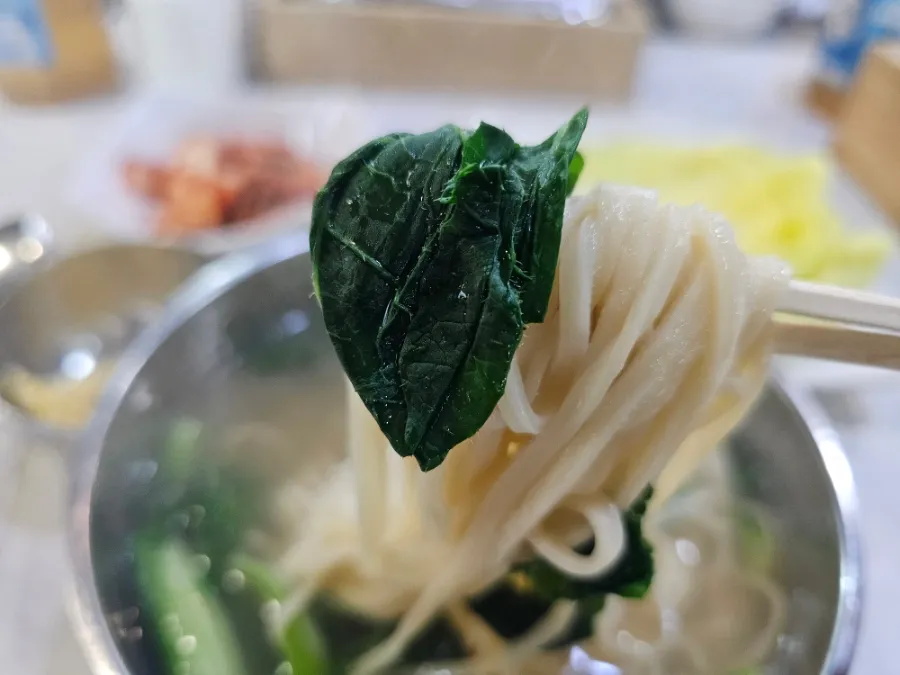
They are reportedly made with soybean powder, which gives them a noticeable grain-like aroma. Before visiting, I had read reviews describing the noodles as having a strong flour taste. I did not fully understand those comments until I tried them myself.
The aroma was stronger than I expected, and the soft texture was different from ordinary Korean knife-cut noodles. I enjoyed the broth, but the noodles took time to get used to.
Adding minced garlic and seasoning gave the mild soup more flavor. Diners who prefer clean and understated food may enjoy it as served, while those who like stronger flavors can adjust it with the condiments.
I finished almost all the broth but left approximately half of the noodles. The broth was excellent, but the noodles were not completely suited to my taste.
Baechujeon: Korean Cabbage Pancake
Baechujeon (배추전) is a traditional Korean pancake made by coating napa cabbage leaves in a light flour batter and pan-frying them.
Unlike seafood pancakes or kimchi pancakes, baechujeon is usually thin and lightly seasoned. Its appeal comes from the contrast between the soft cabbage and the lightly crisp exterior.
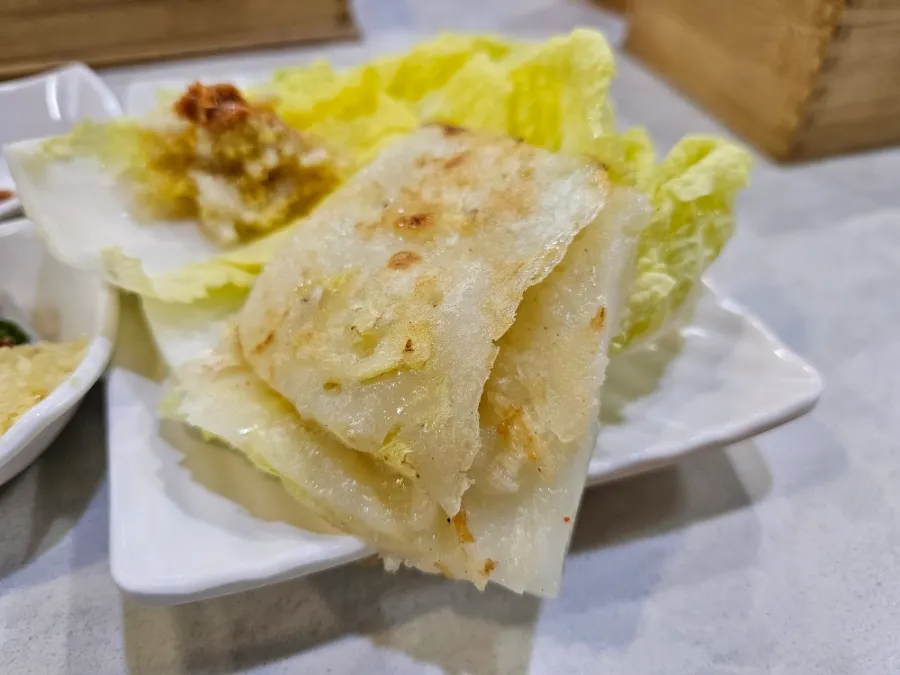
Andongjip’s version was pleasantly chewy with a subtle sweetness from the cabbage. It looked very simple, but it was more enjoyable than I expected.
Dipping it lightly in soy sauce gave it additional flavor without overpowering the cabbage. Of the dishes I tried, the cabbage pancake was one of the most memorable. The price during my visit was 10,000 won.
Suyuk: Tender Korean Boiled Pork
Suyuk (수육) is pork that has been gently boiled until tender and then sliced. It is commonly served with kimchi, salted shrimp, garlic, chili peppers, or soybean paste.
Because the pork is boiled rather than grilled, it has a clean flavor and a soft texture. It is less oily than Korean barbecue and does not have a smoky taste.
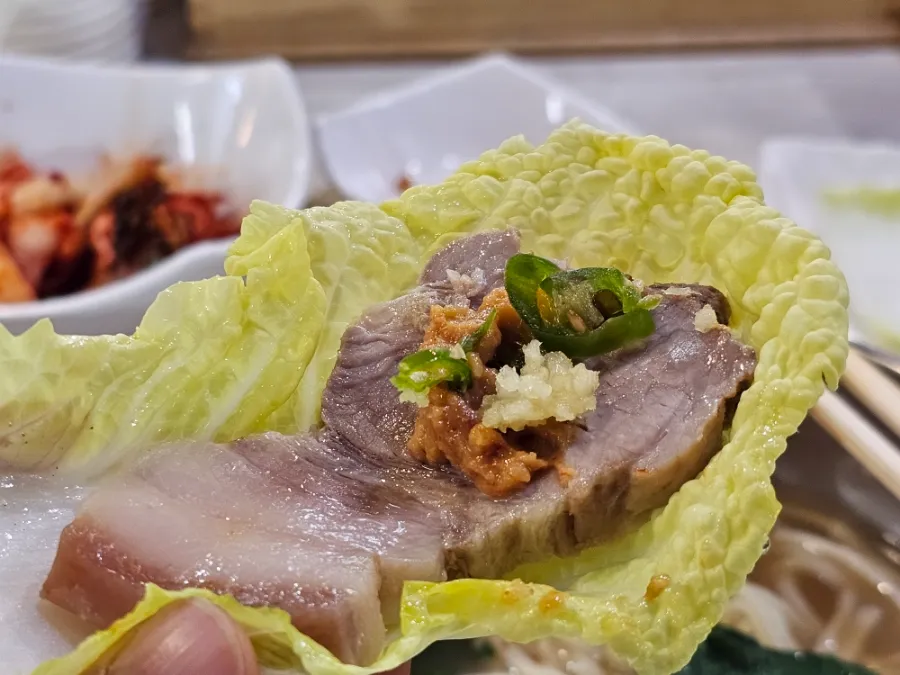
The suyuk at Andongjip was surprisingly tender and mild. I wrapped a slice in cabbage and added garlic, chili pepper, and soybean paste. The fresh cabbage balanced the richness of the pork, while the condiments added saltiness and heat.
I only expected to taste one piece, but it was the dish I most wanted to order again. Even travelers unfamiliar with Korean food may find suyuk approachable because it is not spicy.
The portion was priced at 12,000 won during my visit.
Bibimbap: Rice Mixed with Vegetables
Bibimbap (비빔밥) is one of Korea’s best-known rice dishes. It is made by arranging seasoned vegetables and other ingredients over rice before mixing everything with gochujang, a fermented red pepper paste.
The version at Andongjip was a familiar, traditional market-style bibimbap rather than an elaborate restaurant presentation. It included rice and vegetables that could be mixed with sauce according to personal preference.
The vegetables contributed different textures, while the gochujang added sweetness, saltiness, and gentle heat. It was filling and easy to enjoy, although it did not feel as distinctive as the handmade noodles or suyuk.
The bibimbap cost 10,000 won during my visit.
Is Andongjip Worth Visiting?
By around 11:30 a.m., the empty seats were gradually filling with lunchtime customers. Visiting shortly after opening allowed me to eat without waiting and observe the restaurant before it became busy.
Andongjip is worth considering if you are interested in traditional Korean market food or want to visit a restaurant featured on Culinary Class Wars.
The handmade noodles have a distinctive aroma and texture, so they may not appeal to everyone. The clean broth, however, was the highlight of my meal. I also enjoyed the lightly fried cabbage pancake and tender boiled pork.
My personal ranking was:
- Suyuk
- Baechujeon
- Son-guksi broth
- Bibimbap
- Son-guksi noodles
The experience also reminded me that a restaurant visit can become memorable for unexpected reasons. Thanks to the generous diners sitting beside me, I was able to taste all four main dishes even though I visited alone.
Andongjip became the first restaurant on my personal mission to visit places featured on Culinary Class Wars. It offered more than a famous television connection: it gave me a chance to experience simple regional Korean food inside one of Seoul’s busiest traditional markets.
Take a Day Trip to Suwon
If you want to explore more of Korea beyond central Seoul, consider a guided day trip to Suwon Hwaseong Fortress and the Korean Folk Village.
The tour combines a UNESCO-listed historic fortress with traditional Korean houses, performances, and cultural experiences. Package details and itineraries may vary by date.
View the Suwon Hwaseong Fortress and Korean Folk Village tour on Klook
This post contains an affiliate link. If you make a booking through it, I may earn a small commission at no additional cost to you.