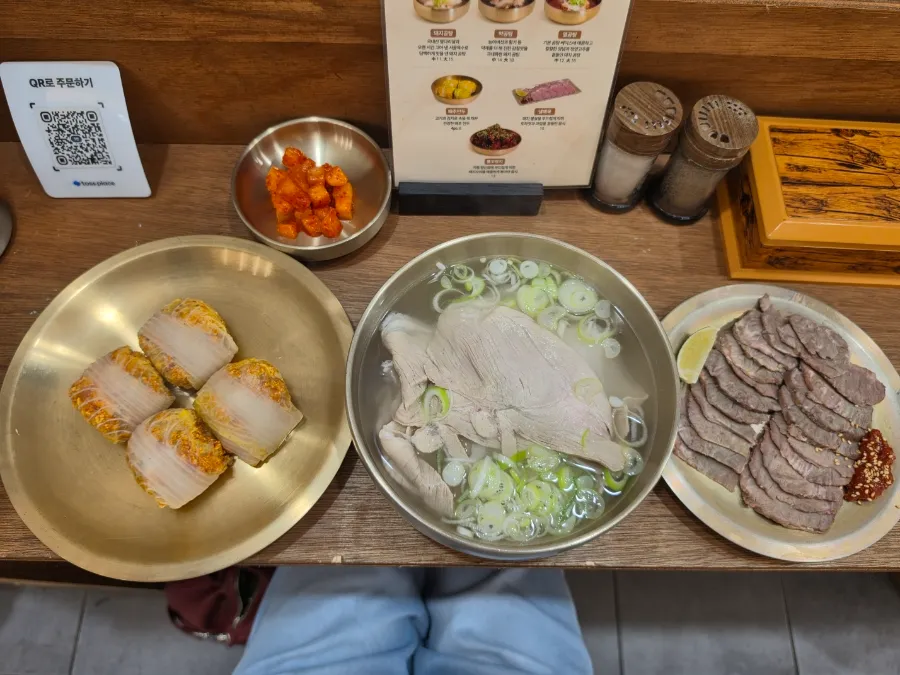
Although I live in Seoul, I rarely visit Myeongdong more than once a year. On this occasion, I was looking for Korean food in Myeongdong before visiting the Bank of Korea Money Museum, so I stopped at Baekok for lunch.
Myeongdong was filled with international visitors. I had spent the previous two years traveling around Southeast Asia as a digital nomad, but walking through the crowded streets made me feel like a traveler in my own city.
Myeongdong is best known for shopping, cosmetics and street food. However, there are also small Korean restaurants hidden in the narrow alleys behind its busy shopping streets.
Baekok Myeongdong is one of them. Its short menu focuses on Korean pork soup, cold pork slices and an unusual style of dumpling wrapped in napa cabbage.
Finding Baekok in a Hidden Myeongdong Alley
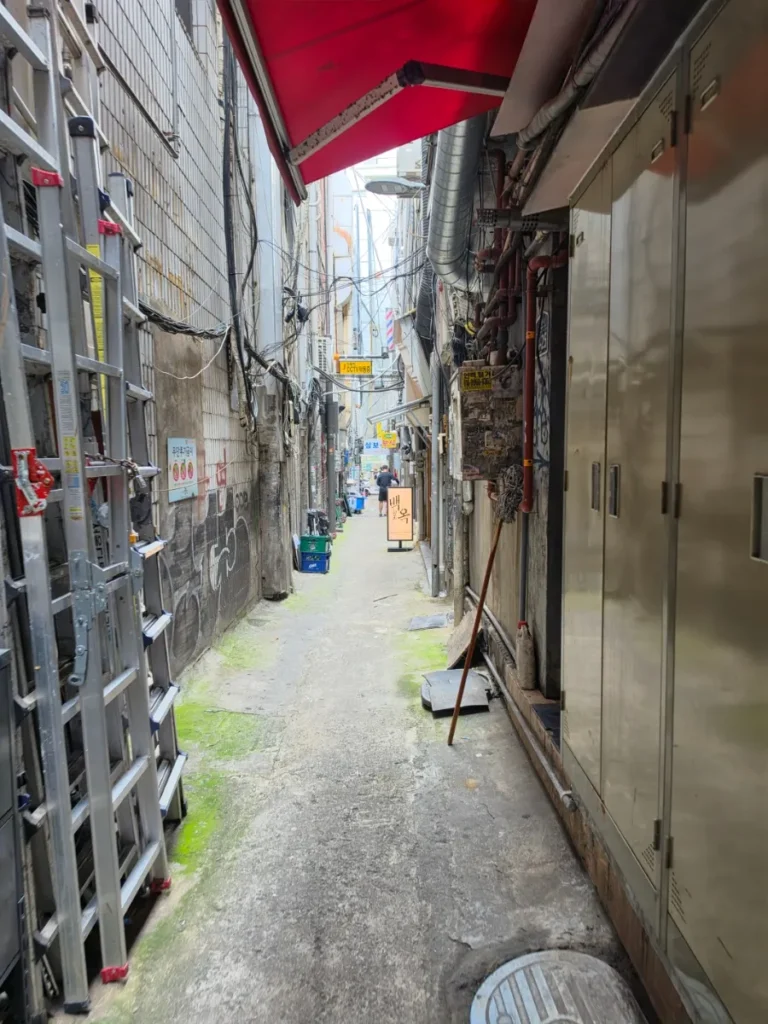
I initially walked past the alley and had to turn around. From the main street, it did not look as though a restaurant would be located there.
The narrow passage showed a very different side of Myeongdong. Instead of cosmetics stores, bright signs and crowds, I found old walls, exposed pipes and a small restaurant sign farther down the alley.
The location may feel uncertain when you visit for the first time, but continue walking until you see the Baekok sign.
Baekok Myeongdong location
- Korean name: 백옥 명동
- Address: B1 and 1F, 8-23 Myeongdong 8-gil, Jung-gu, Seoul
- Korean address: 서울특별시 중구 명동8길 8-23 지하 1층·1층
- Nearest station: Myeongdong Station, Seoul Subway Line 4
- Main dishes: Pork gomtang, cold pork slices and cabbage mandu
View Baekok Myeongdong on Google Maps
Inside Baekok Myeongdong
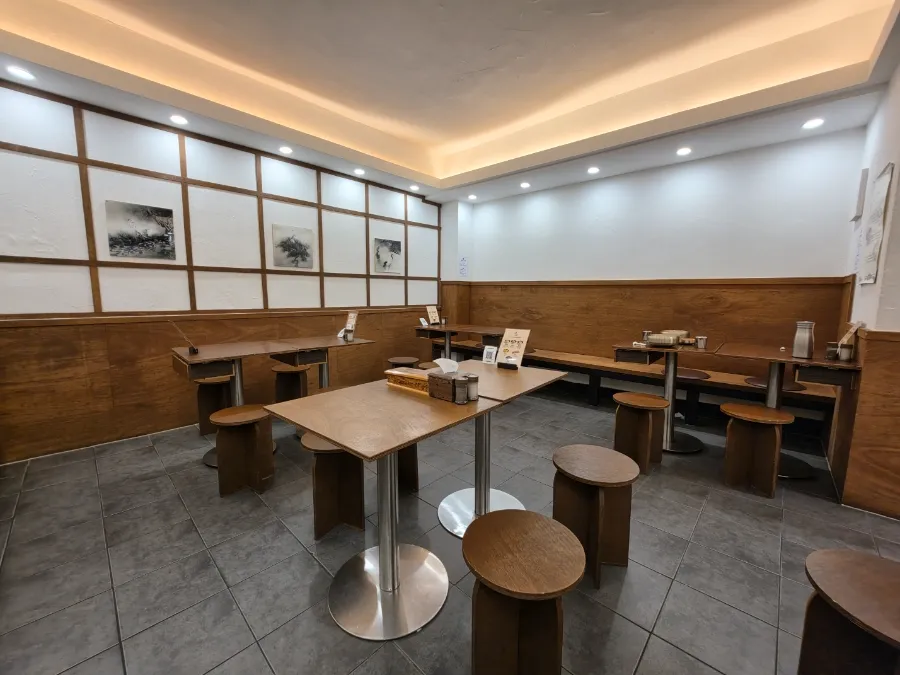
I visited shortly after 1 p.m. on a Sunday. Both Korean and international customers were eating inside.
The restaurant was not large, but the simple menu appeared to keep customers moving steadily. After several people left, I was able to take a clearer photograph of the interior.
There were regular tables as well as counter-style seats along the wall. Since I was eating alone, I chose one of the counter seats.
Baekok is a practical choice for solo travelers who may feel uncomfortable entering a traditional Korean restaurant alone. The ordering process is straightforward, and several dishes are available in portions that do not require a large group.
Baekok Myeongdong Menu and Prices
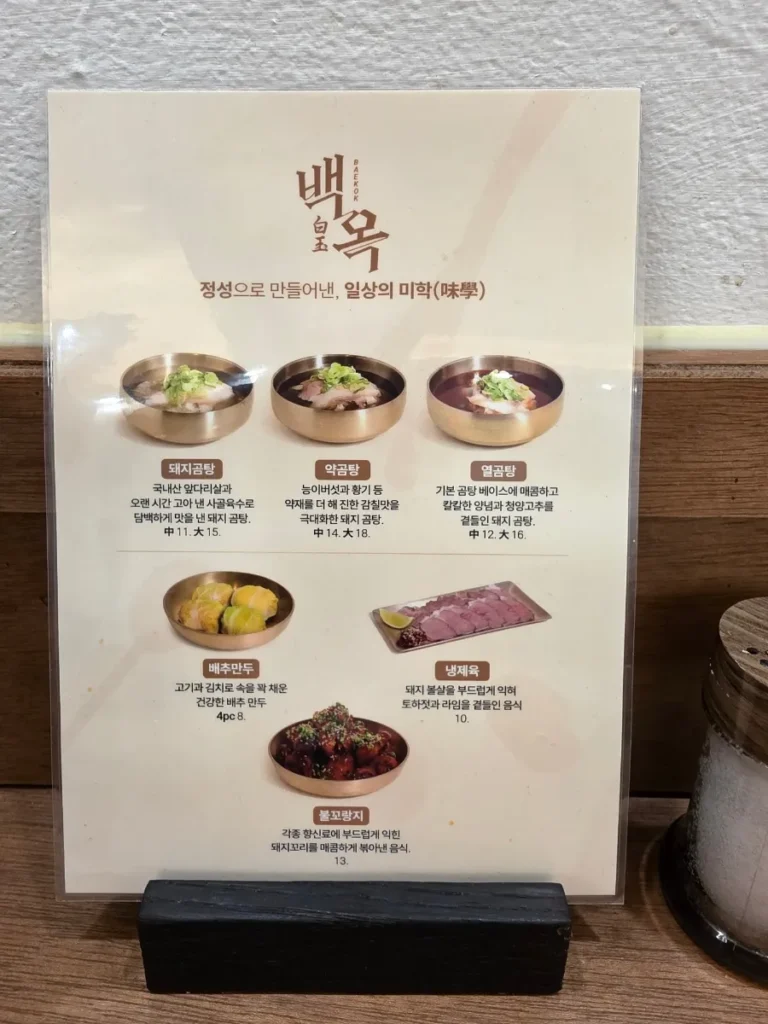
The menu is short and centered on pork. Along with its basic pork gomtang, the restaurant offers spicier and herbal variations.
During my visit, I ordered three dishes:
- Pork gomtang: 11,000 won
- Cold pork slices: 10,000 won
- Cabbage mandu, four pieces: 8,000 won
Prices and menu items may change, but these were the amounts shown during my visit.
Ordering all three dishes was more food than most solo diners would need. However, I wanted to experience the restaurant’s main soup and two of its most distinctive side dishes.
For two people, one bowl of gomtang, one plate of cold pork and one order of cabbage mandu would provide a good introduction to the menu.
What Is Gomtang?
Gomtang (곰탕) is a traditional Korean soup made by simmering meat and sometimes bones for an extended period. It is usually served with rice and kimchi.
Despite the English spelling, gomtang has nothing to do with bears. The name is associated with the Korean cooking process of simmering ingredients slowly to produce a rich broth.
Many visitors first encounter gomtang made with beef. However, there are numerous regional and modern variations, including pork gomtang.
The appearance of the broth also varies. Some Korean meat soups are cloudy and rich, while others are clear and light. Baekok serves its pork in a clear broth with rice and sliced green onions.
Gomtang can be a useful choice for travelers who want to try Korean food but do not eat very spicy dishes. Diners can adjust the seasoning at the table and eat the soup with rice, meat and kimchi.
Baekok’s Clear Pork Gomtang
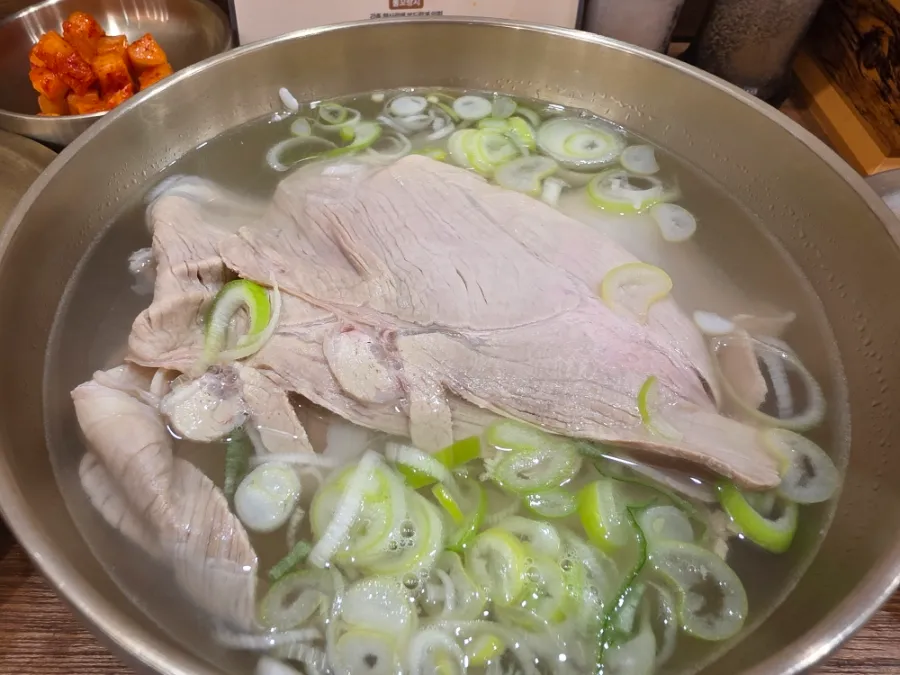
The first thing I noticed was the amount of pork covering the surface of the soup.
Thin slices of pork shoulder were arranged across the bowl like a blanket. Because the slices were wide but not thick, they were easy to pick up and eat with a spoonful of rice.
The broth tasted clean rather than oily or heavy. It had enough savory flavor to eat without additional seasoning, although salt and pepper were available at the table.
The rice also retained a pleasantly firm texture. It did not immediately become soft and mushy after being placed in the broth, so I could still feel the individual grains as I ate.
Gomtang is commonly enjoyed by adding rice directly to the soup. You can also leave the rice separate and add one spoonful at a time if you prefer to control the texture.
How to Eat Gomtang With Kkakdugi
A small dish of kkakdugi (깍두기) was served with the soup.
Kkakdugi is a type of kimchi made by cutting Korean radish into cubes and fermenting it with red pepper seasoning. It is crisp, slightly sour and usually spicy.
Gomtang and kkakdugi are a familiar combination in Korea. The soup is warm and mild, while the fermented radish adds acidity, spice and crunch.
At Baekok, the radish cubes were cut into relatively small pieces. I found them easy to place on top of a spoonful of rice and pork.
Some Korean diners also add a small amount of kkakdugi liquid directly to their soup. This changes the color and gives the broth a stronger fermented flavor. I prefer keeping the broth clear and eating one piece of kkakdugi with each spoonful.
What Is Naeng Jeyuk?
The second dish was naeng jeyuk (냉제육), which can be translated as chilled boiled pork.
International visitors may associate the word jeyuk with jeyuk bokkeum, a spicy stir-fried pork dish commonly found in Korean restaurants. Naeng jeyuk is entirely different.
The pork is boiled, cooled and sliced thinly. Rather than being covered in a spicy sauce, the meat is served plain with condiments that provide saltiness, acidity and extra flavor.
Baekok uses pork cheek for its version. The slices were neatly arranged on a metal plate with a wedge of lime and a fermented shrimp condiment.
Cold Pork With Tohajeot and Lime
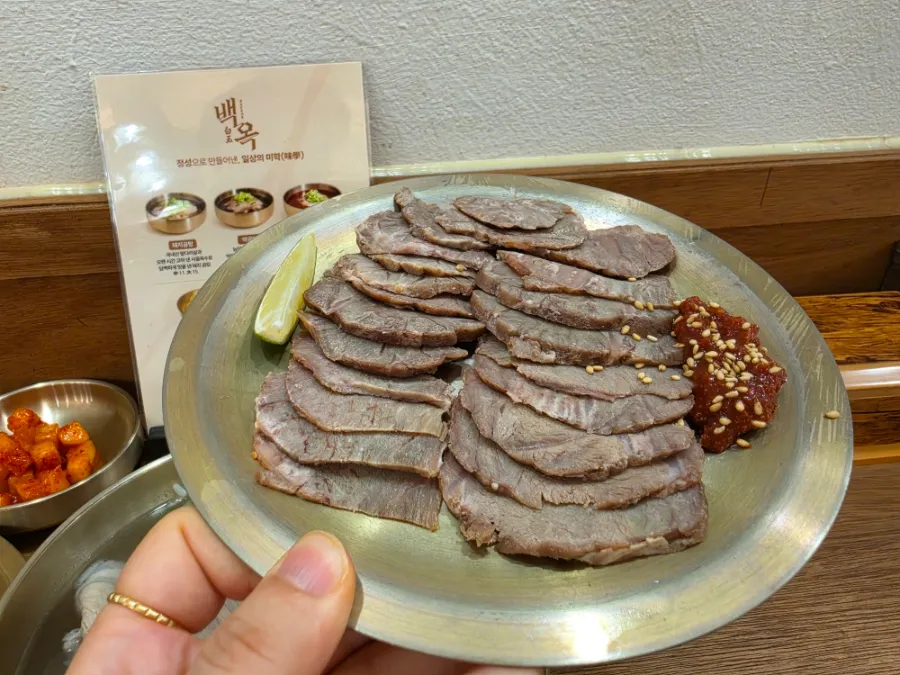
The most memorable part of the cold pork was the condiment served beside it.
Tohajeot (토하젓) is a Korean fermented condiment made with tiny freshwater shrimp and salt. Like other varieties of jeotgal, it has a concentrated salty flavor and strong umami.
I placed a small amount of tohajeot on each slice of pork and squeezed lime juice over it. The combination was more refreshing than I expected. The fermented shrimp added depth, while the lime provided acidity that balanced the meat.
I enjoyed the tohajeot enough to use it with the pork from my gomtang as well.
The portion and price also made the dish accessible to a solo diner. At some Korean restaurants, boiled pork is sold only as a large plate intended for several people. Baekok’s smaller serving allowed me to try it without ordering a full bossam-style meal.
What Is Korean Mandu?
Mandu (만두) is the Korean word for dumplings.
Traditional mandu usually contains a mixture of meat, tofu, vegetables, kimchi or glass noodles wrapped in a thin flour-based skin. The dumplings may be steamed, boiled, pan-fried or added to soup.
Mandu is eaten as a snack, side dish or full meal. It is also traditionally served during Korean holidays, particularly in manduguk, a dumpling soup.
Baekok’s cabbage mandu differs from the standard version because it does not use a flour wrapper. Instead, the filling is enclosed in napa cabbage leaves.
Baekok’s Cabbage Mandu
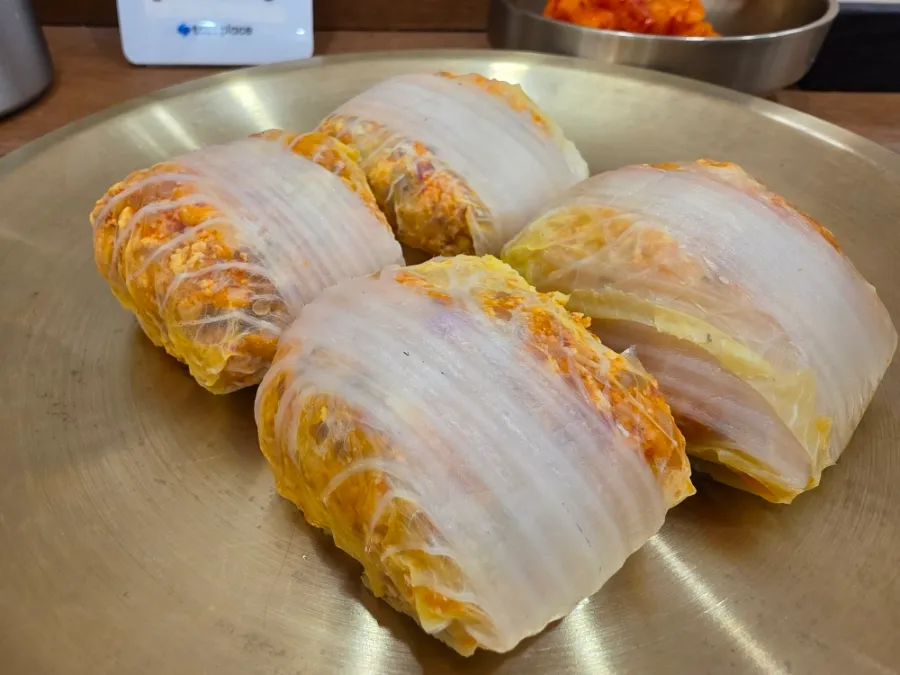
Four cabbage mandu arrived on a round metal plate.
Each dumpling contained a meat and kimchi filling wrapped in a pale napa cabbage leaf. The cabbage made them look closer to small Korean cabbage rolls than ordinary dumplings.
The texture was the most distinctive part. A flour wrapper is usually smooth and chewy, but these cabbage leaves added a light crunch around the soft filling.
I was undergoing orthodontic treatment during this visit and usually had to be careful with firm or chewy foods. Even with braces, I found the cabbage mandu soft enough to chew comfortably.
The cabbage and kimchi flavors made me think that the dumplings would also pair well with a glass of makgeolli, Korea’s traditional rice wine.
This was my favorite side dish at Baekok. Travelers who have already tried ordinary steamed or fried mandu may find the cabbage version more interesting.
What Should You Order at Baekok Myeongdong?
For a solo meal, I recommend ordering the pork gomtang and cabbage mandu.
The soup provides a complete meal with meat, rice and broth, while the cabbage mandu adds a different texture and a more unusual Korean food experience.
Solo diners with a larger appetite could add the cold pork, but all three dishes together may be too much food for one person.
For two people, I would order:
- One bowl of pork gomtang
- One order of cold pork slices
- One order of cabbage mandu
You could add a second bowl of gomtang if both people want their own rice and soup.
The basic pork gomtang is also suitable for visitors who avoid spicy food. The kkakdugi and tohajeot are served separately, so you can control how much fermented or spicy flavor you add.
Is Baekok a Good Place for Korean Food in Myeongdong?
Baekok is a good option for travelers looking for a Korean lunch near Myeongdong Station without relying only on street food or large restaurant chains.
The restaurant offers several advantages:
- A focused menu that is easy to understand
- A mild pork soup for visitors who do not eat spicy food
- Counter seating for solo diners
- Shareable dishes that make it easier to sample several menu items
- A convenient location near Myeongdong’s shopping streets
The hidden alley may make the restaurant slightly difficult to find, but it also provides a glimpse of an older side of Myeongdong that many visitors miss.
My favorite dishes were the clear pork gomtang and cabbage mandu. I would order both again.
A Half-Day Route Around Myeongdong
Baekok can be included in a simple half-day itinerary in central Seoul.
My route was:
Myeongdong Station → lunch at Baekok → Myeongdong streets → Bank of Korea Money Museum
Namdaemun Market is also within the wider central Seoul area. If you want to continue exploring local food, read my experience at Namdaemun Market’s Kalguksu Alley.
For another traditional Korean meal, see my review of Andongjip, an Imokase restaurant featured on Netflix’s Culinary Class Wars.
If you enjoy unusual spaces as much as Korean food, visit Starbucks Gyeongdong 1960 inside a former Seoul theater.
Discover Korean Shamanism in Seoul
If you want to explore Korean culture beyond palaces, shopping streets and popular food markets, this guided experience on Inwangsan Mountain offers a less familiar side of Seoul.
The English-language walking tour introduces the history and cultural meaning of Korean shamanism. The route includes Inwangsan Guksadang, a traditional shamanic shrine, and Seonbawi, a distinctive rock formation associated with local spiritual beliefs.
The tour runs in a small group and involves walking uphill and climbing stairs, so comfortable shoes and water are recommended. Depending on the option selected, you can join the regular guided tour or add a personal shaman reading.
Check the Seoul Korean Shamanism Half-Day Guided Tour on Klook
Affiliate disclosure: This section contains an affiliate link. If you book through this link, I may earn a small commission at no extra cost to you. Tour schedules, routes and included experiences may change, so please check the booking page for current details.
Final Thoughts
Myeongdong is often treated as a neighborhood for shopping and international tourism, but its narrow alleys still contain small restaurants serving focused Korean menus.
Baekok Myeongdong stood out because I could try three different aspects of Korean pork cuisine in one meal: clear pork soup, chilled pork with fermented shrimp and dumplings wrapped in napa cabbage.
The food was approachable without feeling generic. The gomtang was mild and comforting, the cold pork introduced a less familiar Korean condiment, and the cabbage mandu offered a variation I had not seen at many other restaurants.
If you are looking for a solo-friendly Korean restaurant near Myeongdong Station, Baekok is worth adding to your Seoul food list.