Hello, I’m Choi, a Seoul-based travel influencer.
I first visited the Nam-Seoul Museum of Art in May 2026. When my sister came to Seoul a few months later, we looked for a quiet place to visit near Sadang Station and decided to return to the museum together.
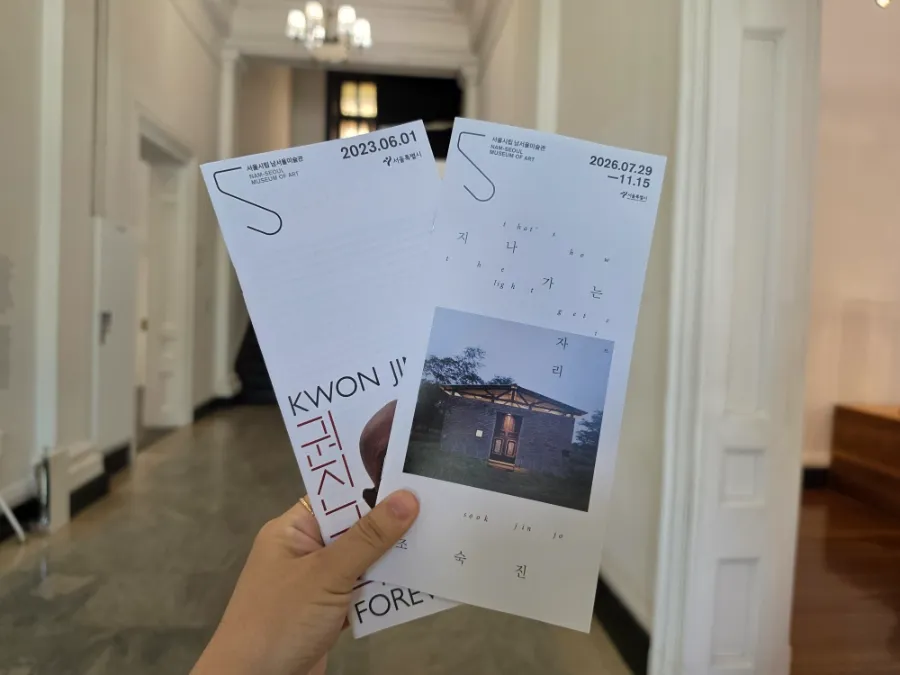
This time, we saw two exhibitions: the permanent exhibition Kwon Jin Kyu’s ForeverHome and the new exhibition Jo Sook Jin: That’s How the Light Gets In. Admission to both exhibitions was free.
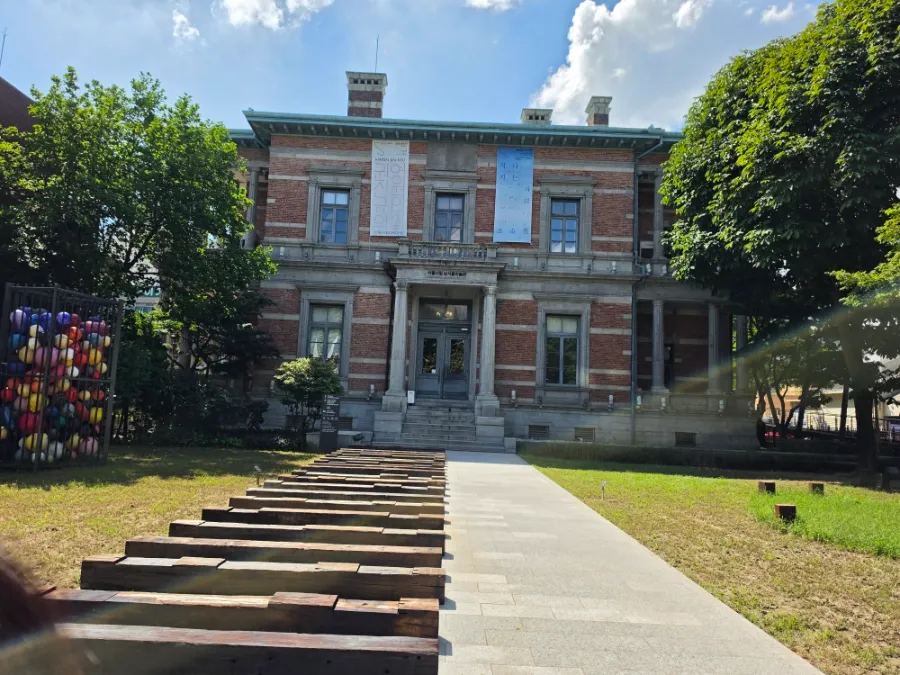
A Free Art Museum Near Sadang Station
The Nam-Seoul Museum of Art is one of the branches operated by the Seoul Museum of Art, also known as SeMA.
It is located near Sadang Station, away from Seoul’s busiest museum districts. Many international visitors know the museums around Gyeongbokgung Palace, Insadong, and City Hall, but this museum offers a quieter alternative in southern Seoul.
The historic red-brick building is one of the main reasons I enjoy returning. Before entering, take time to walk around the garden and look at the architecture as well as the outdoor artwork.
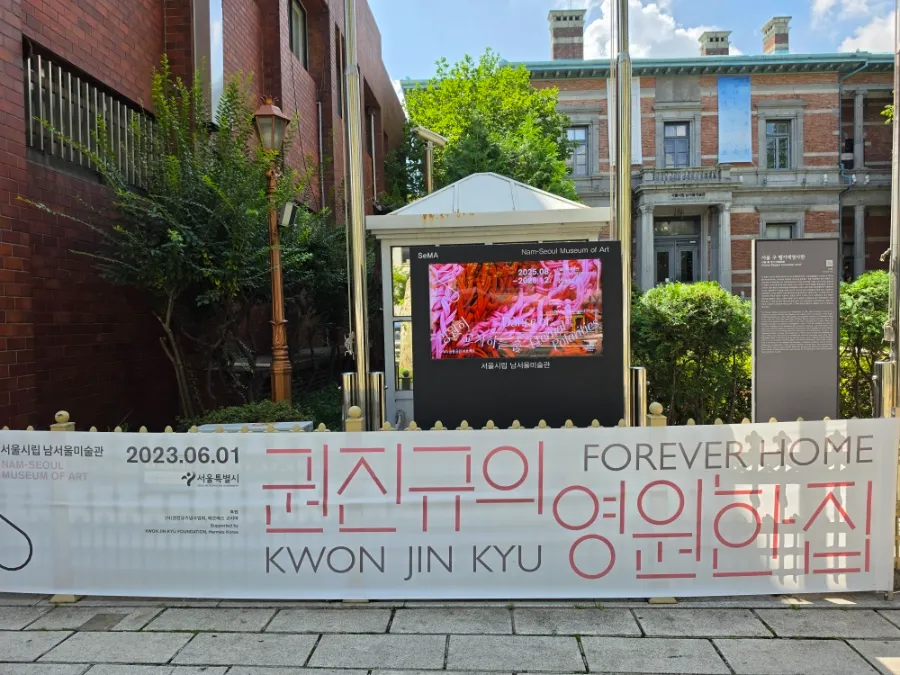
Quick Guide
- Museum: Nam-Seoul Museum of Art
- Korean name: 서울시립 남서울미술관
- Address: 2076 Nambusunhwan-ro, Gwanak-gu, Seoul
- Korean address: 서울특별시 관악구 남부순환로 2076
- Nearest subway: Sadang Station, Lines 2 and 4
- Admission: Free
- Closed:Mondays and January 1. If Monday is a public holiday, the museum remains open.
- Jo Sook Jin exhibition: July 29–November 15, 2026
- Kwon Jin Kyu exhibition: Permanent exhibition
- Guided exhibition tour: 1 p.m. during the exhibition period
📍 View Nam-Seoul Museum of Art on Google Maps
The museum is open from 10 a.m. to 8 p.m. Tuesday through Friday and from 10 a.m. to 6 p.m. on weekends and public holidays. Last admission is one hour before closing.
Opening hours, exhibition schedules, and guided-tour times may change. Check the official Seoul Museum of Art website before visiting.
Jo Sook Jin’s Outdoor Installation
I did not realize it immediately, but the artwork installed in the museum courtyard was also part of the Jo Sook Jin exhibition.
Pieces of wood appeared across the lawn, extending the exhibition beyond the gallery walls. The weathered material looked especially interesting beside the elegant red-brick building.
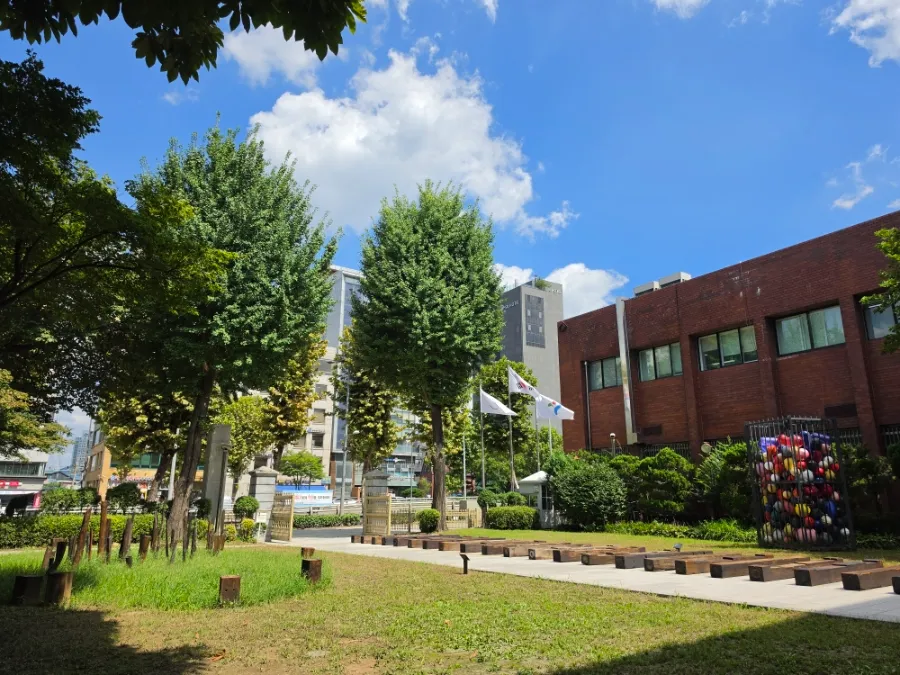
The old building, green trees, blue sky, and pieces of discarded wood created a striking contrast. I recommend looking around the courtyard before entering rather than walking directly to the front door.
Free Lockers at Nam-Seoul Museum of Art
A small number of free lockers are available inside the museum.
There were not many lockers, but the museum was quiet during my visit, so I had no difficulty finding one. If you are carrying a large bag, leaving it in a locker makes it easier to move through the relatively compact exhibition rooms.
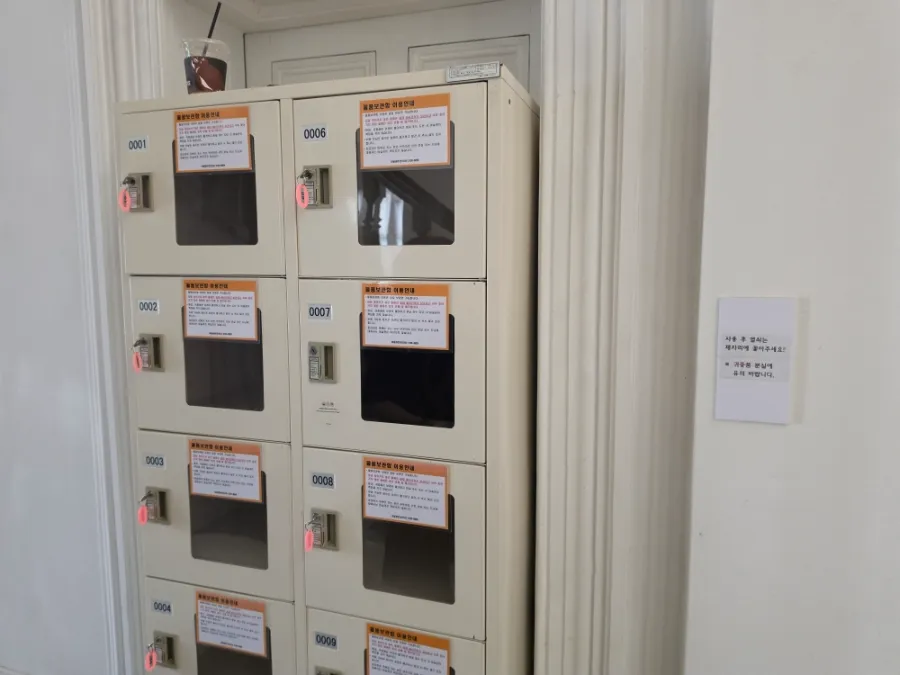
Locker availability may depend on how busy the museum is when you arrive.
Kwon Jin Kyu’s Forever Home
Kwon Jin Kyu’s Forever Home has been on permanent display at the Nam-Seoul Museum of Art since June 1, 2023.
Kwon Jin Kyu was an important Korean sculptor known for his portraits and figurative works. His sculptures often have restrained expressions and carefully modeled surfaces that invite viewers to look closely.
I had already seen this exhibition in May, so the works felt familiar when I returned with my sister. A second visit revealed details that I had overlooked the first time, particularly the textures and subtle expressions of the figures.
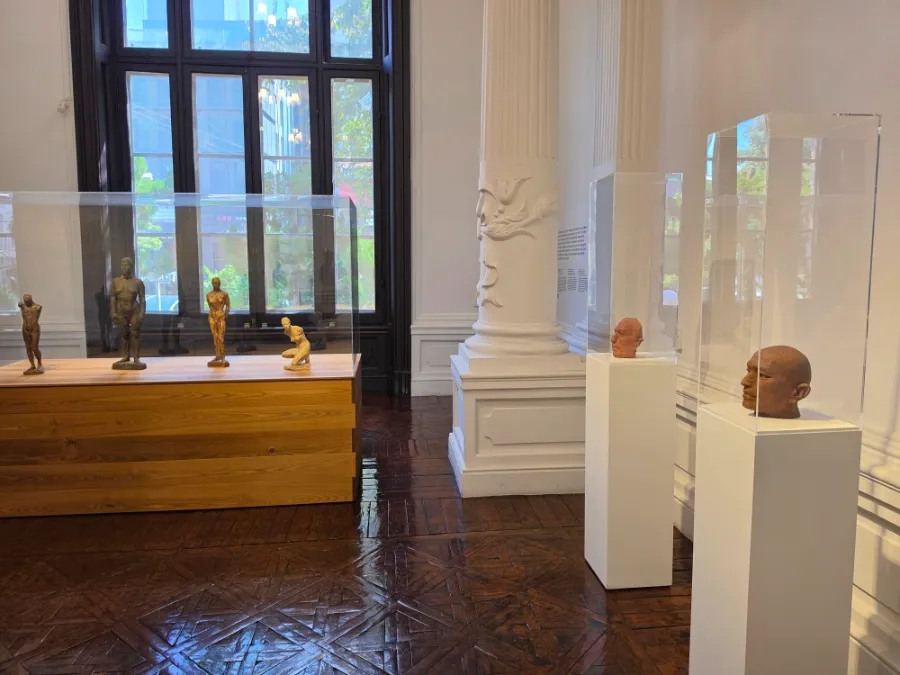
The previous day, my sister and I had visited the Do Ho Suh exhibition at MMCA Seoul. That exhibition was extremely crowded, and it was difficult to spend much time with each piece.
The Nam-Seoul Museum of Art felt completely different. Even though admission was free, the galleries were quiet enough for us to look at the works slowly and move at our own pace.
Jo Sook Jin: That’s How the Light Gets In
The main reason for my return visit was Jo Sook Jin: That’s How the Light Gets In, presented as part of the museum’s Korean representative sculptor series.
The exhibition runs from July 29 to November 15, 2026, and admission is free.
Jo Sook Jin is a contemporary Korean artist who has worked in painting, sculpture, installation, photography, performance, public art, and architectural projects. After moving to New York in 1988, she continued to develop a multidisciplinary practice centered on time, memory, nature, existence, and absence.
She is particularly known for using abandoned wood and old objects. Instead of hiding their cracks, worn surfaces, and previous uses, she allows those traces to remain visible.
Walking Through Jo Sook Jin’s Wooden Forest
Our favorite part of the museum was the second-floor hallway filled with tall pieces of wood.
The vertical wooden forms created the feeling of walking through a forest. After viewing the other rooms, my sister and I returned to the hallway and took several photographs there.
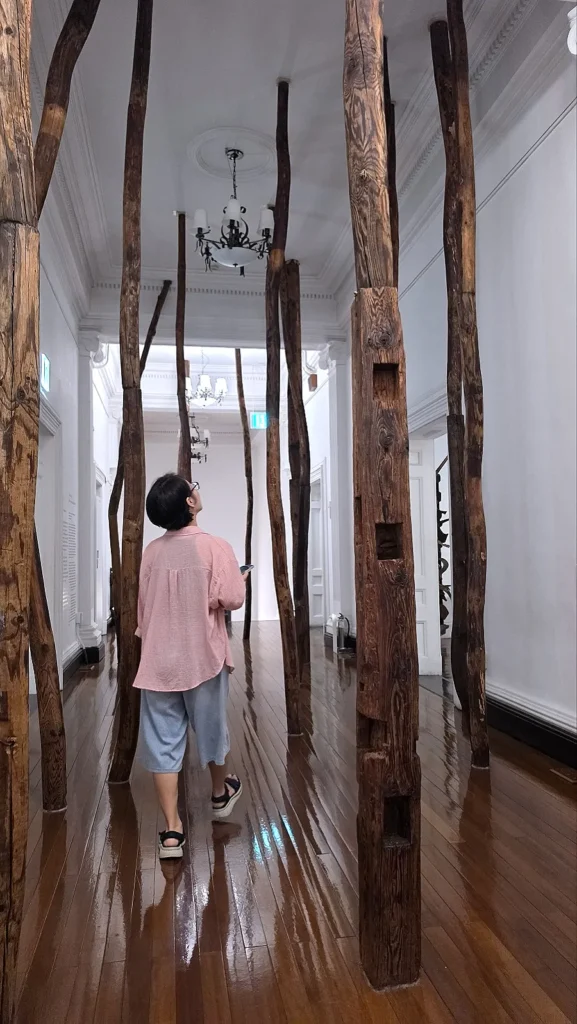
The warm color of the old wood contrasted with the white walls and dark wooden floor. No two pieces had the same shape or surface. Cracks, holes, and irregular edges showed that these materials had already lived another life before becoming part of the installation.
Rather than viewing the wood only from one position, walk slowly between the pieces and look upward. The arrangement changes depending on where you stand.
Reclaimed Frames and Changing Perspectives
Another installation brought together empty wooden frames in different colors and sizes.
Some looked new, while others appeared worn and discolored. Suspended and connected within a larger structure, the frames created overlapping views through the exhibition room.
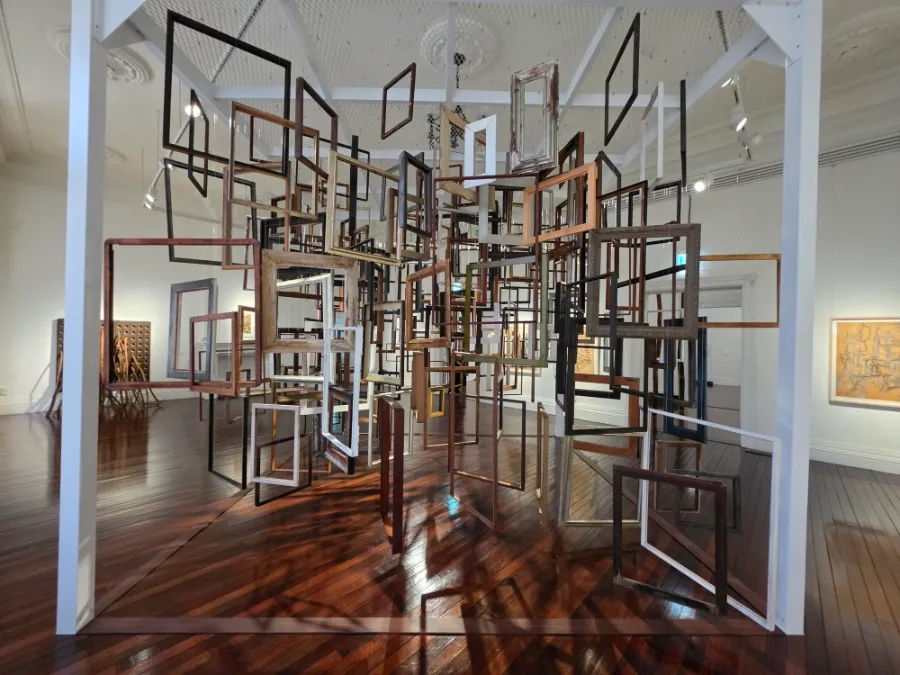
The installation was especially well suited to this museum. Looking through the empty frames, I could see white columns, chandeliers, old windows, and the polished wooden floor from different angles.
The work did not separate itself from the building. Instead, it encouraged me to notice the gallery’s architecture more carefully.
Old Wood Given a New Place
Throughout the exhibition, discarded wood and old objects were assembled into new structures.
One work was built from many pieces of wood stacked into a tall rectangular form. Its rough surfaces and irregular lengths remained visible rather than being polished away.
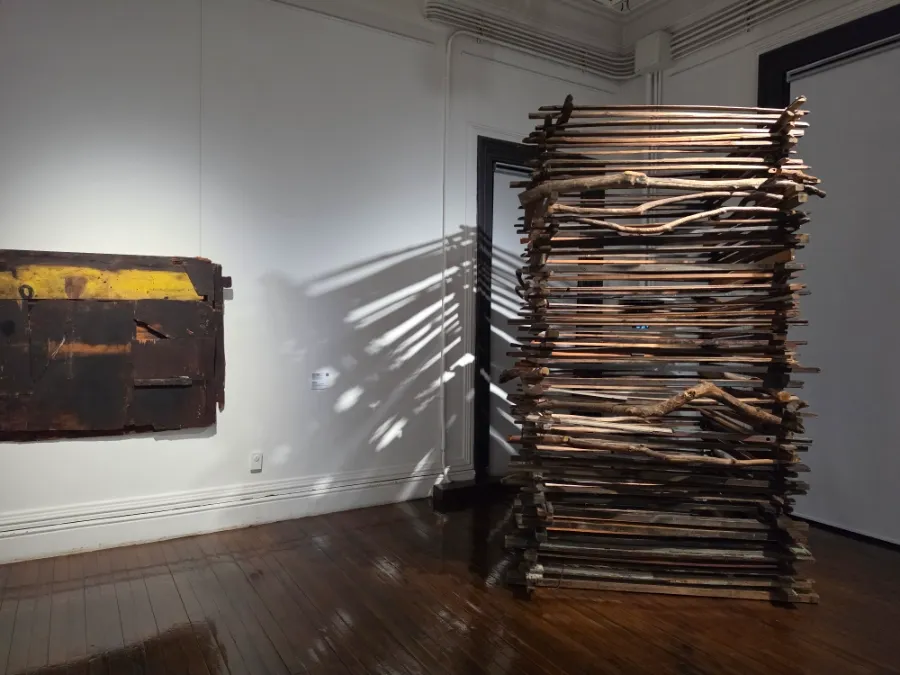
The work appeared solid from a distance, but light passed through the spaces between the pieces. Shadows from the wood also became part of the installation.
Knowing that these materials had once been abandoned changed the way I looked at them. The artist did not erase their age or damage. Their previous history became part of the finished work.
The texture of the wood was one of the details I enjoyed most. New, evenly finished material would not have created the same atmosphere.
Watching the Artist at Work
When I visit an art museum, I always look for artist interviews and videos showing how the works were created.
A finished installation does not always reveal the time, physical effort, travel, or collaboration involved in making it. Video can provide context that is difficult to understand from the final object alone.
At the Nam-Seoul Museum of Art, I watched a video of Jo Sook Jin working on a beach. The sound of waves and an oboe performance made this one of the most peaceful parts of my visit.
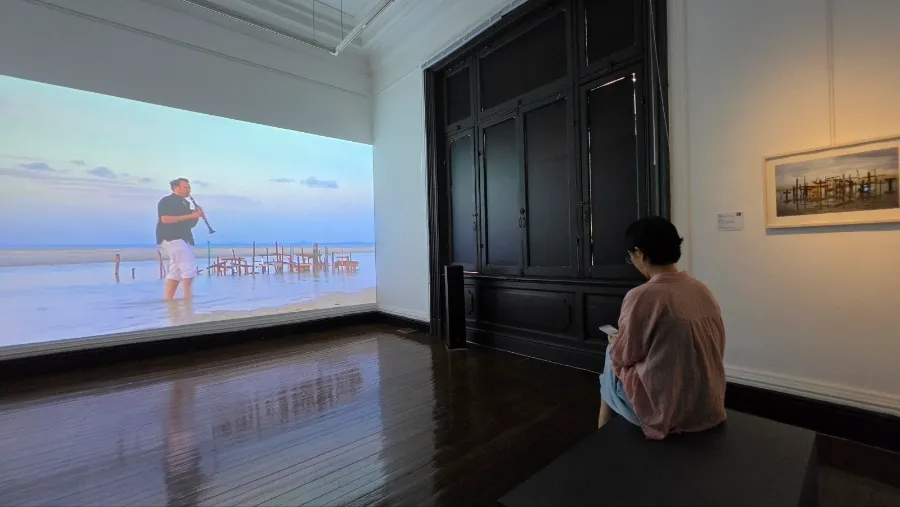
My sister sat quietly in front of the screen while I watched the changing coastal landscape. We stayed longer than we had expected.
If you visit, do not rush past the video room. It helps connect the indoor installations with the artist’s interest in nature, place, and time.
A Museum Inside the Former Belgian Consulate
The Nam-Seoul Museum of Art occupies the former Belgian Consulate building, constructed in 1905.
The building originally stood in Hoehyeon-dong. It was moved to its present location in Namhyeon-dong in 1983 and is designated Historic Site No. 254.
Its red-brick exterior, stone details, symmetrical façade, high ceilings, decorative columns, and wooden floors make it worth visiting even before considering the exhibitions.
As I walked downstairs, the old wooden floor creaked beneath my feet. That sound is one of my favorite details in the museum. My sister took a picture of me from behind as I slowly made my way through the building.
Contemporary artwork can feel very different when displayed inside historic architecture. At this museum, the age of the building and the weathered materials in Jo Sook Jin’s work complement each other particularly well.
Is Nam-Seoul Museum of Art Worth Visiting?
Yes, especially if you prefer small and quiet museums to crowded blockbuster exhibitions.
The Nam-Seoul Museum of Art may not require an entire day. Its appeal comes from the combination of free exhibitions, historic architecture, and a relaxed atmosphere.
I recommend it for travelers interested in:
- Free museums in Seoul
- Korean contemporary art
- Kwon Jin Kyu and Jo Sook Jin
- Historic architecture
- Quiet places near Sadang Station
- Seoul attractions away from major tourist districts
It is also a practical choice for solo travelers. You can explore the rooms at your own pace without needing a reservation or purchasing an expensive museum ticket.
The Jo Sook Jin exhibition is temporary, but the Kwon Jin Kyu exhibition is permanent. Check the museum’s current exhibition schedule if you plan to visit after November 15, 2026.
Try Traditional Korean Natural Dyeing in Seoul
After seeing how Jo Sook Jin transforms natural and reclaimed materials, you may want to add a hands-on craft experience to your Seoul itinerary.
This traditional Korean natural dyeing experience allows participants to create a fabric item using colors derived from natural materials. It can be an interesting option for travelers who want to learn about Korean craft through making something rather than only viewing finished artworks in a museum.
I did not personally participate in this activity during my museum visit. Check the available products, class location, duration, language options, meeting instructions, and cancellation policy before booking.
Book a Traditional Korean Natural Dyeing Experience in Seoul
Affiliate disclosure: This section contains an affiliate link. If you book through it, I may earn a small commission at no additional cost to you.
More Seoul Art and Culture Guides
Continue exploring Seoul with these firsthand guides: