I have been spending a lot of time around Gwanghwamun and Anguk Station while creating Seoul travel content. Whenever I visit this part of the city, I also try to find a good local restaurant.
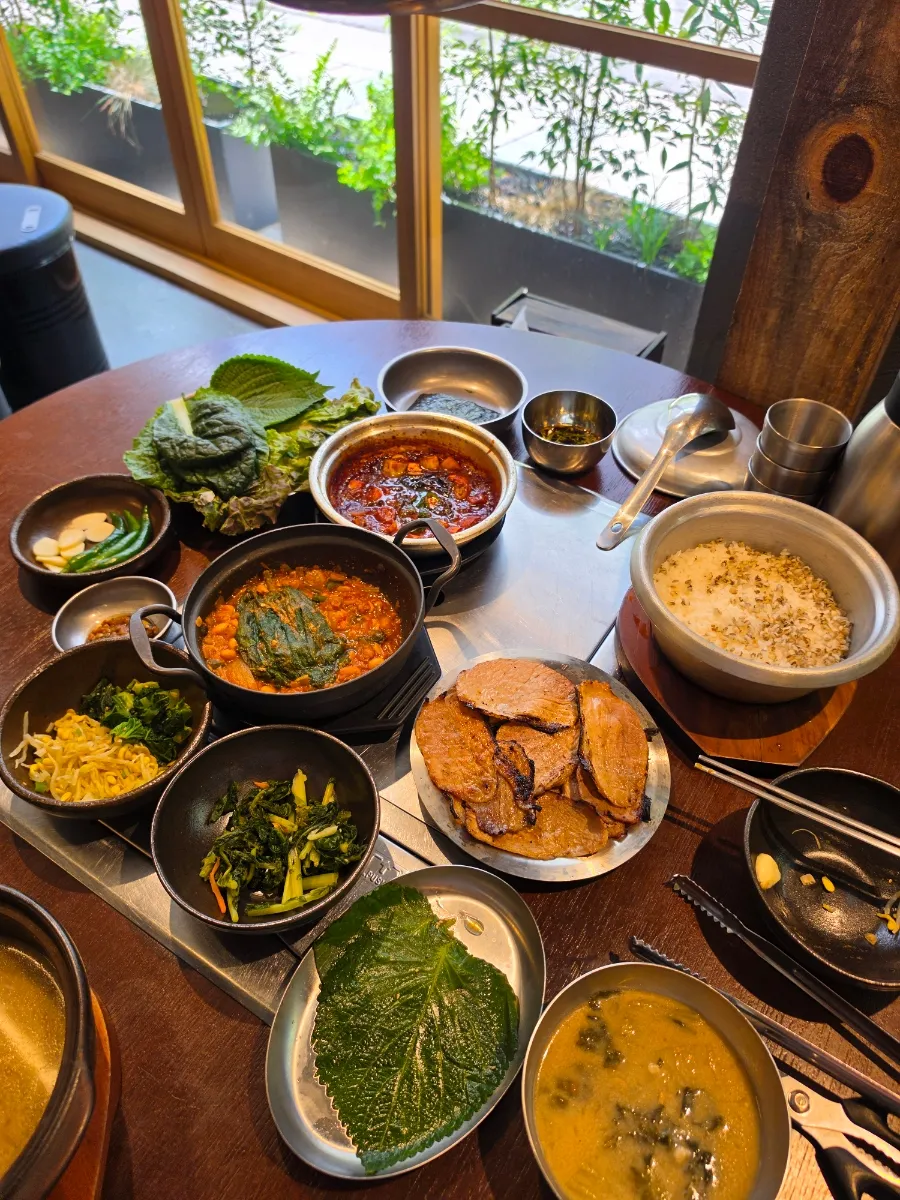
On this trip, I had lunch at Eom Yong Baek Dwaeji Gui Gwanghwamun, a Korean pork restaurant near Jogyesa Temple. I ordered its generous lunch set featuring pork grilled over coal briquettes, freshly cooked rice, soup, and several traditional Korean side dishes.
For international visitors, some of the dishes served here—such as dwaeji-gui, gangdoenjang, and mel-jorim—may be unfamiliar. Here is what they are, how they taste, and how Koreans usually eat them.
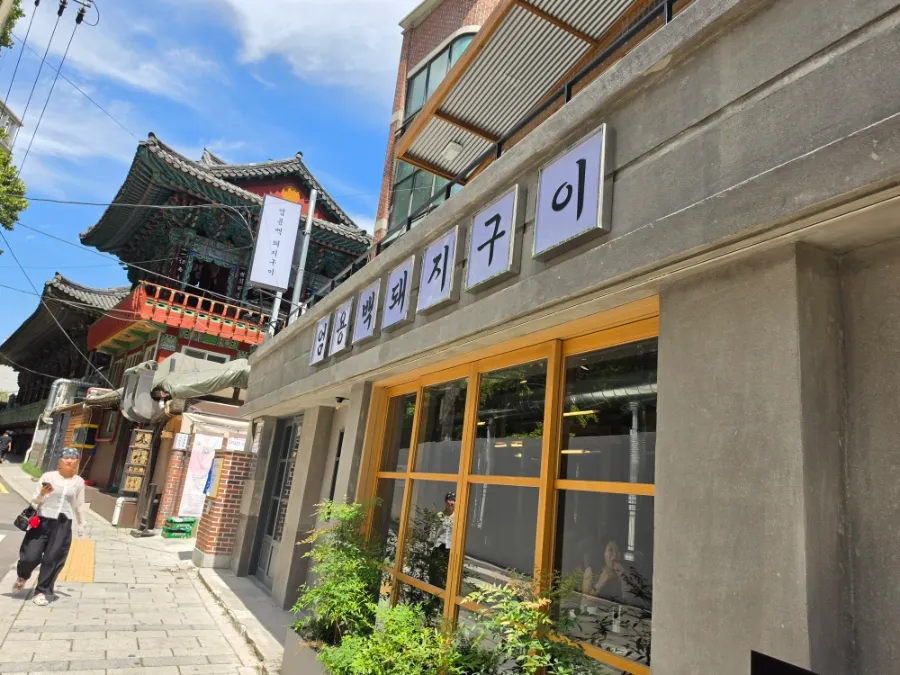
Eom Yong Baek Gwanghwamun Location
Eom Yong Baek is located on a small street close to Jogyesa Temple. I used to walk around this neighborhood often when I worked as an insurance consultant many years ago, so returning to the area brought back memories.
The weather was pleasant that day, so I walked from Euljiro 1-ga Station and followed Cheonggyecheon Stream toward the restaurant. It was a longer walk than coming from one of the closer subway stations, but it was a nice way to see more of central Seoul.
Quick Guide
- Restaurant: Eom Yong Baek Dwaeji Gui Gwanghwamun
- Korean name: 엄용백 돼지구이 광화문점
- Address: 51 Yulgok-ro 4-gil, Jongno-gu, Seoul
- Area: Near Jogyesa Temple, between Gwanghwamun and Anguk
- Lunch set ordered: Coal-briquette grilled pork set
- Price during my visit: KRW 16,000 per person
- Minimum order during my visit: Two servings
- Break time: 2:30–4:30 p.m. at the time of writing
Opening hours, prices, and ordering conditions may change, so check the latest information before visiting.
📍 View Eom Yong Baek Dwaeji Gui Gwanghwamun on Google Maps

Inside the Gwanghwamun Korean Pork Restaurant
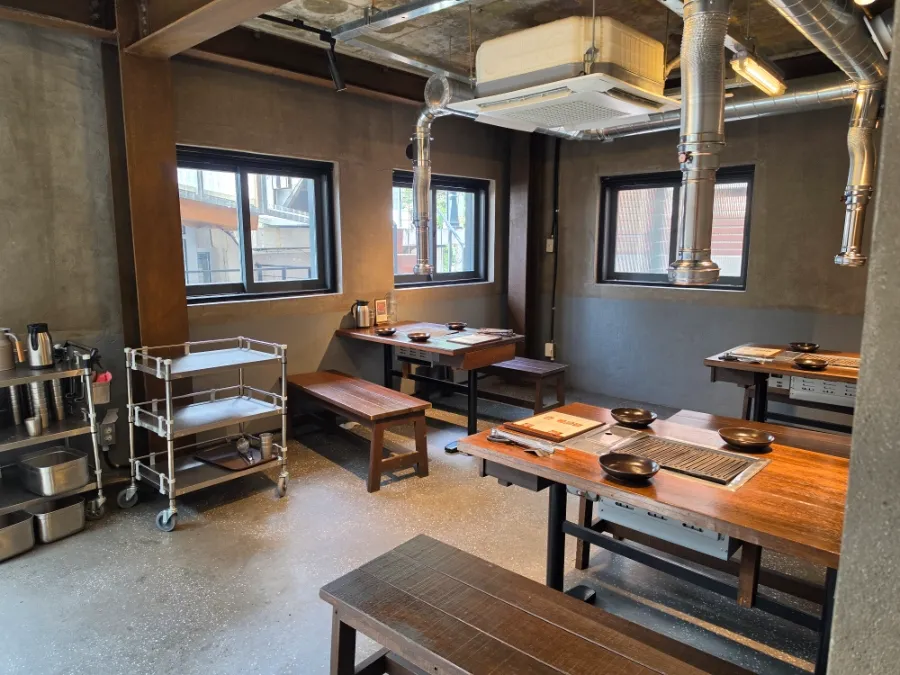
The interior had the practical layout of a Korean barbecue restaurant, with metal tables and ventilation pipes above them. The space was simple but tidy, making it suitable for a casual meal with friends or coworkers.
I arrived at around 1:20 p.m. The dishes took some time to prepare, so I started eating after 1:40 p.m. Because the restaurant’s break time began at 2:30 p.m., I did not have as much time to enjoy the meal as I would have liked.
If you want a relaxed lunch, I recommend arriving well before the break time. Gwanghwamun is a major office district, so restaurants in this area can also become busy during the weekday lunch rush.
What Is Dwaeji-gui?
The restaurant’s name includes the Korean words dwaeji-gui. Dwaeji means pork, while gui refers to food cooked over heat, usually by grilling or roasting.
Dwaeji-gui is therefore a broad term for Korean grilled pork. It can include familiar Korean barbecue cuts such as pork belly and pork neck, as well as marinated pork grilled before it reaches the table.
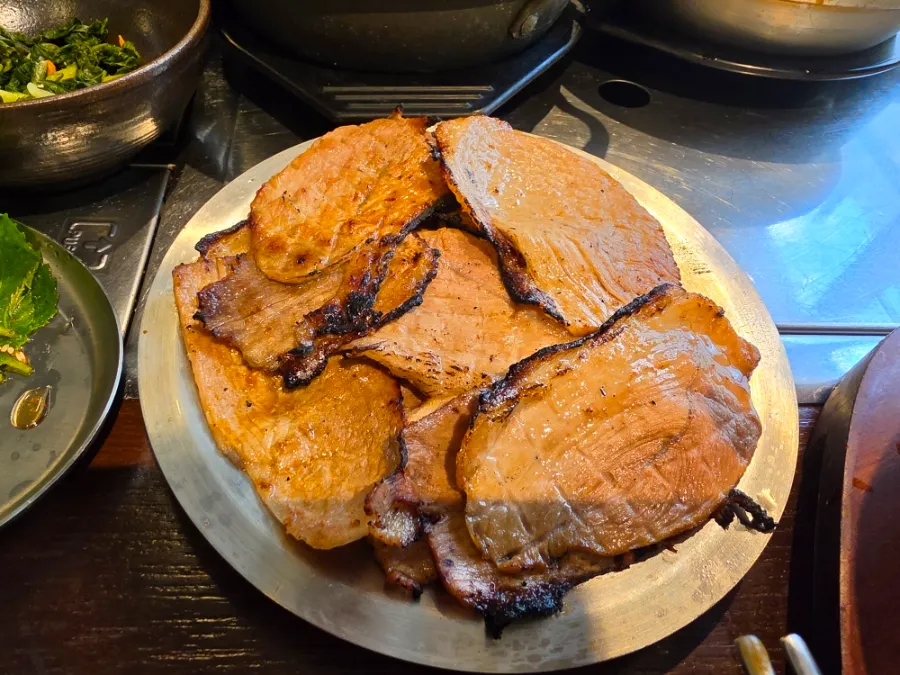
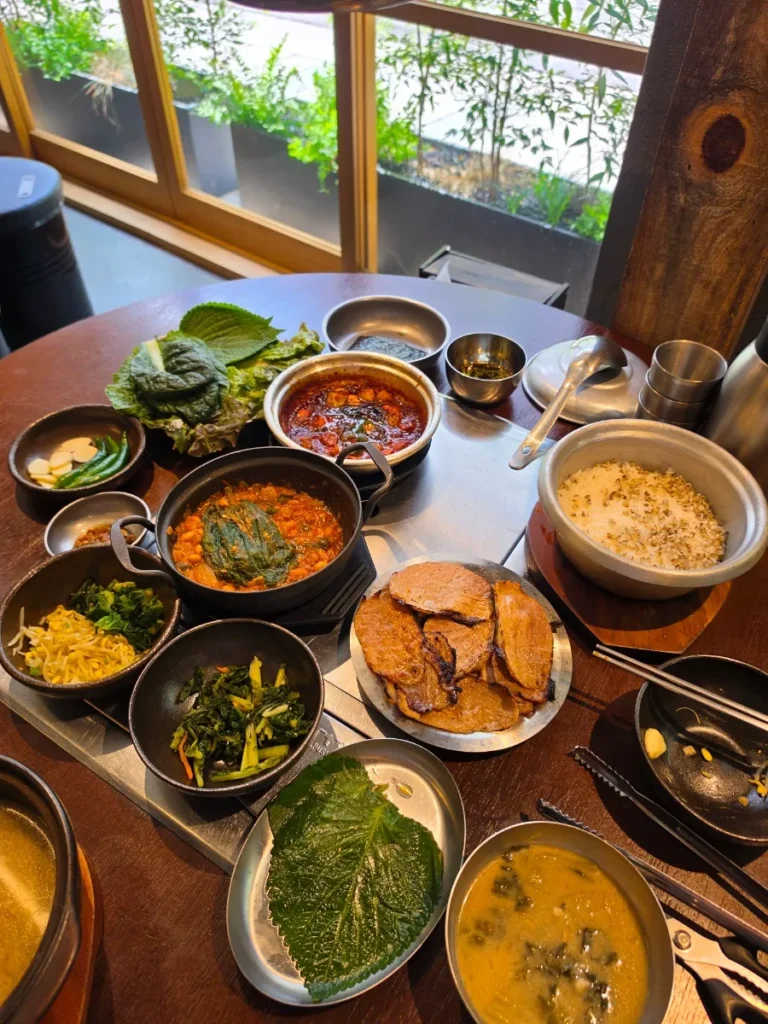
The lunch set I ordered featured thin pieces of pork cooked over yeontan, or Korean coal briquettes. Unlike a typical Korean barbecue meal where guests grill raw meat at the table, this pork arrived already cooked and ready to eat.
Cooking meat over yeontan gives it a noticeable smoky aroma and slightly charred edges. The meat was not especially thick, so it was easy to combine with rice, vegetables, and the condiments served with the set.
A Generous Korean Lunch Set
The lunch special cost KRW 16,000 per person during my visit and required an order of at least two servings. I was eating alone but had come specifically for this meal, so I ordered two portions.
This is important for solo travelers to know. Many Korean restaurants allow individual diners, but certain barbecue dishes or set menus have a two-serving minimum. The price shown on the menu may be the price for one serving rather than the total minimum order.
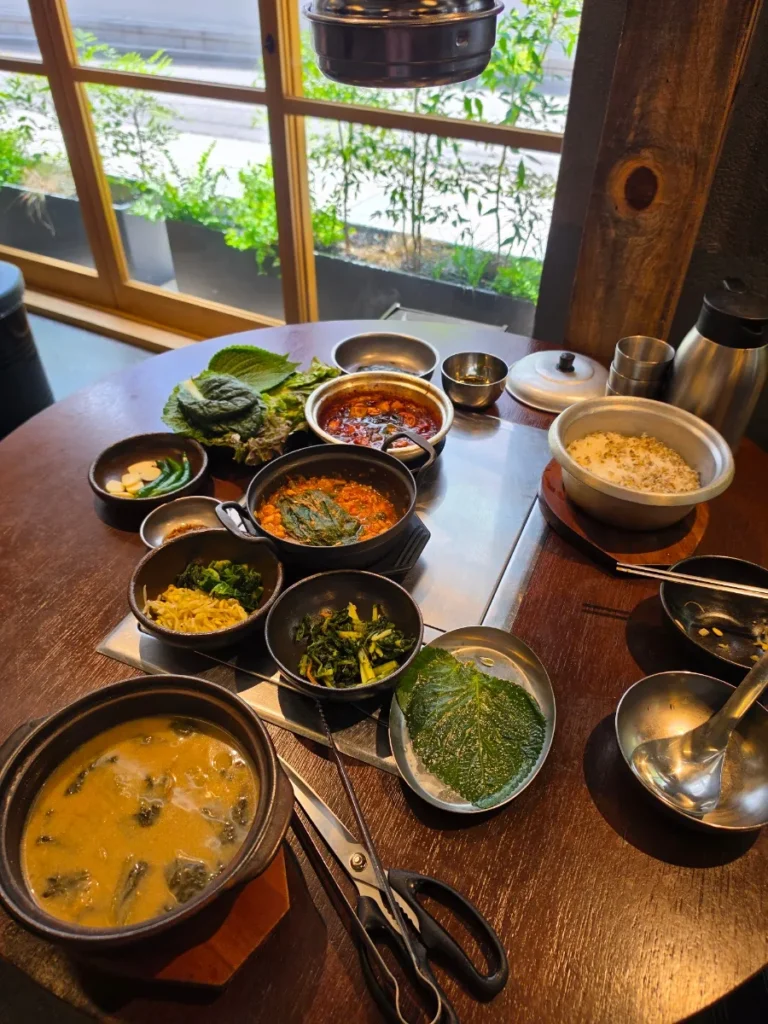
When all the food arrived, the table looked much more generous than I expected. The set included grilled pork, freshly cooked pot rice, soup, leafy vegetables, kimchi, seasoned bean sprouts, seaweed, and several sauces and condiments.
What Are Korean Banchan?
The small dishes served with a Korean meal are called banchan. They are not separate appetizers that must be ordered individually. Instead, they are shared side dishes intended to complement rice and the main course.
The banchan at Eom Yong Baek included young radish kimchi, seasoned bean sprouts, seaweed, and fresh leaves for wrapping the pork. The flavors were balanced and not excessively salty.
Even the simpler dishes worked well with the freshly cooked rice. Combining small amounts of different banchan is one of the pleasures of eating a Korean set meal.
Gangdoenjang: A Thick Korean Soybean Paste
One of the most memorable dishes was gangdoenjang.
Doenjang is a traditional Korean fermented soybean paste. It has a deep, savory flavor and is used in soups, stews, sauces, and vegetable dishes. Gangdoenjang is a thicker, more concentrated preparation made by cooking doenjang with other ingredients until it becomes almost like a chunky sauce.
It is stronger and less soupy than doenjang-jjigae, the soybean paste stew commonly served in Korean restaurants. Because the flavor is concentrated, you only need a small spoonful at a time.
There are several ways to eat it:
- Place a small amount on a lettuce or perilla leaf with pork and rice.
- Mix it into warm rice with seasoned vegetables.
- Use it as a savory dip for fresh vegetables.
I alternated between adding gangdoenjang to my pork wraps and mixing it with the pot rice. It was flavorful enough to make the rice enjoyable even without the meat.
What Are Meljeot and Mel-jorim?
The other distinctive condiment was mel-jorim, which is related to the anchovy-based condiments commonly eaten with pork in southern Korea and on Jeju Island.
In Jeju dialect, mel means anchovy. Meljeot generally refers to salted and fermented anchovies or an anchovy-based dipping sauce. It has a salty, fermented taste and is often heated with seasonings before being served with grilled pork.
Mel-jorim literally means braised or simmered anchovies. Its exact preparation can vary, but it is generally thicker and more substantial than a clear dipping sauce.
The version served with my lunch had a strong savory flavor that balanced the sweetness of the marinated pork. Visitors who are not used to fermented seafood may find the aroma distinctive, so try a small amount first. I enjoyed switching between the earthy gangdoenjang and the saltier anchovy condiment.

Siraegi Soup Served with the Meal
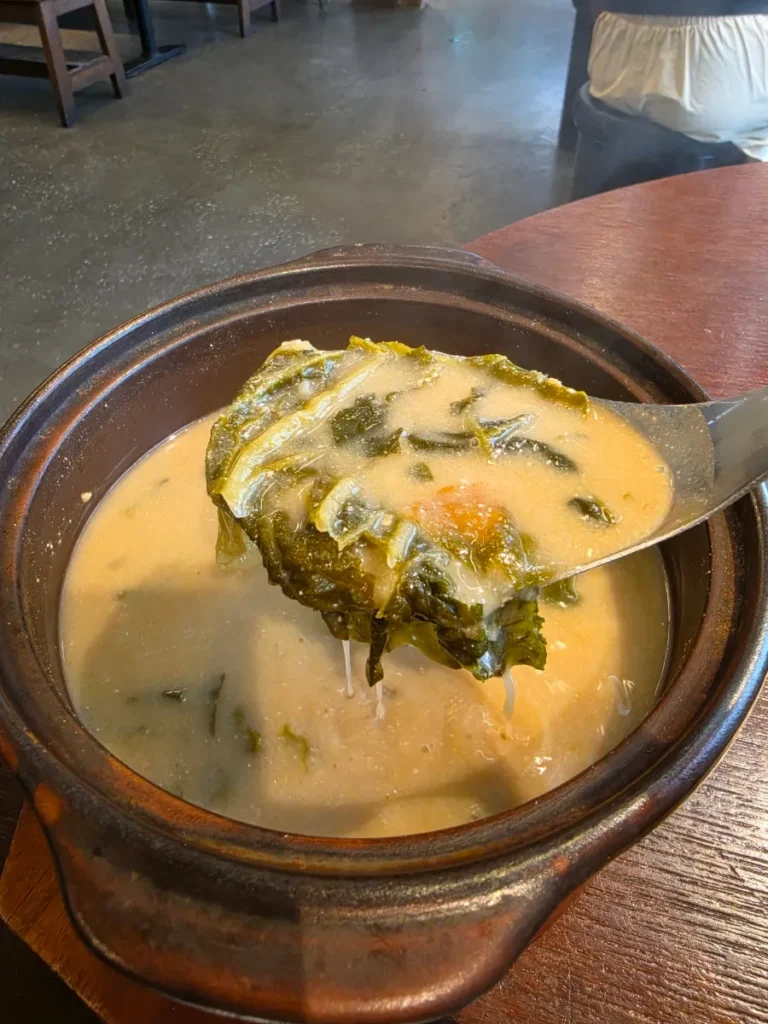
The set also came with siraegi-guk, a Korean soup made with dried radish leaves.
Siraegi is created by drying radish greens, which are later soaked and cooked until tender. The leaves have a rustic texture and absorb the flavor of the soup.
This version reminded me of sirak-guk, a regional soup I once ate in Tongyeong. It tasted comforting alongside the smoky pork and richly seasoned condiments.
How to Eat the Korean Grilled Pork Set
There is no single correct way to eat Korean grilled pork, but making a wrap allows you to taste several elements together.
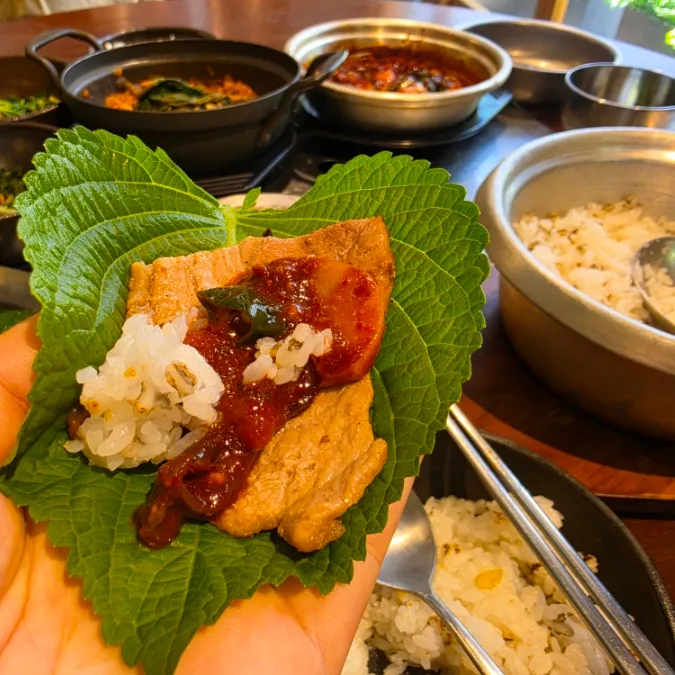
Start with a lettuce or perilla leaf, then add a small amount of rice and one piece of pork. Finish it with gangdoenjang, the anchovy condiment, or a piece of garlic.
Fold the leaf around the filling and eat it in one or two bites. Avoid adding too many ingredients at once, as the condiments have concentrated flavors.
The soy-based seasoning on the pork and its smoky aroma worked especially well with perilla leaves. Perilla has a herbal, slightly minty flavor that may be unfamiliar to first-time visitors, but it cuts through the richness of the meat.
Finishing the Meal with Pot Rice
The rice was served in a metal pot rather than an ordinary bowl. Freshly cooked sotbap, or pot rice, tends to stay warm throughout the meal and develops a slightly toasted layer at the bottom.
After eating the pork, I mixed some of the remaining rice with gangdoenjang and seasoned bean sprouts. It was a simple combination, but the fermented soybean paste gave the rice a rich and satisfying flavor.

Is Eom Yong Baek Gwanghwamun Worth Visiting?
Eom Yong Baek is a good option for travelers looking for a substantial Korean lunch near Gwanghwamun, Jogyesa Temple, or Anguk.
The main advantage is that the set provides more than grilled meat. It introduces several parts of a traditional Korean meal, including banchan, pot rice, fermented soybean paste, an anchovy condiment, soup, and leafy wraps.
However, the minimum order can make it less practical for solo travelers. The food may also take time to prepare, so arriving shortly before the afternoon break is not ideal.
I was undergoing orthodontic treatment during this visit, which made chewing slowly more difficult. Combined with my late arrival, I had to finish the meal faster than I wanted. Even so, the smoky pork, gangdoenjang, and freshly cooked rice made the trip worthwhile.
The restaurant also had spicy stir-fried squid on its lunch menu. I would like to return and try it after finishing my orthodontic treatment.
If you want to experience a filling Korean pork lunch rather than a simplified tourist menu, this restaurant is worth considering while exploring central Seoul.
Add a K-POP Dance Class to Your Seoul Itinerary
After exploring traditional Korean food in Gwanghwamun, you may want to experience a more modern side of Korean culture.
This K-POP dance class takes place in Myeongdong, one of Seoul’s most popular shopping and entertainment districts. Participants can learn K-POP choreography and take photos and videos during the experience.
I did not personally join this class, so check the booking page for the current schedule, lesson language, age requirements, class level, inclusions, and cancellation policy before reserving.
▶ Book the Myeongdong K-POP Dance Class in Seoul
Affiliate disclosure: This section contains an affiliate link. If you book through it, I may earn a small commission at no additional cost to you.
More Seoul Food Guides
Continue exploring Seoul with these firsthand Korean food guides: