If you are looking for tteokbokki in Seoul beyond the usual tourist areas, Apple House is a longtime local restaurant worth knowing.
A friend who knows I enjoy searching for tteokbokki restaurants while traveling recommended Apple House to me. She likes this place so much that she even orders its food for delivery, so I was curious to try it myself.
I occasionally visit the Isu Station area for shopping, so this time I planned an afternoon around tteokbokki and a few errands.
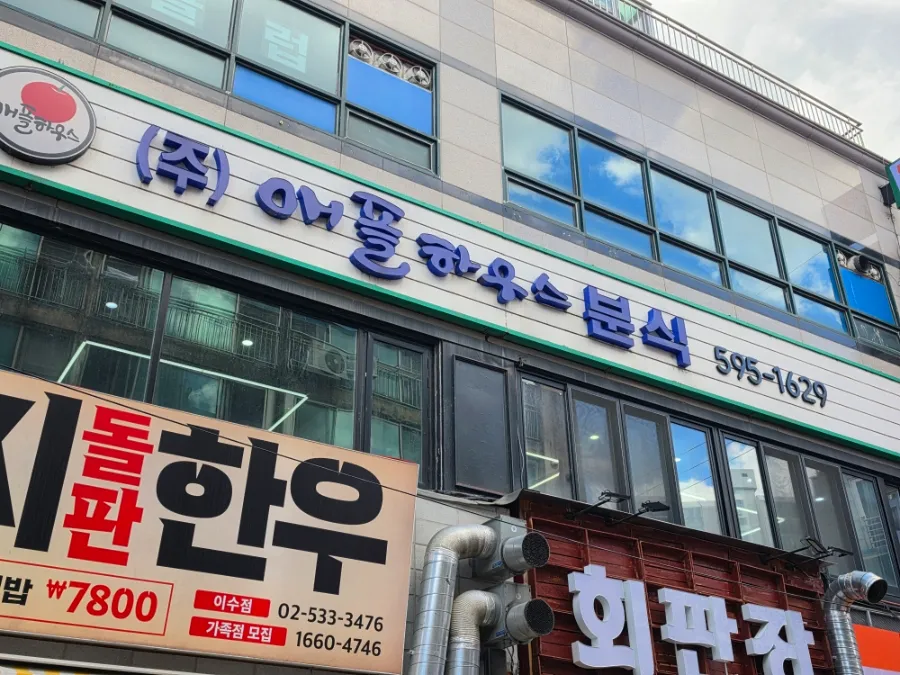
Apple House Tteokbokki Near Isu Station
Apple House (애플하우스) has been serving tteokbokki since 1987. The restaurant was originally located in Banpo before moving to its current location near Isu Station in 2022. Its best-known dishes include jeukseok tteokbokki, seasoned fried dumplings and stir-fried sundae.
The restaurant is on the second floor, and even the entrance has an old-school Korean snack-bar atmosphere.
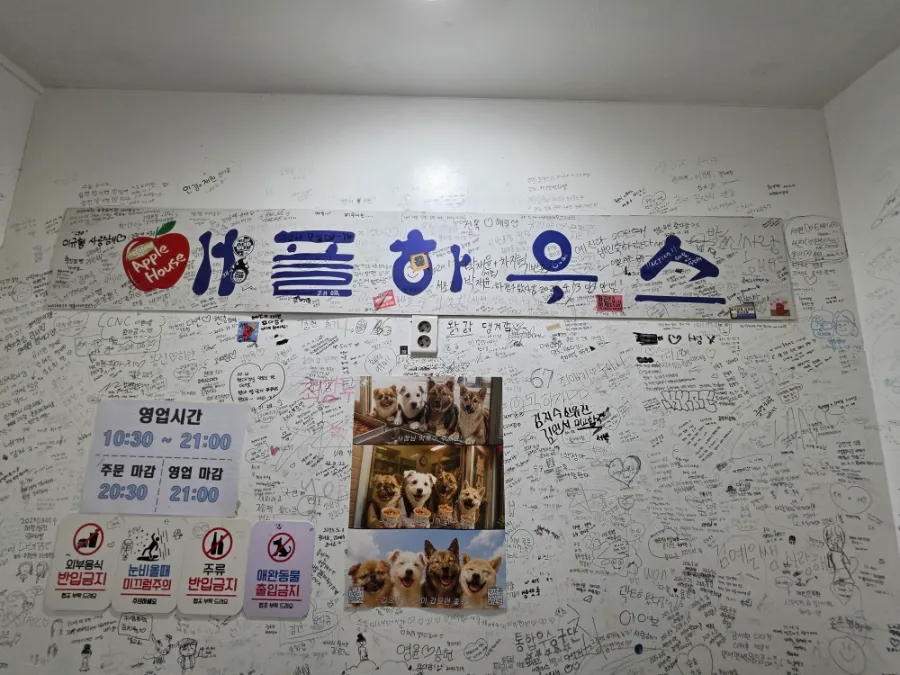
The walls are covered with handwritten messages and drawings left by customers over the years. It feels very different from the polished and carefully designed restaurants that are common in Seoul today.
Apple House is known to get busy. I deliberately arrived around 2 p.m. on a weekend to avoid the main lunch rush, but there were still plenty of customers.
Fortunately, the dining room is large, and I was able to find a table without waiting.
Quick Guide
Restaurant: Apple House
Korean name: 애플하우스
Address: 2F, 29 Dongjak-daero 27da-gil, Dongjak-gu, Seoul
Korean address: 서울 동작구 동작대로27다길 29 2층
Nearest subway: Isu Station, Lines 4 and 7
Best known for: Jeukseok tteokbokki and seasoned fried dumplings
📍 Google Maps: Apple House (애플하우스)
Opening hours and menu prices can change, so check the latest information before making a special trip.
What Is Jeukseok Tteokbokki(즉석떡볶이)?
If this is your first trip to Korea, the term jeukseok tteokbokki (즉석떡볶이) may be unfamiliar.
Regular tteokbokki is usually cooked before it reaches your table. You simply order it and eat it as it is served.
Jeukseok tteokbokki is different because you cook it directly at your table.
Tteok, fish cakes, vegetables and spicy red sauce are placed together in a pot on a portable burner. You can usually add extra ingredients such as ramen noodles or jjolmyeon, chewy Korean noodles.
As everything simmers together, the sauce becomes thicker and the noodles and rice cakes absorb more flavor.
Some Koreans also add rice to the remaining sauce at the end of the meal and make fried rice.
So while regular tteokbokki is often eaten as a quick Korean street-food snack, jeukseok tteokbokki is more of a shared meal cooked together at the table.
This style of tteokbokki is one of the foods Apple House is particularly known for.
Apple House Menu and How to Order
Ordering was simple.
There was a paper menu on the table. I marked the dishes I wanted, took the order sheet to the counter and paid.
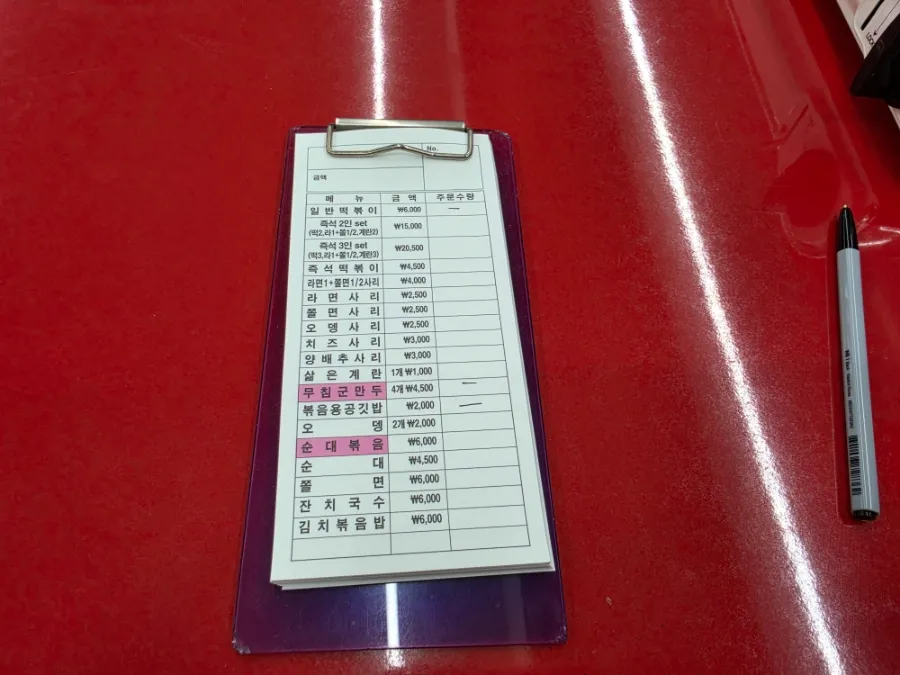
During my visit, I ordered regular tteokbokki for KRW 6,000 and seasoned fried dumplings for KRW 4,500.
Although Apple House is famous for jeukseok tteokbokki, I was eating alone. I also noticed that ordering the instant version by myself would involve adding noodles, so I decided to try the simpler regular tteokbokki this time.
Side Dishes Are Self-Service
There is a self-service station where customers can pick up yellow pickled radish, dishes and utensils.
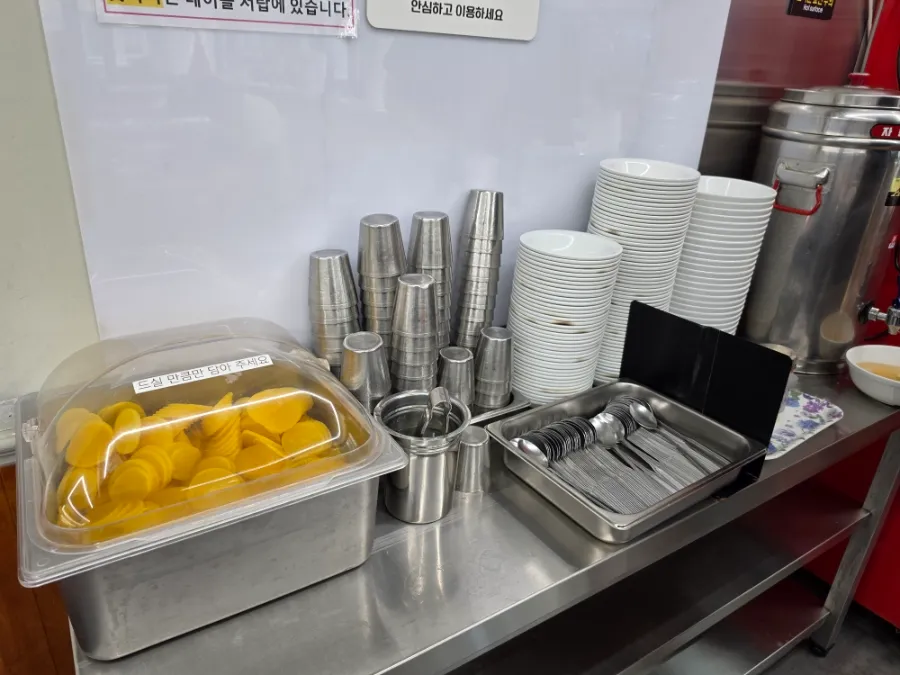
Soup was also available.
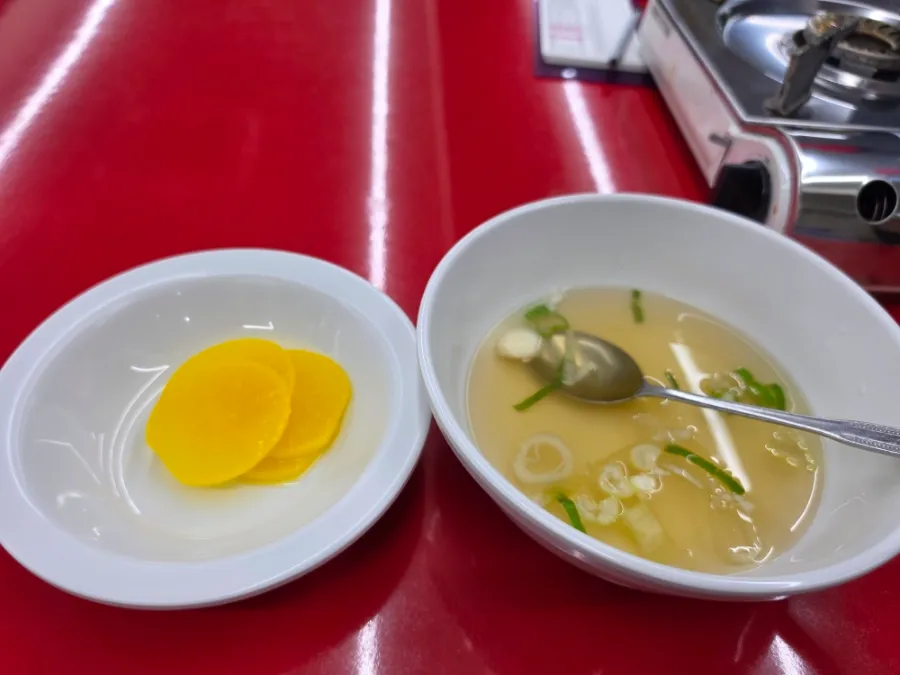
The warm soup went well with the spicy food, although it tasted slightly salty to me.
I considered ordering fish cakes as well, but the tteokbokki and dumplings were already enough for one person.
Tteokbokki and Apple House’s Famous Dumplings
Soon, two bright red dishes arrived at my table.
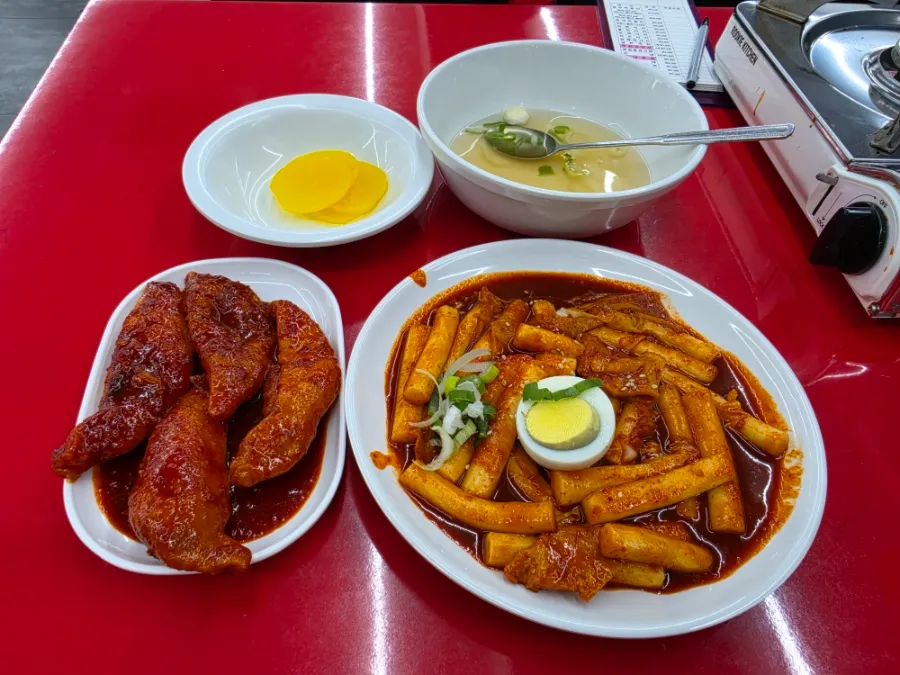
One of Apple House’s signature dishes is muchim gunmandu (무침군만두).
Gunmandu means fried dumplings, while muchim refers to food that has been mixed or coated with seasoning.
Instead of serving plain fried dumplings, Apple House coats them in a thick red sauce that is sweet, spicy and savory.
They are especially crispy.
Very crispy, in my case.
The Dumpling That Broke My Braces
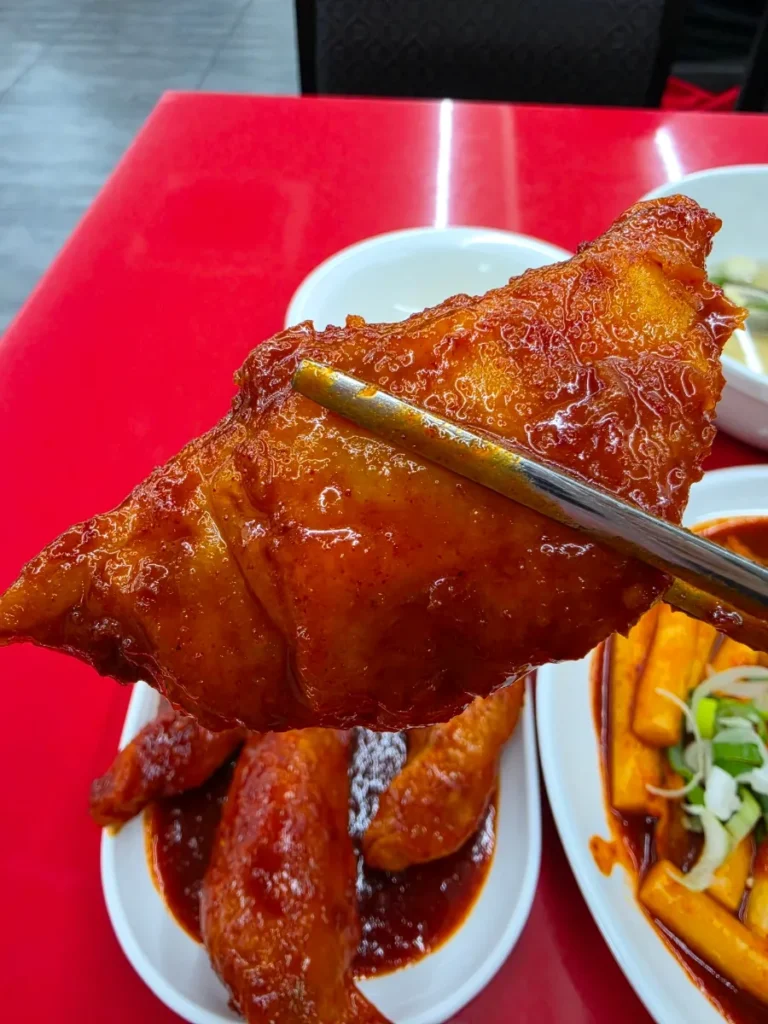
I am currently wearing braces, and my first bite came with an unexpected surprise.
The dumpling was so crisp and hard that one of my orthodontic brackets came off while I was eating it.
That made the rest of my lunch rather difficult.
Still, I liked the sauce. It had enough heat to make it appetizing but also had sweetness and plenty of savory flavor.
I could understand why many customers order these dumplings alongside the tteokbokki.
If you like extra-crispy dumplings, they are worth trying.
What Does Apple House Tteokbokki Taste Like?
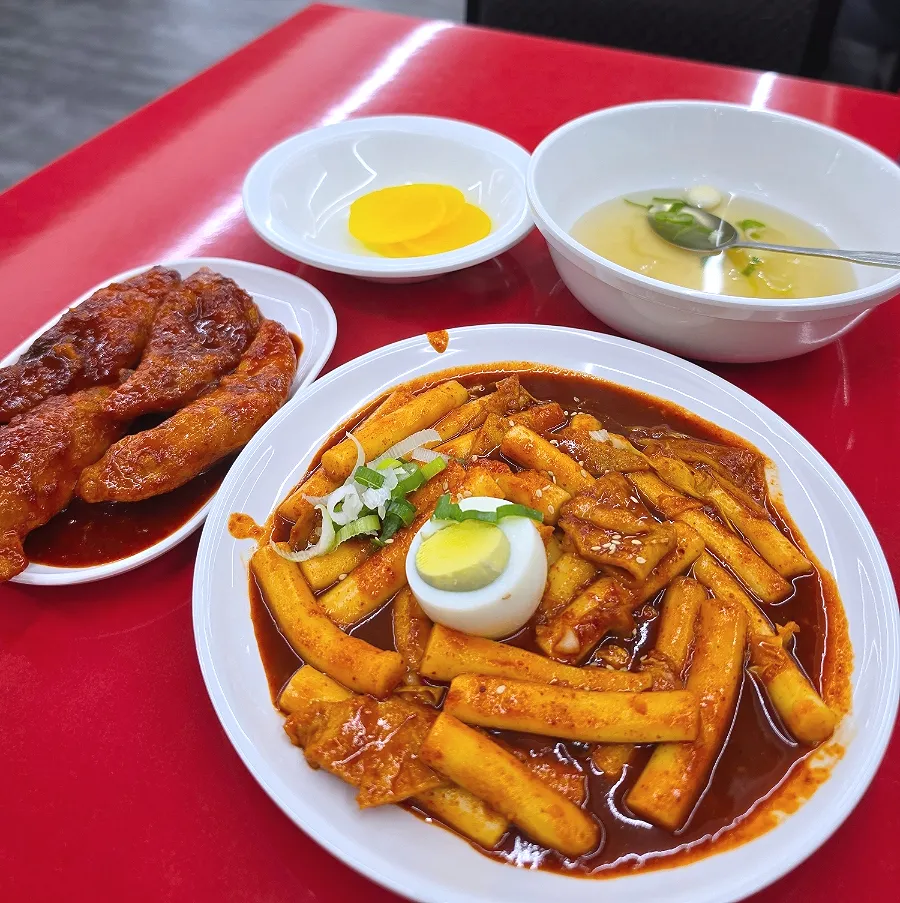
I enjoy looking for good tteokbokki restaurants, although I do not eat it all the time.
So I was curious to see how Apple House compared with some of my personal favorites in Seoul.
The regular tteokbokki came with wheat-based tteok, fish cakes, green onions and a boiled egg in a generous amount of red sauce.
The sauce was sweet, spicy and savory—the familiar flavor I associate with an old-school Korean bunsik restaurant.
Bunsik (분식) refers to inexpensive Korean comfort foods such as tteokbokki, kimbap, ramen, fried snacks and sundae.
What Is Miltteok (Wheat Tteok)?
Apple House uses miltteok (밀떡), or wheat-based tteok, in this dish.
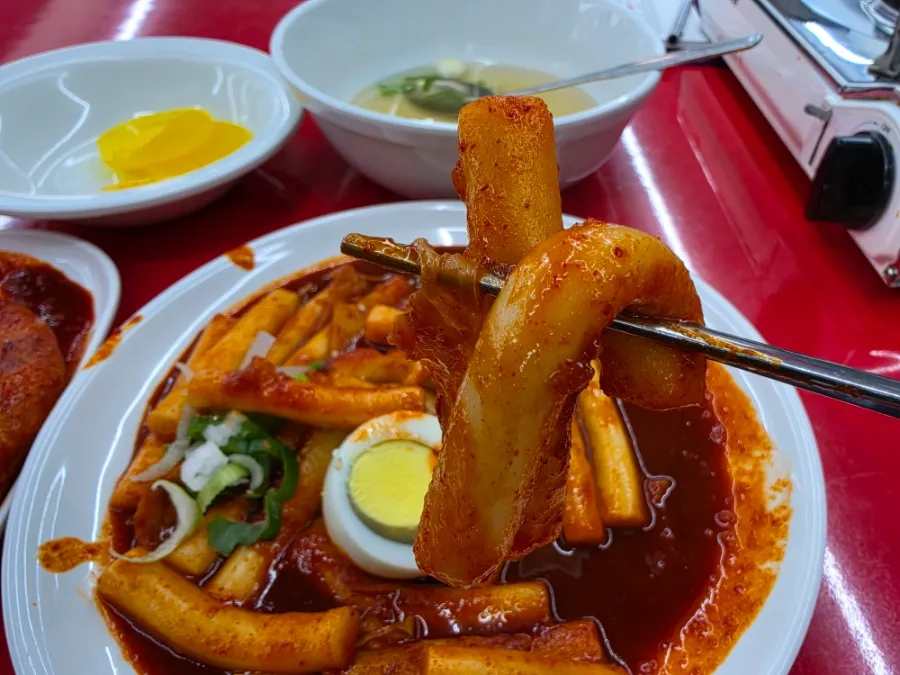
Wheat tteok tends to be softer and smoother than the chewier rice-based tteok many travelers may encounter elsewhere in Korea.
Unfortunately, my orthodontic bracket had already come off, so I was very conscious of how I was chewing. On that particular day, the smooth wheat cakes were difficult for me to eat comfortably.
I eventually left about half of my portion.
For that reason, I do not think this visit was a fair opportunity to judge Apple House solely on its regular tteokbokki.
What Should You Order at Apple House?
If I visited Apple House for the first time again, I would choose its signature dishes:
Jeukseok tteokbokki (즉석떡볶이) + muchim gunmandu (무침군만두)
Jeukseok tteokbokki gives international visitors a chance to experience a style of Korean food that is quite different from the ready-to-eat tteokbokki sold at street stalls.
You cook everything together at your table and can add ramen or jjolmyeon noodles, making it particularly suitable for two or more people.
Apple House is also known for sundae bokkeum (순대볶음), stir-fried Korean blood sausage. That is one dish I would like to try on my next visit.
Is Apple House Worth Visiting?
Yes, with one qualification: I would recommend it more as a local Korean food experience than as a restaurant you need to cross the entire city to visit.
Apple House is not a trendy restaurant created for Instagram. Its appeal is almost the opposite.
It is an old-school bunsik restaurant where people have been eating tteokbokki for decades.
For international travelers, it can also be a good place to discover that Korean tteokbokki is not limited to the paper cups of rice cakes sold at street-food stalls.
I would recommend Apple House if you want to try:
- Tteokbokki in Seoul
- Jeukseok tteokbokki
- Korean bunsik
- Muchim gunmandu
- Affordable local Korean food
- A restaurant outside Seoul’s main tourist districts
If possible, visit with another person. You will be able to order tjeukseok tteokbokki and share more side dishes.
Nearby Things to Do: Live Jazz in Sadang
If you are looking for things to do near Isu Station or Sadang, you can turn your tteokbokki meal into an evening out.
Entry55 Sadang is a live jazz venue in the nearby Sadang area. Klook currently offers tickets for its live jazz performances.
A simple evening itinerary could be:
Apple House tteokbokki → Sadang → Live jazz at Entry55
This is an easy way to combine a casual Korean meal with nightlife in southern Seoul rather than heading back to the more tourist-heavy areas of Hongdae or Myeongdong.
Book Entry55 Sadang Live Jazz Tickets on Klook
Affiliate disclosure: This section contains an affiliate link. If you book through this link, I may earn a small commission at no additional cost to you.
Final Thoughts
Tteokbokki may look like a simple dish, but there are many different ways to eat it in Korea.
Apple House is particularly interesting because it introduces visitors to jeukseok tteokbokki, where the ingredients are cooked together at your table.
My own lunch did not go quite as planned because of my broken orthodontic bracket. Still, the experience certainly made Apple House memorable.
Next time, instead of ordering the regular tteokbokki alone, I would bring someone with me and try the full jeukseok tteokbokki (즉석떡볶이) experience—plus the stir-fried sundae (순대볶음) I missed this time.
If you are staying around Isu or Sadang and want to experience a longtime local tteokbokki restaurant in Seoul, Apple House is worth adding to your food list.