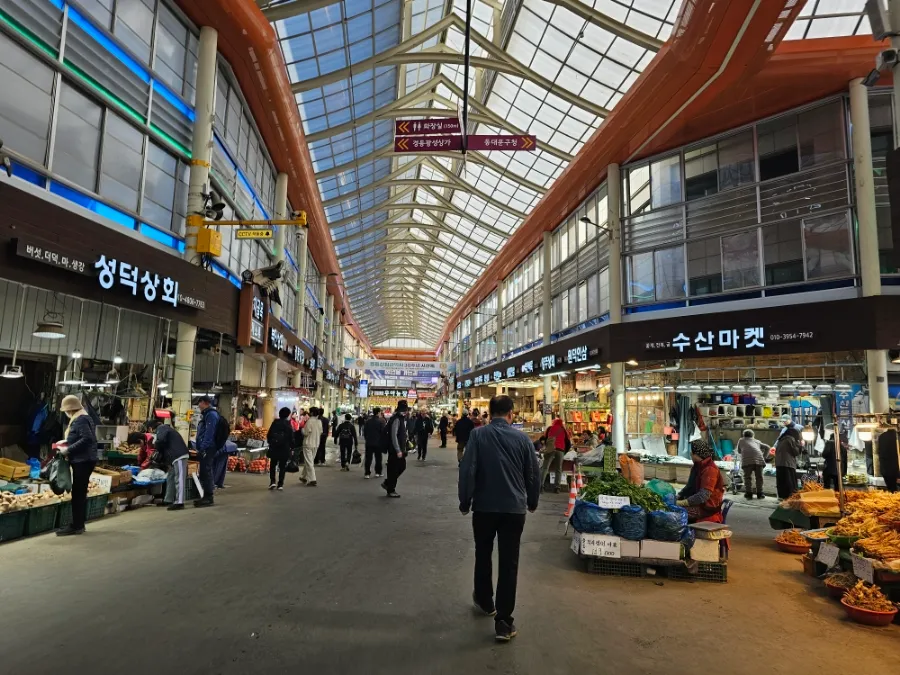
After spending two years traveling around Korea and Southeast Asia, I returned to Seoul and began exploring my own city again. During my first few weeks back, I visited five traditional markets in Seoul: Tongin Market, Namdaemun Market, Mangwon Market, Dongmyo Flea Market, and Gyeongdong Market.
Each market offered a different experience. Some were ideal for Korean street food, while others were better for sitting down and enjoying a traditional local meal. I tried oil-fried tteokbokki, a generous market lunch, giant stuffed chili peppers, spicy pollock stew, and handmade noodles.
If you are looking for the best traditional markets in Seoul for local Korean food, these five places are a good starting point.
Seoul Traditional Market Food at a Glance
| Market | Food I Tried | Best For |
|---|---|---|
| Tongin Market | Gireum tteokbokki | Exploring Seochon and trying a distinctive rice cake dish |
| Namdaemun Market | Chalbap, cold noodles, and soybean paste soup | A generous market meal |
| Mangwon Market | Giant fried chili peppers | Korean street food and makgeolli |
| Dongmyo | Dongtaetang at Gwangju Sikdang | Spicy soup and a traditional local atmosphere |
| Gyeongdong Market | Son-guksi at Andongjip | Mild regional Korean food and fans of Culinary Class Wars |
1. Tongin Market: Gireum Tteokbokki in Seochon
Tongin Market (통인시장) is a compact traditional market in Seochon, an old neighborhood located west of Gyeongbokgung Palace. It is best known for gireum tteokbokki (기름떡볶이), which means oil-fried rice cakes.
Unlike the bright red tteokbokki commonly sold in Seoul, this version is cooked in oil without a large amount of sauce. The rice cakes are slightly crisp outside and chewy inside. Visitors can usually choose between a spicy red pepper version and a milder soy sauce version.
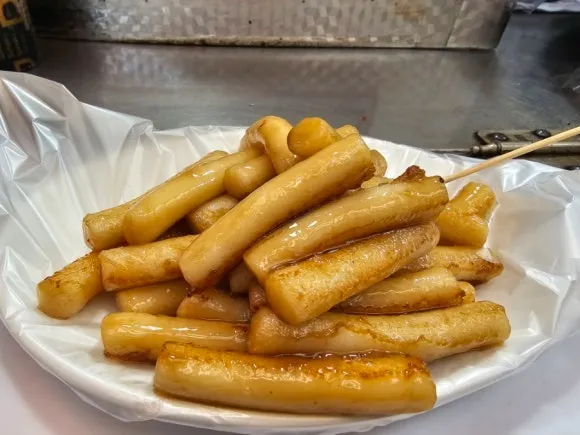
I tried both flavors at Wonjo Halmeoni Gireum Tteokbokki. The soy sauce rice cakes were savory and lightly seasoned, while the red version had more heat. The texture and cooking method made the dish different from the saucy tteokbokki I had eaten elsewhere.
Tongin Market is a convenient choice for travelers planning to visit Seochon, Gyeongbokgung Palace, or the nearby streets filled with cafés and small shops. The market is not very large, so it can be combined easily with other attractions.
- Address: 18 Jahamun-ro 15-gil, Jongno-gu, Seoul
- Map: View Tongin Market on Google Maps
Read my full Tongin Market gireum tteokbokki review
2. Namdaemun Market: A Generous Meal in Kalguksu Alley
Namdaemun Market (남대문시장) is one of the largest and busiest traditional markets in Seoul. It sells clothing, accessories, household goods, souvenirs, and food. Hidden inside its narrow lanes is Kalguksu Alley (칼국수골목), an enclosed food alley lined with small counters.
The alley is famous for kalguksu (칼국수), Korean knife-cut noodles. My meal included a bowl of kalguksu along with chalbap, cold noodles, and soybean paste soup.
Chalbap (찰밥) is sticky rice with a pleasantly chewy texture. It was served with vegetables and side dishes, making it feel like a simple home-style Korean meal. The cold noodles added a refreshing contrast, while the warm soybean paste soup brought everything together.
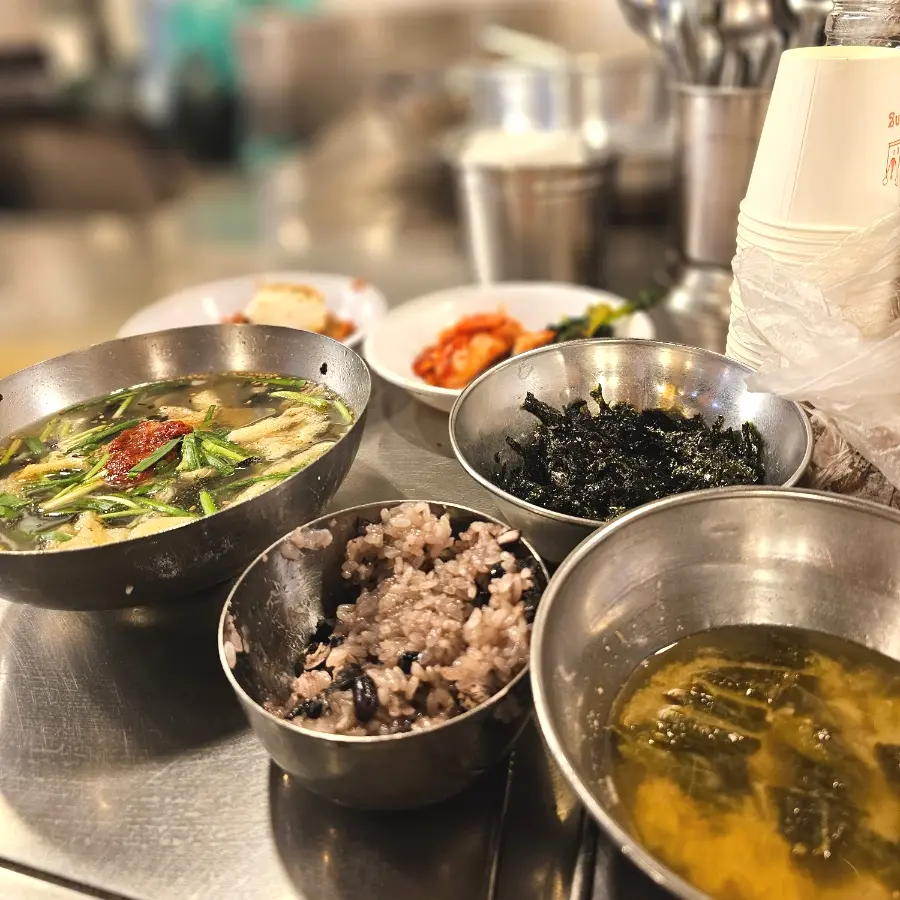
What stood out was the amount of food. Namdaemun Market is a good option for travelers who want a filling meal and enjoy eating in a busy, close-knit market environment. Seating is limited, and diners often sit shoulder to shoulder at narrow counters.
The experience may feel unfamiliar to first-time visitors, but that compact setting is part of the alley’s character.
- Address: 21 Namdaemunsijang 4-gil, Jung-gu, Seoul
- Map: View Namdaemun Market on Google Maps
Read my honest lunch review of Namdaemun Market’s Kalguksu Alley
3. Mangwon Market: Giant Fried Chili Peppers at Wooyirak
Mangwon Market (망원시장) has become one of Seoul’s most popular food markets. It is smaller and easier to explore than some of the city’s larger markets, but it offers a wide selection of fried food, rice cakes, chicken, noodles, and desserts.
My main reason for visiting was Wooyirak (우이락), a shop known for oversized fried chili peppers.
The green chili peppers are filled and covered in batter before being fried until crisp. They are much larger than the ordinary fried peppers sold at many Korean snack shops. The crisp coating, soft pepper, and savory filling create several textures in one bite.
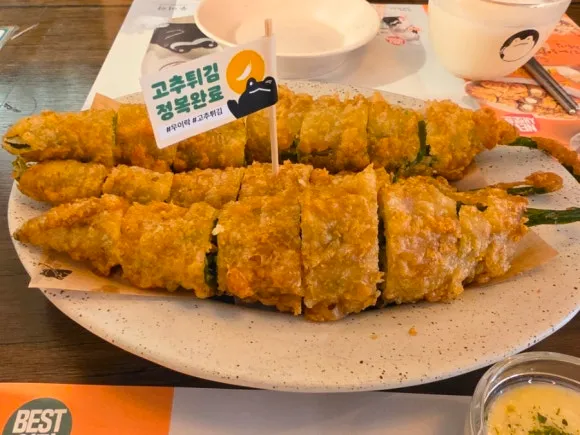
I ate the fried peppers with makgeolli (막걸리), a traditional Korean rice wine. Fried food and makgeolli are a familiar pairing in Korea because the lightly sweet, tangy drink helps balance the richness of the batter.
Mangwon Market is well suited to visitors who want to sample several Korean street foods rather than sit down for one large meal. The surrounding Mangwon neighborhood also has independent cafés and small local restaurants.
Popular shops can have long lines, so visiting outside the busiest lunch and weekend hours may make the experience more comfortable.
- Address: 14 Poeun-ro 8-gil, Mapo-gu, Seoul
- Map: View Mangwon Market on Google Maps
Read my Wooyirak fried chili pepper and makgeolli review
4. Dongmyo: Spicy Pollock Stew at Gwangju Sikdang
Dongmyo Flea Market (동묘구제시장) is best known for vintage clothing, secondhand goods, and piles of unexpected items. Before shopping, I stopped at Gwangju Sikdang (광주식당), a small local restaurant near the market.
The restaurant specializes in dongtaetang (동태탕), a spicy Korean stew made with frozen pollock.
My bowl contained large pieces of pollock, radish, tofu, shrimp, and clams. The seafood and radish gave the broth a clean and refreshing taste. It was spicy, but the heat felt sharp rather than heavy.
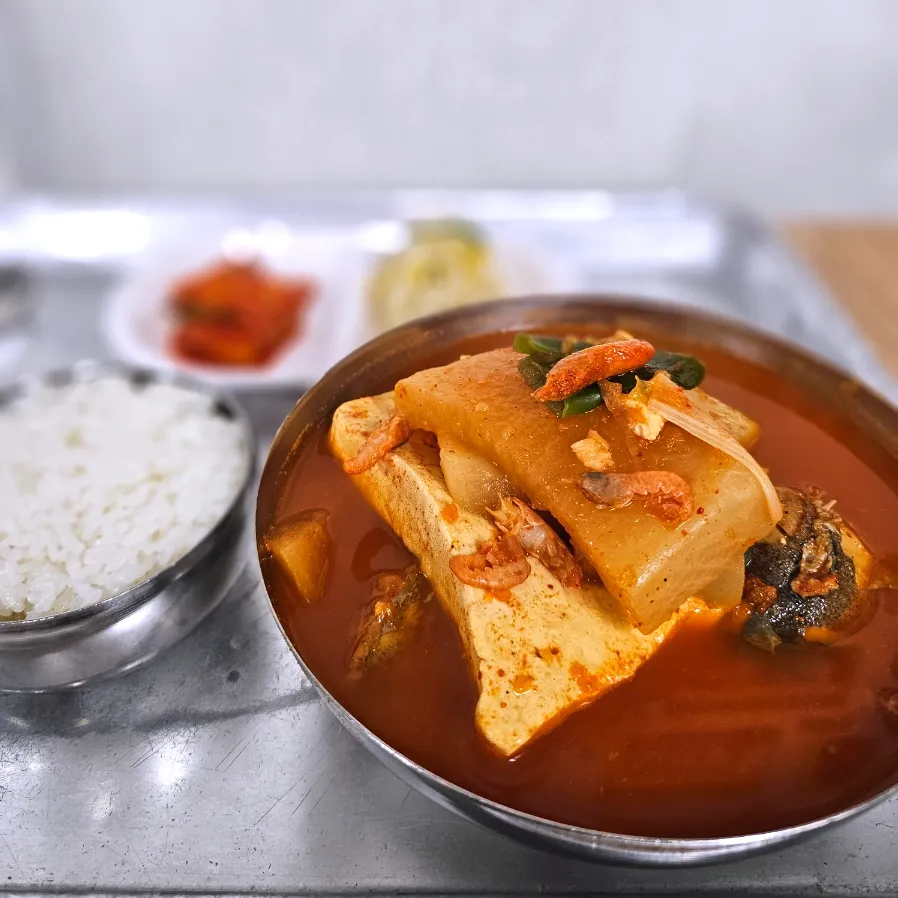
The thick pieces of radish had absorbed the broth, and the fish was meaty enough to pull apart with chopsticks. Rice and simple banchan (반찬), including kimchi and seasoned bean sprouts, completed the meal.
Gwangju Sikdang is not a polished restaurant created for tourists. Its appeal comes from the generous portions, quick service, communal seating, and traditional atmosphere. It is especially suitable for travelers who want a hot meal before exploring Dongmyo’s vintage market.
Travelers who are sensitive to spicy food should be careful because the broth has a noticeable kick.
- Address: 15 Jibong-ro 2-gil, Jongno-gu, Seoul
- Map: View Gwangju Sikdang on Google Maps
Read my full Gwangju Sikdang dongtaetang review
5. Gyeongdong Market: Handmade Noodles at Andongjip
Gyeongdong Market (경동시장) is a large traditional market in eastern Seoul. It is known for produce, dried goods, medicinal herbs, seafood, and local restaurants.
Inside the market, Andongjip (안동집) became widely known after chef Kim Mi-ryeong, also called “Imokase No. 1,” appeared on Netflix’s Culinary Class Wars (흑백요리사).
The restaurant serves son-guksi (손국시), handmade noodles associated with the Andong region. The mild broth was the highlight of my meal. It tasted clean and comforting, with leafy greens adding freshness.
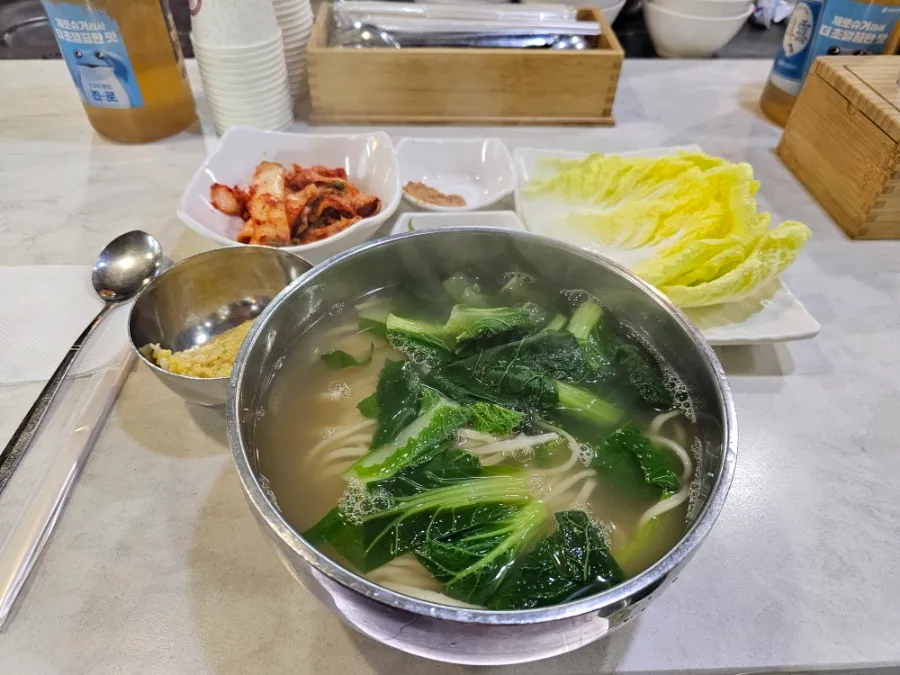
The noodles had a soft texture and a distinctive grain aroma. They are made with soybean powder, giving them a flavor that may be unfamiliar to travelers expecting ordinary wheat noodles. I enjoyed the broth but found the noodle aroma stronger than expected.
Andongjip also serves baechujeon (배추전), a lightly battered cabbage pancake; suyuk (수육), tender boiled pork; and bibimbap (비빔밥), rice mixed with vegetables and red pepper paste.
Of these dishes, the tender suyuk and lightly fried cabbage pancake were my favorites.
Finding the restaurant inside the large market can be confusing. Searching for the Gyeongdong Market Youth Mall and following the signs was easier than relying only on the restaurant address.
- Address: 3 Gosanja-ro 36-gil, Dongdaemun-gu, Seoul
- Map: View Andongjip on Google Maps
Read my full Andongjip Culinary Class Wars restaurant review
Which Seoul Market Should You Visit?
The best market depends on the type of experience you want.
Choose Tongin Market if you are exploring Seochon and want to try a rice cake dish that is difficult to find elsewhere.
Choose Namdaemun Market if you want a generous traditional market meal in one of Seoul’s most energetic shopping districts.
Choose Mangwon Market if you prefer Korean street food, fried snacks, and a neighborhood with cafés.
Choose Dongmyo if you want to combine vintage shopping with a spicy local meal.
Choose Gyeongdong Market if you are interested in regional Korean food or want to visit a restaurant featured on Netflix’s Culinary Class Wars.
Take a DMZ Day Trip from Seoul
After exploring Seoul’s traditional markets, you may want to take a day trip to the Korean Demilitarized Zone (DMZ). Located between South and North Korea, the DMZ offers a closer look at the history and continuing division of the Korean Peninsula.
Depending on the package selected, the tour may include a tunnel, an observatory overlooking North Korea, a meeting with a North Korean defector, or the Gamaksan Suspension Bridge. Tours depart from convenient meeting points in Seoul, including Hongdae, City Hall, and Myeongdong.
Itineraries and included attractions vary by package and date, so check the current details before booking.
View DMZ day tour options from Seoul on Klook
This post contains an affiliate link. If you make a booking through it, I may earn a small commission at no additional cost to you.
Tips for Visiting Traditional Markets in Seoul
- Bring some Korean won because smaller vendors may prefer cash.
- Visit with an appetite, but do not order too much at the first stall.
- Weekday mornings are often more comfortable than busy weekends.
- Return trays, bowls, and utensils to the location indicated by the vendor.
- Ask before photographing vendors or people working inside the market.
- Check current opening hours and closing days before visiting individual restaurants.
- Remember that many traditional markets are active workplaces for local residents.
Traditional markets offer more than inexpensive Korean food. They show how Seoul residents shop, eat, and interact in their everyday lives.
After returning to the city, visiting these markets helped me reconnect with Seoul through food. Each place had a different rhythm, from the quiet streets around Tongin Market to the busy counters of Namdaemun and the enormous halls of Gyeongdong Market.
If this is your first market food trip in Seoul, choose one destination that fits your itinerary and follow the detailed review for practical information. If you have more time, visiting several markets will reveal how varied Seoul market food can be.