Suwon is close enough to Seoul for a day trip, but I decided to stay overnight and explore the city at a slower pace.
During my 2-day trip to Suwon from Seoul, I ate a traditional Korean breakfast at Yuchi Hoegwan, relaxed at a local hot spring, walked around Suwon Hwaseong Fortress and Hwaseong Haenggung Palace, and tried more of the city’s famous food.
This guide focuses on two places I personally visited in the morning: Yuchi Hoegwan, a long-running haejangguk restaurant in Suwon, and Onsugol Hot Spring, a local Korean bathhouse using natural hot spring water.
They made this trip feel quite different from a typical Seoul-to-Suwon day tour.
Yuchi Hoegwan: Local Haejangguk in Suwon
I started the morning at Yuchi Hoegwan, a well-known haejangguk restaurant in Ingye-dong.
The restaurant was also featured on the Korean TV food program Jeon Hyun-moo Plan. I had watched the show often while traveling around Southeast Asia, so I was curious to visit one of the restaurants featured on it.
Yuchi Hoegwan dates back to 1976, and its Suwon main branch currently operates 24 hours a day. The restaurant also has its own parking area.
Yuchi Hoegwan Suwon Main Branch
67 Hyowon-ro 292beon-gil, Paldal-gu, Suwon, Gyeonggi-do
📍 View Yuchi Hoegwan on Google Maps
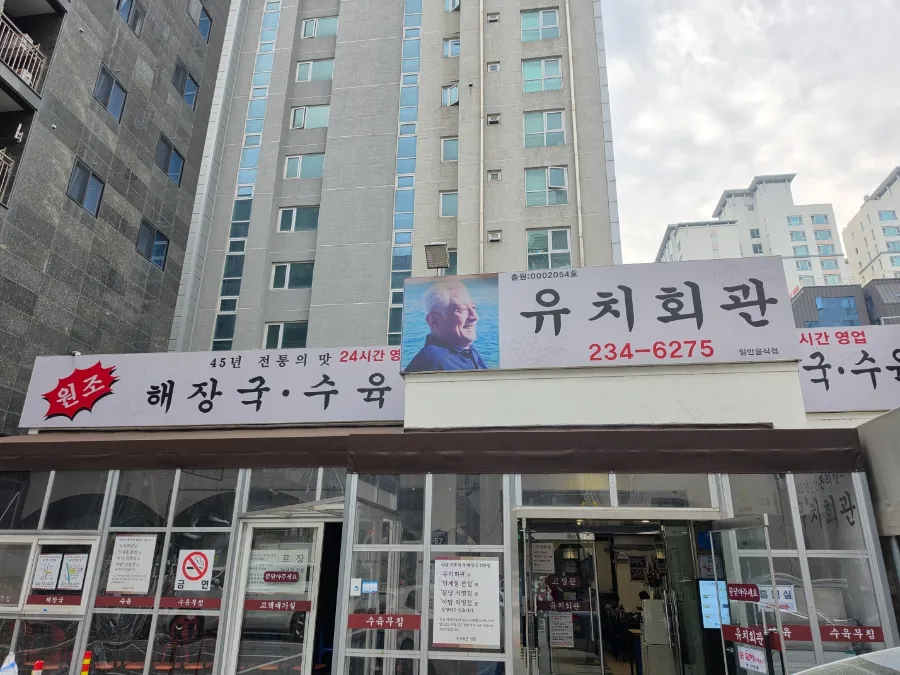
Yuchi Hoegwan has three directly operated locations: the Suwon Ingye-dong main branch and two branches in Bundang and Yatap.
For this trip, I visited the original Suwon location.
What Is Haejangguk?
Haejangguk literally means “hangover soup,” although Koreans do not eat it only after drinking.
It is also a common breakfast or lunch when you want something hot and filling.
Yuchi Hoegwan’s version contains beef, greens and mushrooms in a hot stone bowl. One unusual feature is that seonji, Korean blood curd, is served separately rather than being mixed into the soup.
That makes the dish easier to try if you are unfamiliar with seonji—you can simply leave it out. The restaurant itself explains that it serves the blood curd separately because its aroma and texture can be divisive.
Yuchi Hoegwan Menu and Price
When I visited, a bowl of haejangguk cost KRW 12,000.
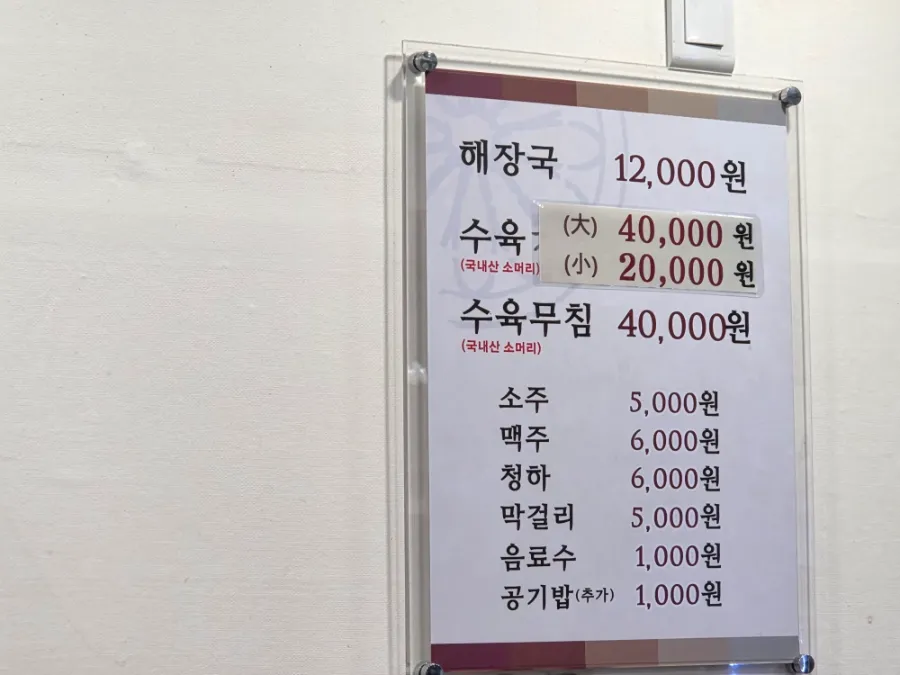
The menu board during my visit showed:
- Haejangguk – KRW 12,000
- Suyuk, large – KRW 40,000
- Suyuk, small – KRW 20,000
- Seasoned suyuk – KRW 40,000
- Soju – KRW 5,000
- Beer – KRW 6,000
The current listed haejangguk price is still KRW 12,000, although prices can change.
Even though I arrived in the morning, the restaurant already had a mix of customers. Some appeared to be having breakfast, while others looked as though they were finishing a very late night out.
That is one of the interesting things about a 24-hour Korean soup restaurant: breakfast time does not always feel like breakfast time.
My Haejangguk Breakfast
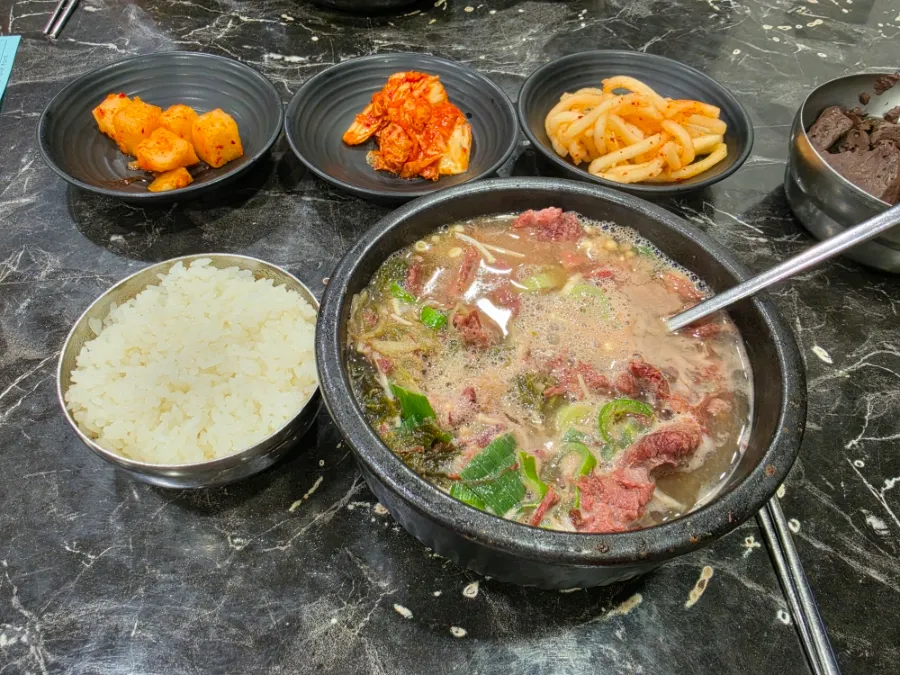
The meal came with rice and three simple Korean side dishes:
- kkakdugi, cubed radish kimchi
- seasoned shredded radish
- napa cabbage kimchi
I liked the kkakdugi and seasoned radish most.
The cabbage kimchi tasted fairly ordinary to me, so I only tried a little. Taste is subjective, of course, and the soup was clearly the main attraction here.
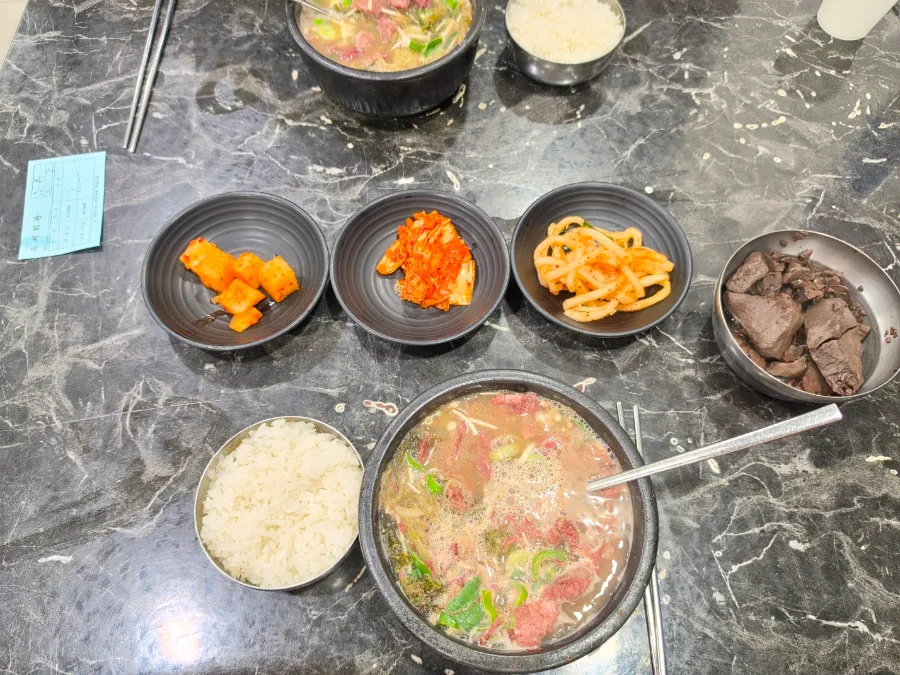
A Very Generous Amount of Beef
The part that surprised me most was the amount of meat.
The stone bowl was packed with beef and greens, making it a very filling breakfast.
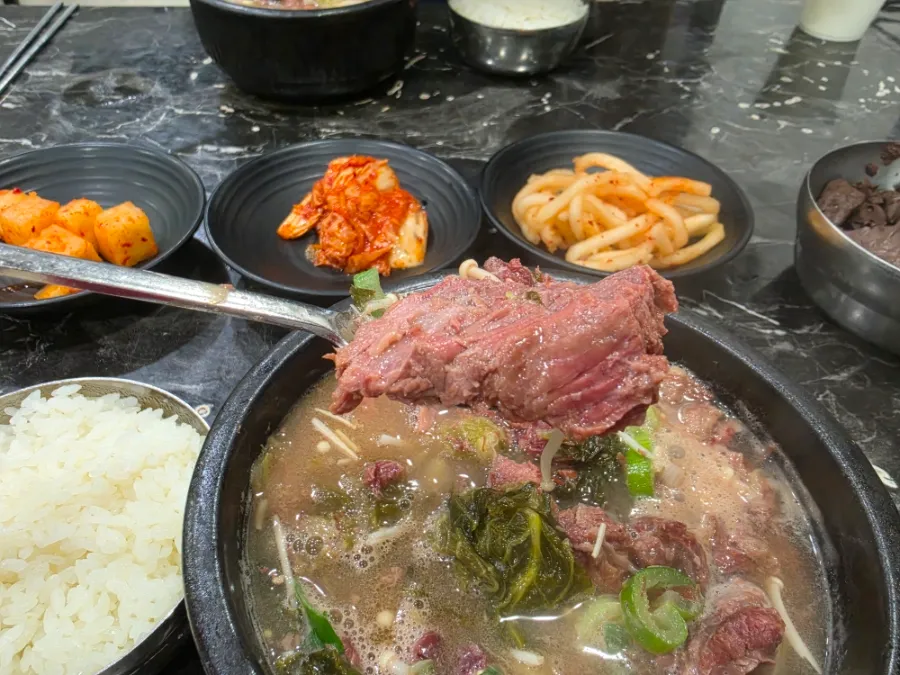
For my own taste, however, the aroma of the meat felt stronger than I expected that morning.
I usually do not consider myself a picky eater, but I finished only about half of the bowl. My travel companion had no problem finishing the meal, so this may simply come down to personal preference or how I was feeling that day.
That is worth mentioning for international visitors because traditional Korean soups made with beef, offal or blood curd can taste quite different from the lighter Korean dishes many travelers try first.
What Is Seonji?
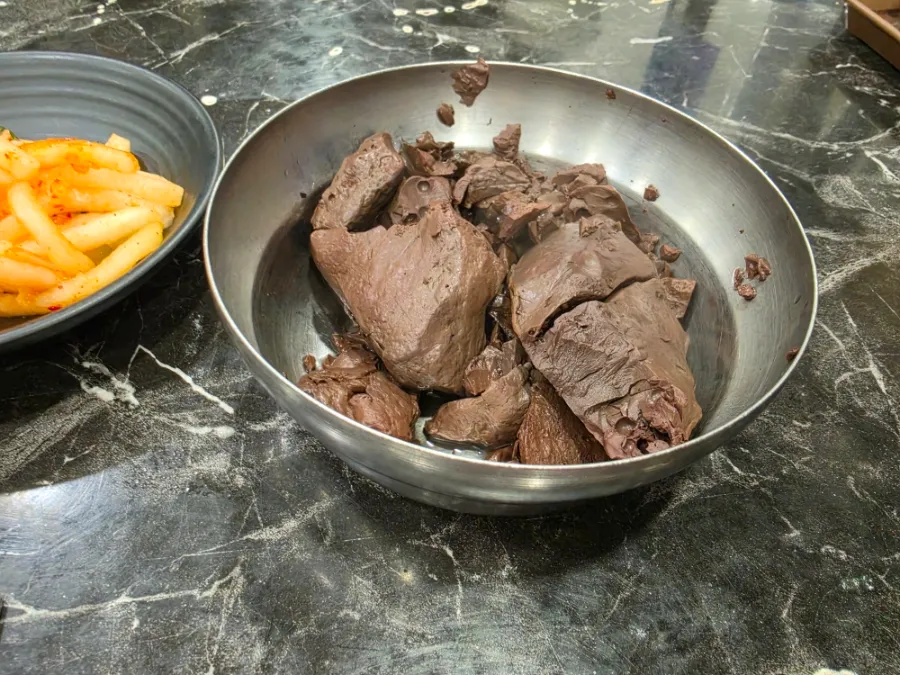
Seonji is cooked animal blood that has been set into a soft curd.
It is a traditional ingredient in some Korean soups and has a distinctive texture and flavor.
At Yuchi Hoegwan, it came in a separate bowl, so I did not have to add it to my soup. My companion ate it, but I left mine untouched.
If you are interested in traditional Korean food, trying seonji can be an interesting local experience. If it does not appeal to you, you can still enjoy the haejangguk without adding it.
Onsugol Hot Spring: A Local Korean Bathhouse in Suwon
After breakfast, I headed to Onsugol Hot Spring, one of the places I was most curious about on this Suwon trip.
I often include a hot spring when I travel within Korea, so finding one in the middle of Suwon was a pleasant surprise.
Onsugol Hot Spring
232 Dongsuwon-ro, Gwonseon-gu, Suwon, Gyeonggi-do
📍 View Onsugol Hot Spring on Google Maps

Onsugol is not a large resort spa. It feels much more like a local Korean public bathhouse, which was exactly what made the experience interesting to me.
Onsugol Hot Spring Price and Parking
When I visited, adult admission was KRW 12,000.
The sign also stated that parking was free for up to five hours during the period of my visit.
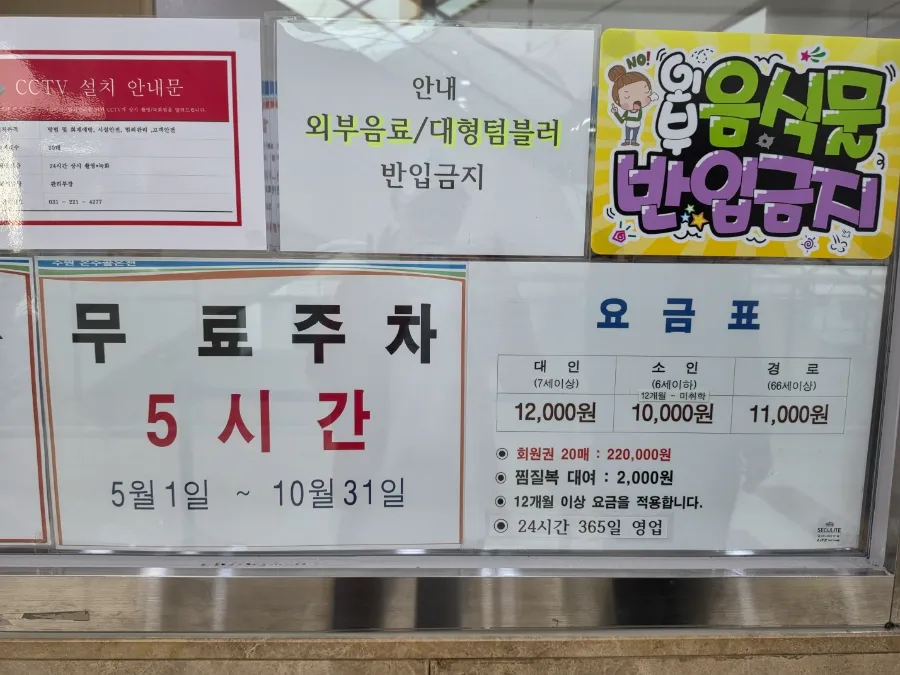
Prices shown during my visit were:
- Adult – KRW 12,000
- Child – KRW 10,000
- Senior – KRW 11,000
Because admission and parking conditions can change, check the latest information before visiting.
I had visited Osaek Hot Spring in Yangyang just the week before, so this time I wanted somewhere that did not require a long trip into the mountains.
Onsugol gave me that option right inside the city.
My Experience at Onsugol Hot Spring
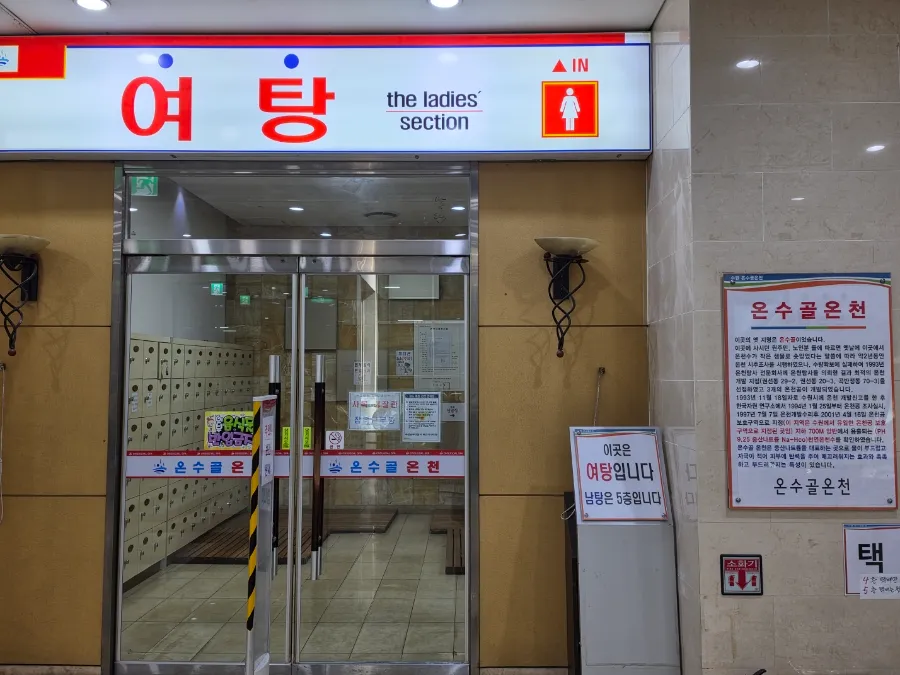
I visited on a weekend, but the bathing area was spacious enough that I did not feel particularly crowded.
There were several different baths, including the gold bath, jade bath, health bath and an outdoor bath.
I moved between them slowly and spent some time relaxing after walking and traveling.
Since cameras are not appropriate inside Korean public baths, I did not take photographs beyond the public entrance area.
Korean Bathhouse Etiquette for First-Time Visitors
If this is your first Korean bathhouse experience, there are a few things to know.
Men and women use separate bathing areas, and swimsuits are generally not worn inside the baths.
You wash your body before entering the communal pools, and shower areas are provided inside.
For some international travelers, this can initially feel unfamiliar. But if you are comfortable with the bathing culture, a neighborhood bathhouse can be one of the more everyday Korean experiences you can try outside the usual tourist attractions.
During my visit, a Korean-style body scrub, called sesin, cost KRW 30,000.
Sesin is an exfoliating scrub performed by a bath attendant and is a familiar part of Korean bathhouse culture.
Is Suwon Worth Staying Overnight?
For many international visitors, Suwon is a day trip from Seoul because Suwon Hwaseong Fortress and Hwaseong Haenggung Palace can be visited in one day.
I enjoyed staying overnight.
My trip included:
Yuchi Hoegwan breakfast → Onsugol Hot Spring → Suwon Hwaseong and Hwaseong Haenggung → local Suwon food
Staying for two days meant I did not need to rush directly from one major attraction to another.
Instead, I could add experiences such as a local breakfast and a Korean bathhouse, which made the trip feel more like exploring the city than simply checking off attractions.
Who Would Enjoy This Suwon 2-Day Trip?
I would especially consider this itinerary if you:
- want an easy overnight trip from Seoul
- are looking for things to do in Suwon beyond Hwaseong Fortress
- enjoy trying traditional Korean food
- want to experience a local Korean bathhouse
- prefer slower travel and everyday local places
- are curious about Korean food that may be less familiar to international visitors
Yuchi Hoegwan was not completely to my taste because of the stronger aroma I noticed that morning, but the generous serving and local atmosphere made the visit memorable.
Onsugol Hot Spring was the part I enjoyed more. It was not a glamorous destination spa, but that was part of its appeal: it felt like a place used in everyday life rather than a tourist attraction designed for visitors.
For me, that combination of local Korean food, hot spring culture and Suwon’s historic attractions made staying overnight worthwhile.
More Korea Local Food & Culture Guides
Continue exploring Korea with these firsthand guides: