If you are looking for a contemporary art exhibition in Seoul, the Do Ho Suh exhibition at MMCA Seoul offers an impressive look at the artist’s ideas about home, memory, migration, and identity.
After traveling around Southeast Asia for two years, I have been spending more time exploring museums, exhibitions, and cultural attractions in Seoul. When my sister came to visit, we planned a two-day Seoul museum itinerary together.
On the first day, we visited Daeo Bookstore and the National Museum of Modern and Contemporary Art. On the second day, we continued to the Nam-Seoul Museum of Art and Seoul Book Bogo.
The Do Ho Suh exhibition at MMCA Seoul was the busiest exhibition on our itinerary, so I will begin with this one.
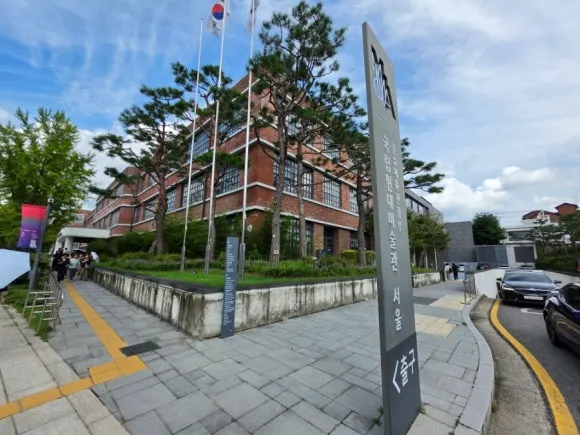
MMCA Seoul Location and Visitor Information
The National Museum of Modern and Contemporary Art, Seoul—usually called MMCA Seoul—is one of the main contemporary art museums in the city.
Its location makes it easy to combine a museum visit with Gyeongbokgung Palace, Bukchon Hanok Village, Samcheong-dong, or Insadong.
- Museum: National Museum of Modern and Contemporary Art, Seoul
- Korean name: 국립현대미술관 서울
- Address: 30 Samcheong-ro, Jongno-gu, Seoul
- Korean address: 서울특별시 종로구 삼청로 30
- Area: Samcheong-dong
- Nearest subway station: Anguk Station, Line 3
- Exhibition: 《Do Ho Suh》
- Exhibition period: August 27, 2026–February 9, 2027
- Exhibition halls: Galleries 3, 4, and 5 on B1 and MMCA Studio on the second floor
- Admission at the time of my visit: KRW 8,000
📍 View MMCA Seoul on Google Maps
Opening hours, admission fees, free-entry periods, and reservation policies may change. Check the official MMCA exhibition page before visiting.
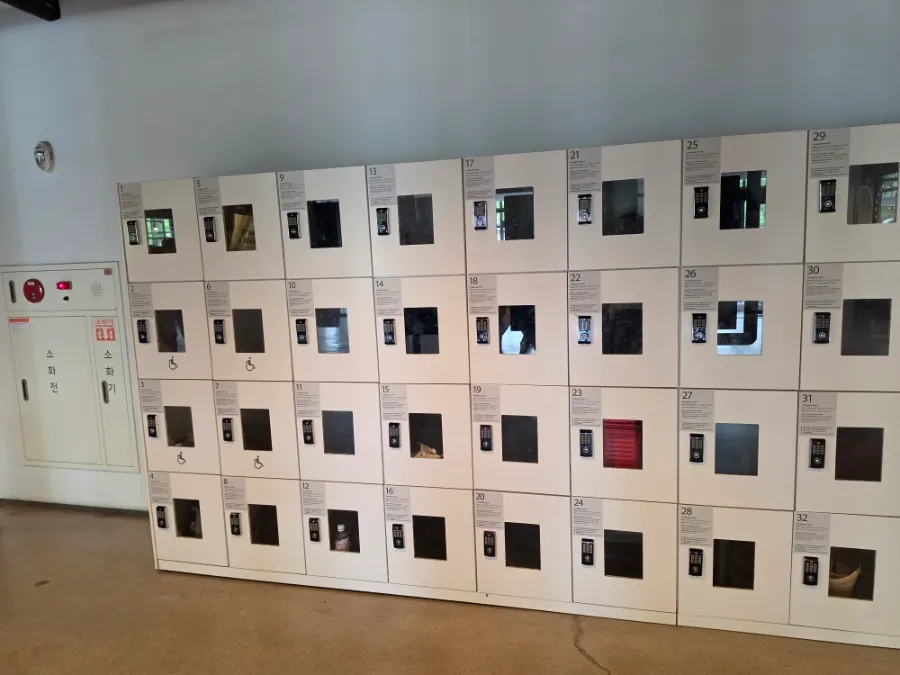
Free Lockers at MMCA Seoul
Before entering the exhibition, I left my bag in one of the museum’s free lockers. Lockers were available on the first floor, and I was told that there were additional lockers downstairs.
Remember the location of your locker and the password you set. The museum is large, so it can be easy to forget which floor you used after moving between several exhibition halls.
Do You Need a Reservation for the Do Ho Suh Exhibition?
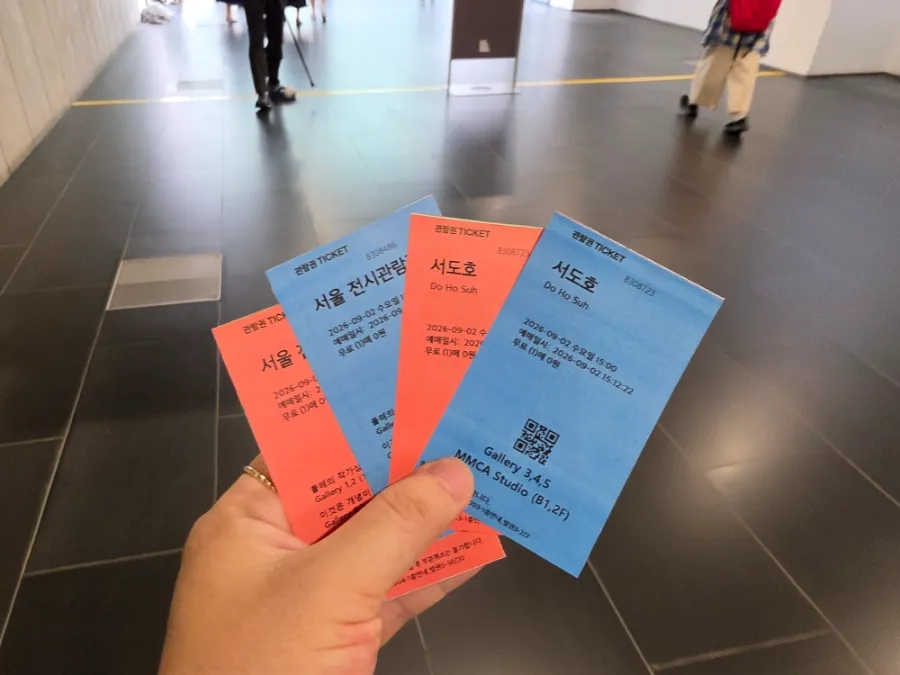
Online reservations for the Do Ho Suh exhibition had already sold out when I visited, so I purchased a ticket at the museum.
My visit coincided with a free-admission period connected to the Korea Art Festival, and I waited for approximately one hour before entering.
The exhibition was extremely popular. If you are planning to visit, check the online reservation availability in advance rather than relying on same-day admission.
At the time of my visit, reservations for the following week were released on Monday evening. Because ticketing rules can change, confirm the current schedule through the MMCA website.
Who Is Do Ho Suh?
Do Ho Suh, also written in Korean name order as Suh Do Ho, was born in Seoul in 1962. He studied traditional Korean painting at Seoul National University before continuing his studies and artistic career in the United States.
Home, memory, movement, and identity are recurring themes in his work. His experience of living in different countries and cities led him to explore questions such as what makes a place feel like home and how a space remains in our memory after we leave it.
He is especially known for recreating rooms, corridors, staircases, doors, and architectural details from places where he once lived. Many of these structures are made from thin, translucent fabric.
Rather than making simple replicas of buildings, he turns personal memories and traces of everyday life into visible forms.
Drawings, Repetition, and Memory
Some of the first works that caught my attention were Do Ho Suh’s drawings.
The repeated lines running through buildings and human figures reminded me of a mantra. I wondered whether this repetition was not only evidence of an intense working process but also a form of meditation for the artist.
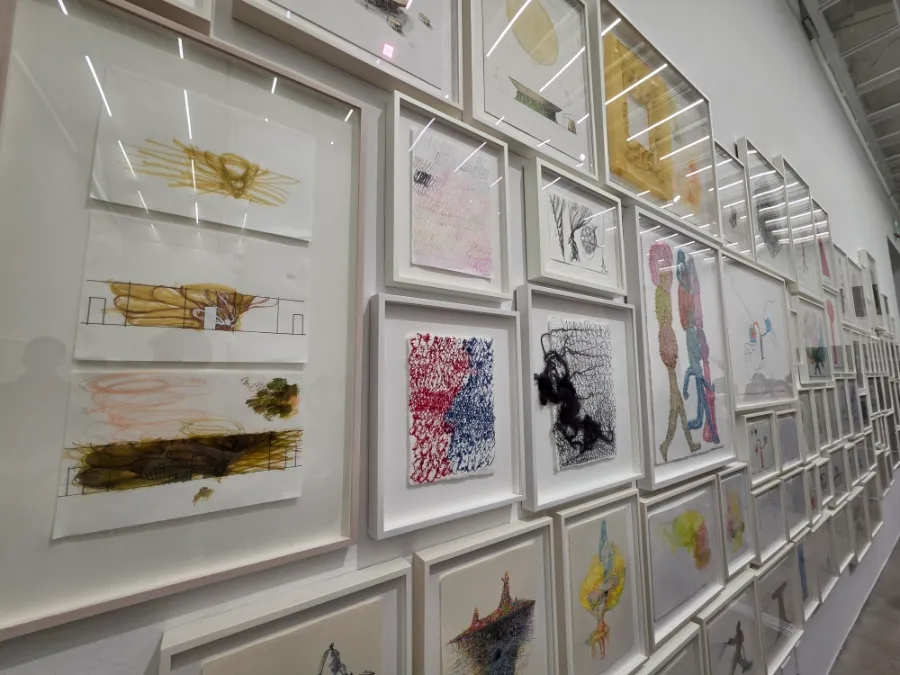
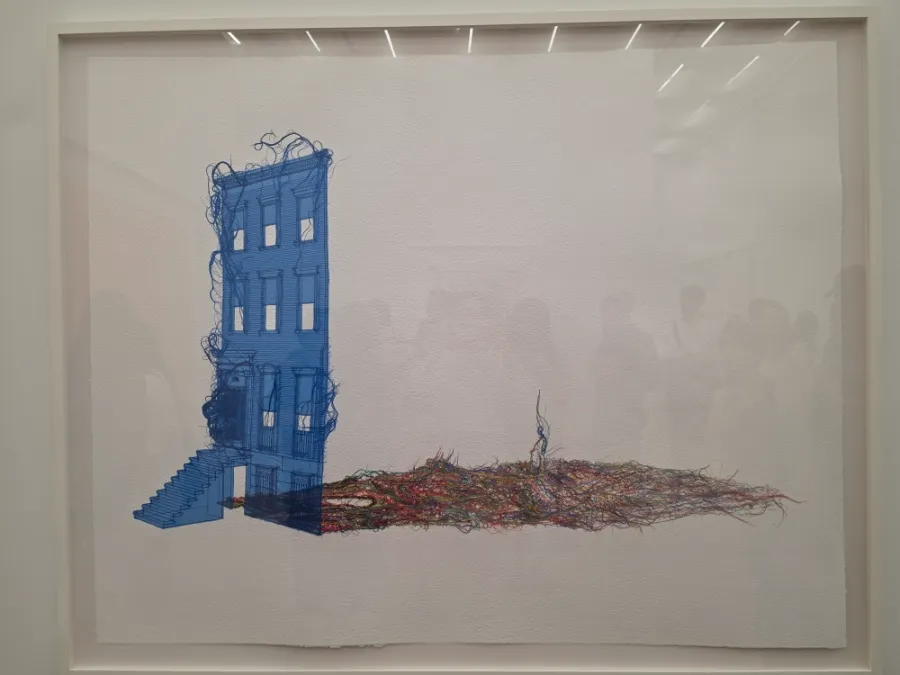
Although these are contemporary artworks, some of the delicate lines and repeated patterns reminded me of traditional East Asian painting. In a few works, I also noticed details that felt similar to the decorative structures of Korean temples.
These connections made me stop and look more closely.
A Building Recreated Through Rubbing
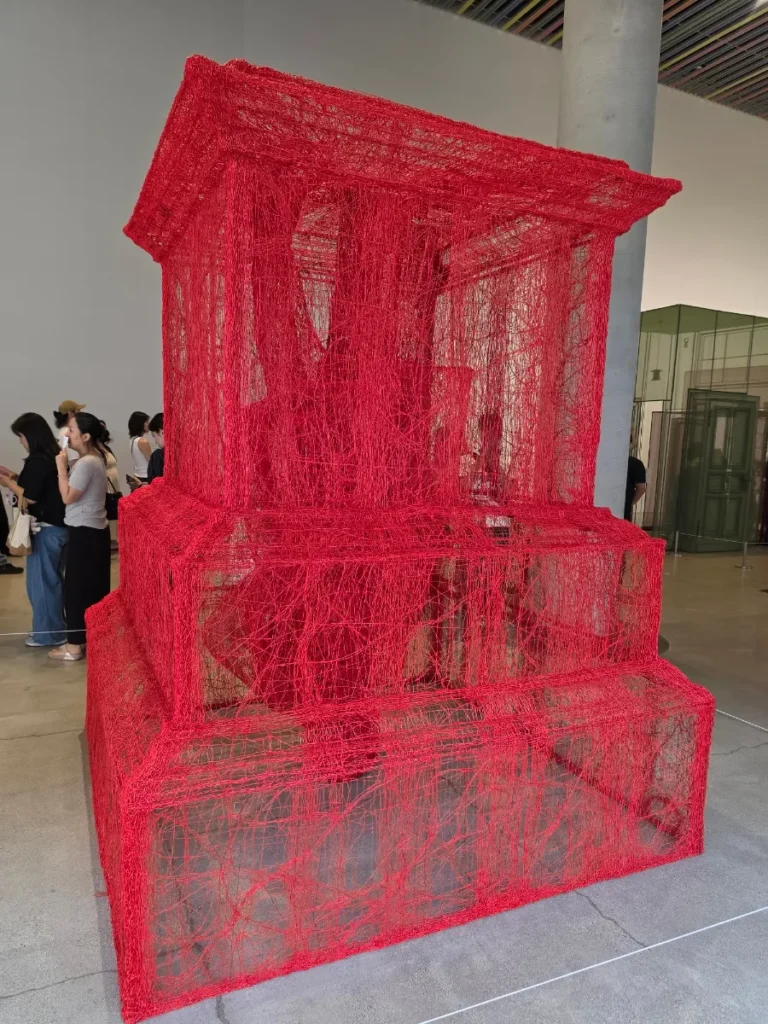
One of the most surprising installations in the exhibition was a building reproduced through a rubbing process.
The surface and architectural details were carefully transferred, turning the physical traces of the building into an artwork. From a distance, it looked like a solid structure, but a closer view revealed the unusual texture and construction.
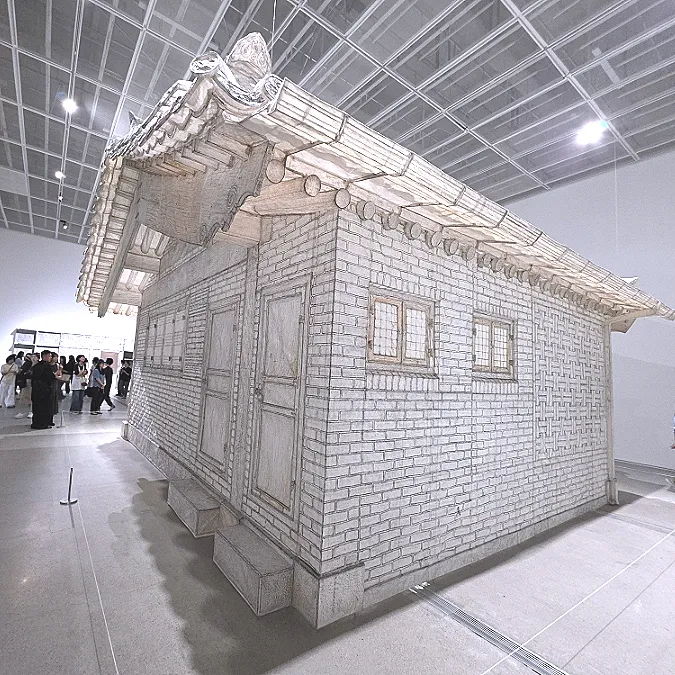
A video in the exhibition explained how the work was made. I recommend watching it because the completed installation alone does not fully reveal the amount of time and labor involved in its production.
Everyday Objects Made from Fabric
A ticket QR code was required when moving into another section of the exhibition, so keep your ticket until you have finished visiting every gallery.
This section contained objects connected to houses, doors, and everyday life. Do Ho Suh recreated familiar details such as doorknobs and light switches using thin, translucent polyester fabric.
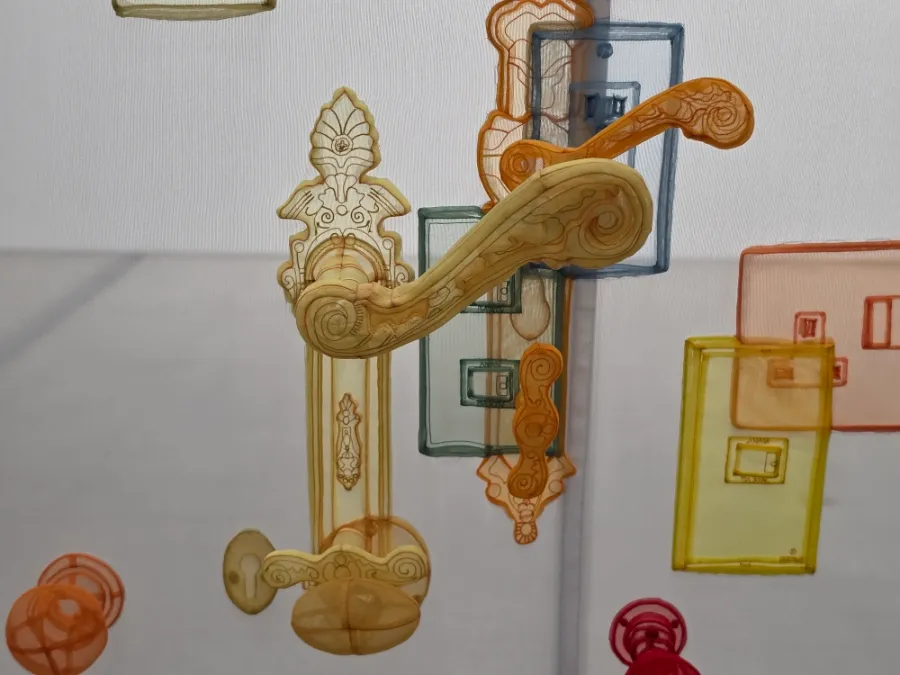
Solid objects become light and almost transparent. This transformation encourages visitors to think less about the physical object and more about the memories and human traces connected to it.
Personal Clothing as a Record of Time
The exhibition also included clothes that the artist had worn at different stages of his life, including school uniforms and military uniforms.
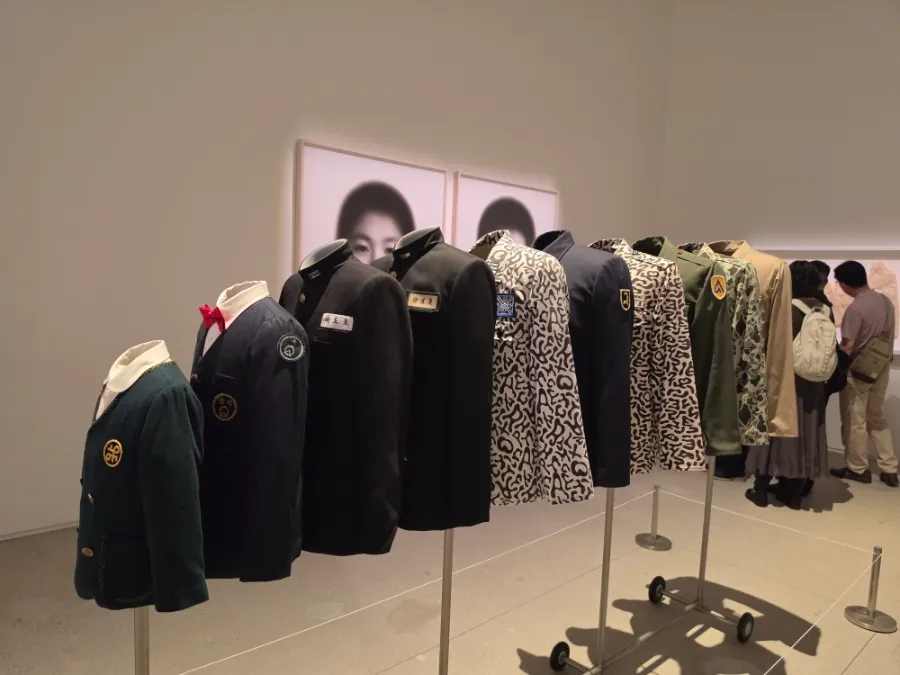
I was surprised that these items had been preserved for so long. They showed how one person’s possessions can eventually become a record of a larger period, society, and culture.
The display made me think about the importance of collecting and preserving ordinary objects from our lives.
Floor: Look Beneath the Glass
As I was leaving one gallery, I noticed several visitors crouching down and taking pictures of what initially looked like an ordinary glass floor.
I zoomed in with my camera and finally understood what they were looking at.
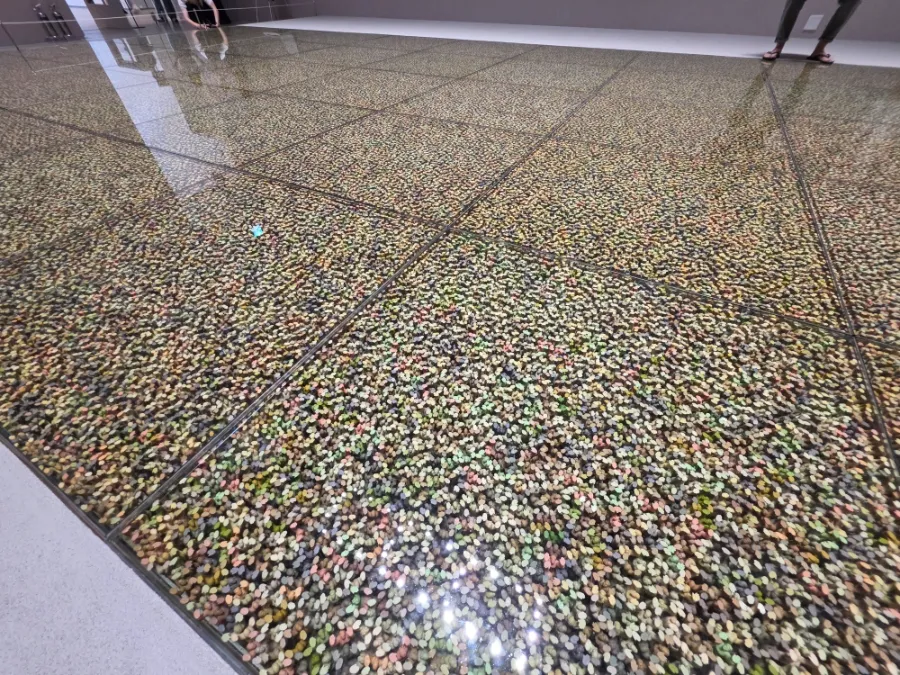
In 〈Floor〉, numerous small human figures hold up a transparent glass surface with their raised arms.
From a distance, they look like tiny colored dots. When you look closely, however, you can see individual people supporting the structure together.
Each figure is small, but collectively they carry something much larger than themselves. The work made me think about the people whose labor and presence quietly support the societies in which we live.
Do Ho Suh’s Fabric Architecture
Near the end of the exhibition, I encountered the fabric architecture for which Do Ho Suh is best known.
Doors, windows, walls, and corridors were recreated in thin, translucent material. Because the structures were transparent, several spaces appeared to overlap.
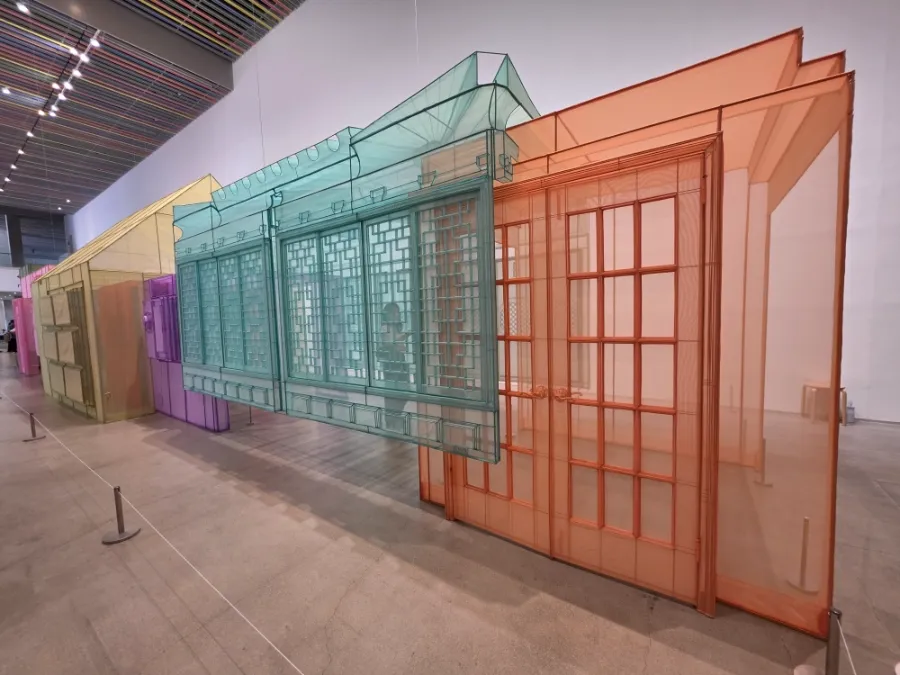
This large installation brought together the central themes of the exhibition: home, memory, movement, and identity.
The architecture looked solid from a distance but became delicate and almost weightless when viewed up close. It felt like walking through a memory of a place rather than the place itself.
Was the Do Ho Suh Exhibition Worth Visiting?
After waiting for an hour, I wished the galleries had been quieter. There were so many visitors that it was sometimes difficult to concentrate on the artworks.
However, the exhibition was still worth seeing because it brought together drawings, personal objects, architectural works, and large-scale installations in one place.
Many pieces looked completely different from a distance and up close. Take time to examine the materials and small details instead of moving quickly through the galleries.
This exhibition is particularly suitable for visitors interested in contemporary art, architecture, migration, personal memory, and the meaning of home.
If you are searching for a current Seoul art exhibition or things to do near Gyeongbokgung Palace, the Do Ho Suh exhibition at MMCA Seoul can be combined with a walk through Samcheong-dong, Bukchon, or Insadong.
Because it is a popular exhibition, check the MMCA reservation page before making a special trip.
Try a Traditional Korean Gayageum Class in Seoul
After exploring contemporary Korean art, you may also want to experience a traditional form of Korean culture.
The gayageum is a traditional Korean string instrument played by plucking its strings. This Seoul experience includes an introductory gayageum lesson and the opportunity to wear hanbok.
It may appeal to visitors who want a hands-on cultural activity rather than only visiting museums and historical sites. I did not personally participate in this class, so check the current schedule, language options, duration, location, and cancellation policy on the booking page.
Book a Seoul Gayageum Experience with Hanbok
Affiliate disclosure: This section contains an affiliate link. If you book through it, I may earn a small commission at no additional cost to you.
More Seoul Culture Guides
Continue exploring Seoul with these firsthand guides: