If you are looking for a quiet Korean art museum in Seoul, Horim Museum Sinsa offers a peaceful alternative to the city’s larger and busier museums.
Two weeks before this visit, I went to the Horim Museum Sillim Main Building. I had lived in Sillim for more than ten years without realizing that such an impressive private collection was so close to my home.
The quality of the collection surprised me, but so did the lack of visitors. After that experience, I became curious about the museum’s second location in Sinsa, Gangnam.
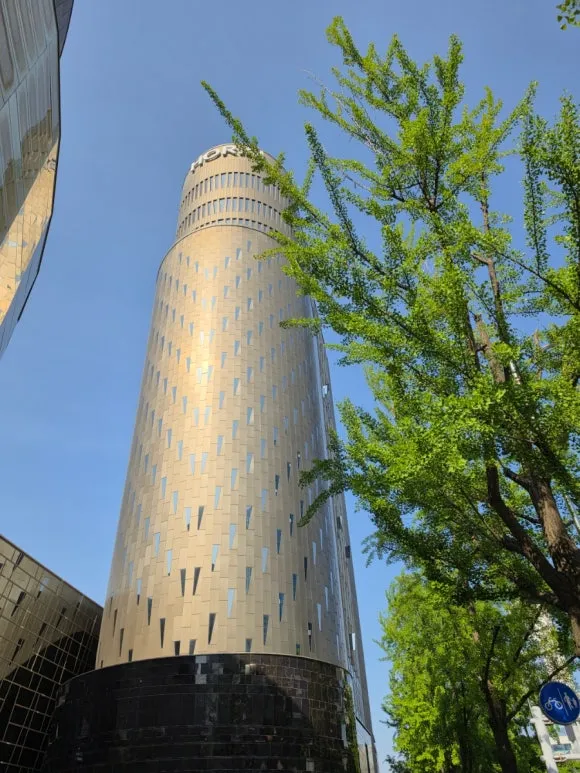
The Sinsa Branch occupies part of the distinctive Horim Art Center on Dosan-daero. Its dark galleries, carefully illuminated ceramics, paintings and embroidered screens made the visit feel almost private.
Quick Guide to Horim Museum Sinsa
- Name: Horim Museum Sinsa
- Korean name: 호림박물관 신사분관
- Address: 317 Dosan-daero, Gangnam-gu, Seoul
- Korean address: 서울 강남구 도산대로 317
- Building: Horim Art Center
- Nearest station: Apgujeong Rodeo Station
- Opening hours: Tuesday–Saturday, 10:30 a.m.–6:00 p.m.
- Last admission: One hour before closing
- Closed: Sunday, Monday and designated holidays
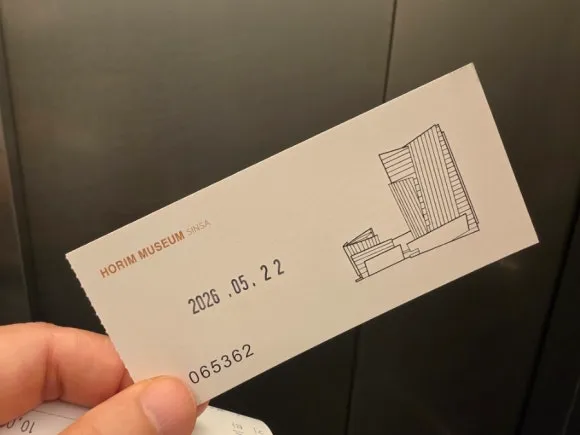
- Adult admission: KRW 10,000 at the time of my visit
- Exhibition halls: Three floors
- Suggested route: Begin on the fourth floor and work your way down
- Visit date: May 22, 2026
Find Horim Museum Sinsa on Google Maps
Admission fees, opening hours and exhibitions may change. Check the museum’s official website before visiting.
Sillim Main Building or Sinsa Branch?
Horim Museum has two locations in Seoul, and it is helpful to understand the difference before planning a visit.
The museum first opened in Daechi-dong in 1982. It expanded and relocated to Sillim in 1999, while the Sinsa Branch opened inside Horim Art Center in 2009.
The Sillim Main Building primarily introduces the museum’s permanent collection. Its galleries contain Korean archaeological objects, ceramics, paintings and other traditional artworks.
The Sinsa Branch, meanwhile, is used mainly for special exhibitions. This means that the works displayed here may change depending on when you visit.
If you would like to see the permanent collection first, read my guide to the Horim Museum Sillim Main Building.
The two locations are not within walking distance of each other. Make sure you check the address carefully before setting out.
Three Exhibition Halls
Horim Museum Sinsa has three main exhibition halls spread across the second, third and fourth floors.
Visitors are encouraged to begin on the fourth floor and move downward. I followed this route, starting with the ceramic exhibition before continuing to the paintings and embroidered works.
The layout was easy to navigate, and the relatively small number of visitors meant I could move at my own pace.
During my visit, QR codes beside some works provided additional written information. Scanning them was useful when I wanted more context than the short gallery labels offered.
sychoi’s Tip: Check the current special exhibitions before visiting because the Sinsa Branch does not display the same works throughout the year. Begin on the fourth floor and work your way down through the three exhibition halls.
A Quiet and Atmospheric Museum
My first impression of the interior was that it felt unusually dark and quiet.
The ceramics were displayed in glass cases under focused lighting, while most of the surrounding gallery remained dim. Because there were so few visitors, walking through the exhibition alone occasionally felt slightly eerie.
Once I began concentrating on the objects, however, the darkness helped bring out their forms, colors and surface details.
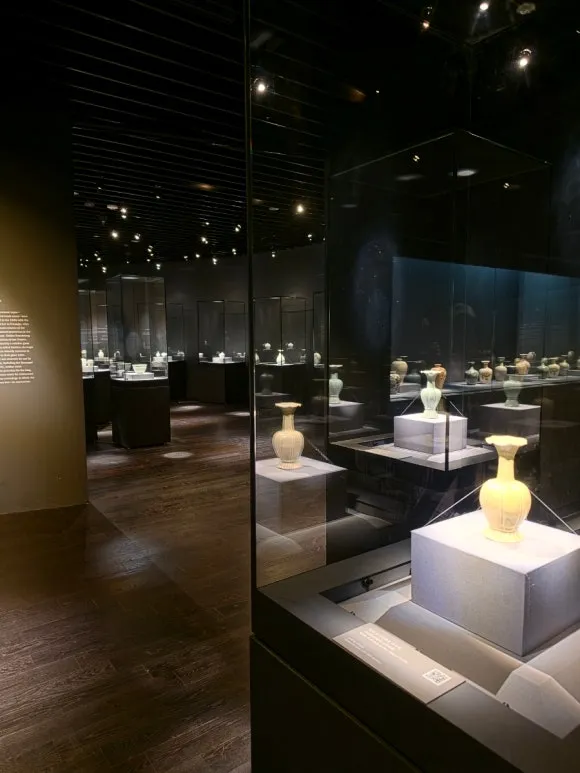
At times, the visit felt almost like a private viewing. I could stand in front of one object for as long as I wanted without blocking anyone else’s view.
It was a very different experience from visiting one of Seoul’s large national museums, where popular galleries can become crowded.
Goryeo White Porcelain and Joseon Celadon
During my May 2026 visit, one of the special exhibitions was Subtle Colors: Goryeo White Porcelain and Joseon Celadon.
Before this visit, I associated Goryeo mainly with celadon and the Joseon period with white porcelain. The exhibition introduced a more complicated history.
White porcelain was also produced during the Goryeo period, not long after celadon production began. Its color and surface, however, differ from the cleaner white appearance commonly associated with later Joseon porcelain.
The exhibition also presented Joseon celadon, showing how ceramic traditions did not change according to perfectly separated historical categories.
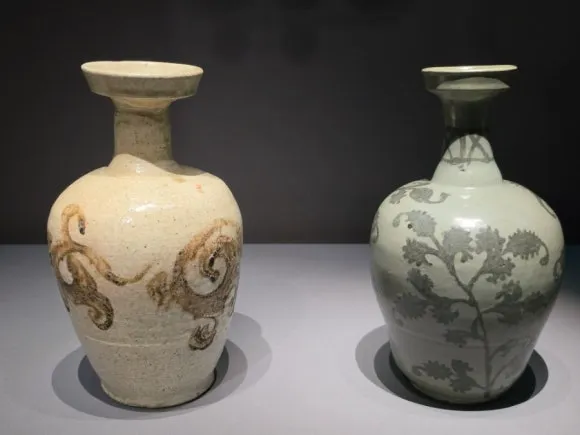
Many of the vessels had forms and decorative details that felt different from ceramics I had seen at other museums.
Looking at the hand-painted patterns and carved surfaces made me think about the skill required to create them. Even with modern tools, producing that level of detail would be difficult. Seeing what artisans achieved centuries ago made the works feel even more remarkable.
A White Porcelain Vase That Held My Attention
One of the most memorable objects was a tall white porcelain vase covered with delicate carved patterns.
From a distance, it appeared simple and almost completely white. When I moved closer, the surface revealed intricate floral decoration.
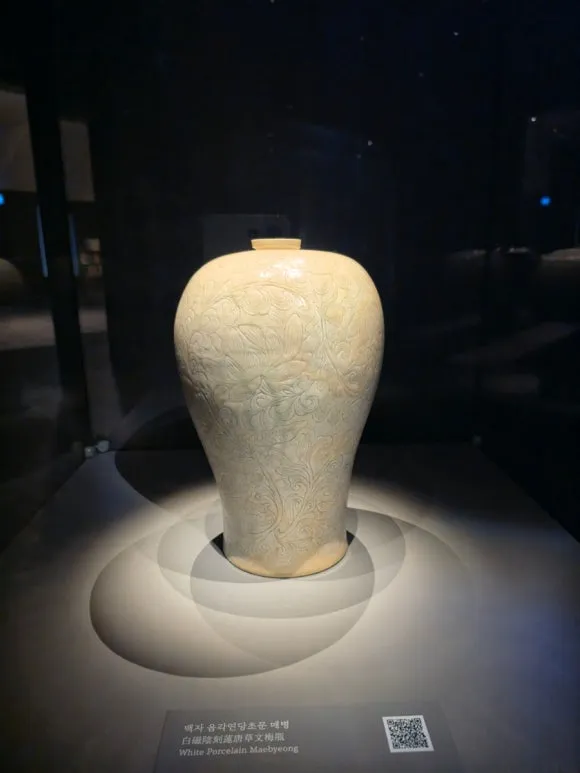
This was one advantage of visiting a quiet museum. I could look at the vase from different angles and spend time noticing details that I might have missed in a crowded gallery.
The ceramic exhibition alone made the admission fee feel worthwhile to me.
Spring Flowers in the Painting Galleries
After viewing the ceramics, I moved to the exhibition Adding Flowers to Brocade: Spring Flowers on Silk.
The galleries were decorated around a spring theme and included flower paintings, screens and embroidered works.
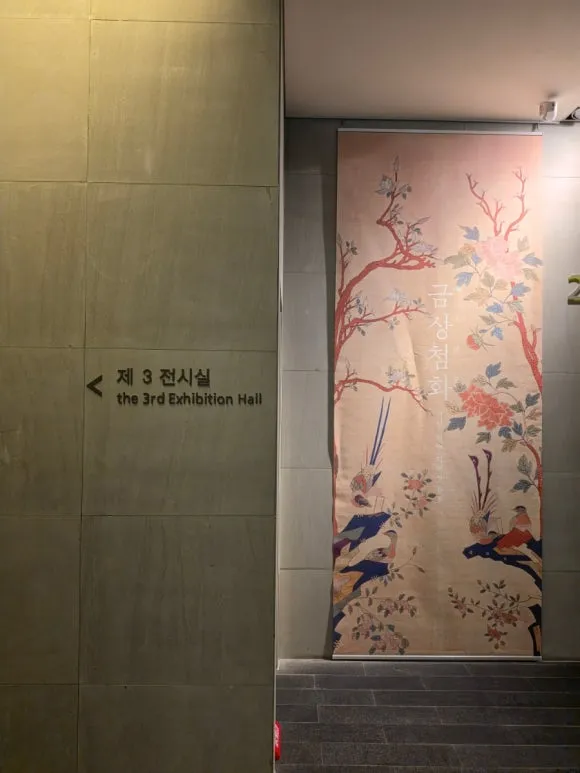
Visiting both Horim Museum locations helped me discover something about my own taste: although I appreciate sculpture and ceramics, I am more naturally drawn to painting.
I spent longer in this section, viewing the works first from across the room and then moving closer to examine individual flowers, branches and birds.
The spring exhibitions mentioned in this article ended on July 31, 2026. Visitors should check the current program to see what is now on display.
Floral Screens and Embroidery
A large four-panel floral screen was one of the strongest visual highlights of my visit.
The flowers filled the panels with color but still retained the balanced composition often found in traditional Korean decorative art.
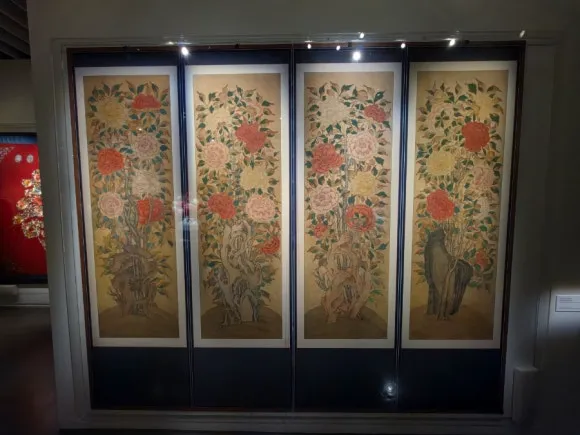
I found myself imagining the room where a screen like this might originally have stood and the person wealthy enough to commission or own it.
The embroidered works were even more impressive when viewed closely. Threads of different colors had been used to create extremely small details, including the wings and body of an insect.
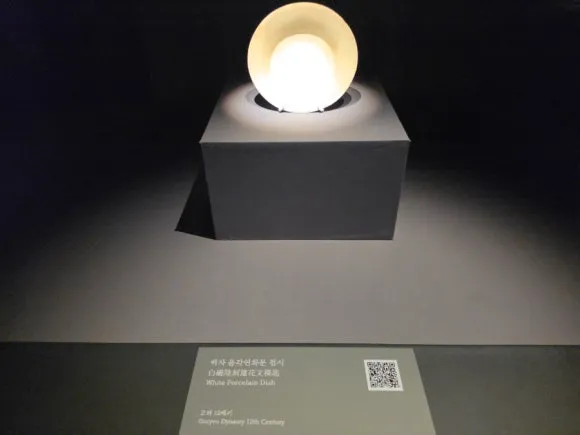
It was difficult to understand how someone could produce such precision using only thread and a needle. The closer I looked, the more clearly I could see the patience and control involved.
This was the section where I stayed the longest.
Why Are There So Few Visitors?
Only a small number of people were inside the Sinsa Branch during my visit.
I saw one foreign visitor and unexpectedly felt grateful that someone from outside Korea had chosen to spend time looking at Korean art.
It also reminded me of visiting the Busan Modern and Contemporary History Museum, where I sometimes noticed more international tourists than Korean visitors.
A quiet museum is pleasant for the person exploring it, but it can also feel unfortunate when a strong collection receives so little attention.
Horim Museum does charge admission, unlike some national museums in Korea. However, the carefully curated exhibitions and peaceful viewing environment made the KRW 10,000 fee feel reasonable to me.
Who Would Enjoy Horim Museum Sinsa?
Horim Museum Sinsa may be a good choice for:
- Travelers interested in Korean ceramics and traditional art
- Visitors looking for a quiet museum in Gangnam
- People who prefer small exhibitions to crowded national museums
- Solo travelers looking for an indoor activity in Seoul
- Art lovers interested in paintings, embroidery and decorative screens
- Visitors returning to Seoul who want to explore less familiar museums
It may be less suitable if you want:
- A large museum that requires an entire day
- English explanations for every object
- A museum with the same permanent displays throughout the year
- A completely free attraction
- A lively or interactive family activity
Is Horim Museum Sinsa Worth Visiting?
Horim Museum Sinsa is worth visiting if you enjoy traditional Korean art and prefer a slow, quiet museum experience.
The special exhibitions may be relatively compact, but the quality of the objects encourages close viewing. I particularly enjoyed the paintings and embroidered screens, although the ceramic galleries also introduced me to forms of Korean pottery I had not previously understood.
The Sillim Main Building and Sinsa Branch offer different experiences. Sillim is the better place to explore the museum’s broader permanent collection, while Sinsa is useful for seeing focused special exhibitions in Gangnam.
After overlooking museums near my home for more than a decade, I now want to make better use of Seoul’s cultural spaces. My next planned visit is the Kansong Art Museum in Seongbuk-dong.
Watch the HUNKY SHOW Musical in Seoul
For a livelier cultural experience, travelers may also consider the HUNKY SHOW musical in Seoul.
HUNKY SHOW is a stage performance designed as an entertaining night out rather than a traditional museum experience. It may suit visitors who want to combine visual art and Korean heritage during the day with a contemporary performance in the evening.
This activity is separate from my Horim Museum visit, and I have not personally attended the show. Check the current venue, performance schedule, age requirements, included options and cancellation policy before booking.
Check HUNKY SHOW Musical Tickets on Klook
Affiliate disclosure: This section contains an affiliate link. If you book through it, I may earn a commission at no additional cost to you.
More Seoul Culture Guides
Continue exploring Seoul with these firsthand guides:
- Horim Museum Sillim: Korean Art and Visitor Guide
- Bank of Korea Money Museum: A Free Myeongdong Attraction
- Flatnine Gangnam: Live Jazz and Dinner in Seoul
Horim Museum Sinsa reminded me that some of Seoul’s most rewarding cultural spaces are also among its quietest. Spending time with ceramics, paintings and embroidery without rushing made the visit feel personal, and it encouraged me to continue discovering museums I had previously overlooked.