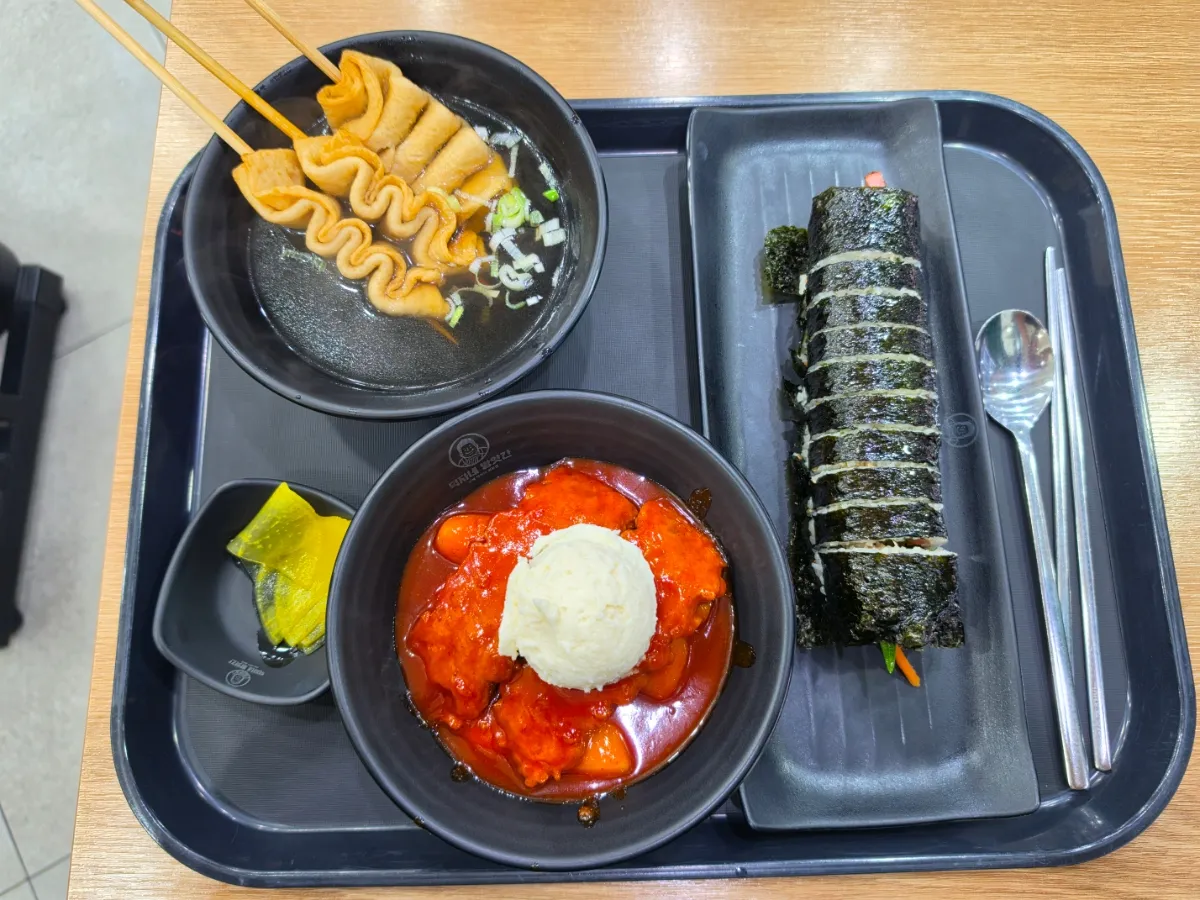
If you are looking for tteokbokki in Gangnam Seoul, Deokjane Bangatgan near Sinnonhyeon Station is a local Korean bunsik restaurant known for thick garaetteok topped with potato salad. It serves thick rice cakes covered in a spicy red sauce, with a scoop of potato salad placed on top.
I love tteokbokki enough that I tried to find it even while traveling around Southeast Asia for two years. After returning to Seoul, I continued visiting restaurants whenever I heard that their tteokbokki was especially good.
This time, I went to Deokjane Bangatgan, a casual bunsik restaurant between Gangnam Station and Sinnonhyeon Station.
“Bangatgan” means a traditional mill where grains or rice are processed. The name suits this restaurant because its signature tteokbokki uses long, thick garaetteok rather than the smaller rice cakes commonly served at Korean street-food stalls.
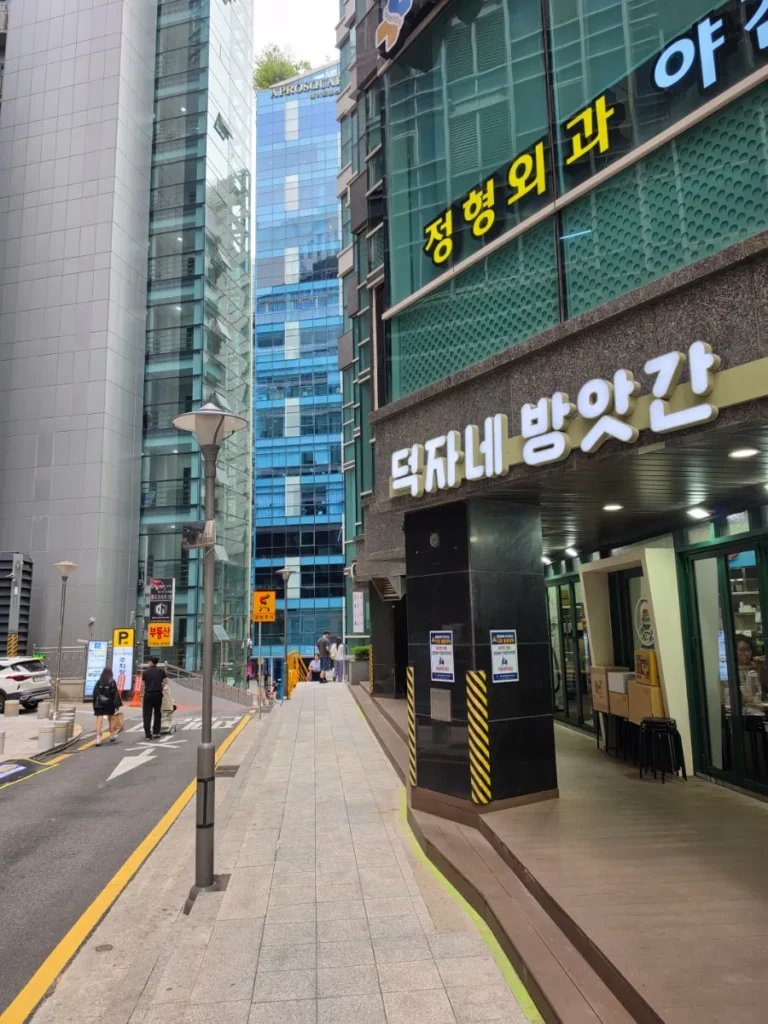
Deokjane Bangatgan Near Gangnam and Sinnonhyeon Station
Deokjane Bangatgan is close to Sinnonhyeon Station. You can also walk from Gangnam Station while exploring the busy shopping streets and side alleys around the area.
Although international visitors generally refer to the wider neighborhood as Gangnam, the restaurant’s official address is in Seocho-gu, just west of Gangnam-daero.
- Korean name: 덕자네 방앗간
- Address: 62 Seocho-daero 77-gil, Seocho-gu, Seoul
- Korean address: 서울특별시 서초구 서초대로77길 62 1층
- Nearest station: Sinnonhyeon Station
- Alternative station: Gangnam Station
- Main dishes: Garaetteok tteokbokki, gimbap and eomuk
- Ordering: Self-service kiosk
- Dining style: Casual Korean bunsik restaurant
- Suitable for solo diners: Yes
The hours displayed during my visit were 11:00 a.m.–8:30 p.m., with a break from 2:30–4:00 p.m. Restaurant hours can change, so check the latest information before visiting.
📍 View Deokjane Bangatgan on Google Maps
What Is a Korean Bunsik Restaurant?
A bunsikjip is a casual Korean snack restaurant. Despite the word “snack,” the portions can easily make a complete lunch or dinner.
Typical bunsik dishes include:
- Tteokbokki, or spicy rice cakes
- Gimbap, rice and fillings rolled in dried seaweed
- Eomuk, Korean fish cake
- Twigim, Korean-style fried food
- Jjolmyeon, spicy chewy noodles
- Mandu, Korean dumplings
These restaurants are usually more casual and affordable than full-service Korean restaurants. Many are also comfortable for people eating alone.
Deokjane Bangatgan follows this familiar format, but its thick rice cakes and potato salad make its tteokbokki different from the versions I usually see in Seoul.
Inside Deokjane Bangatgan
After entering the restaurant, I found a seat and placed my order at the kiosk.
The restaurant had an open kitchen, and the food preparation area looked clean during my visit. The interior was simple and practical rather than designed as a trendy cafe or elaborate dining space.
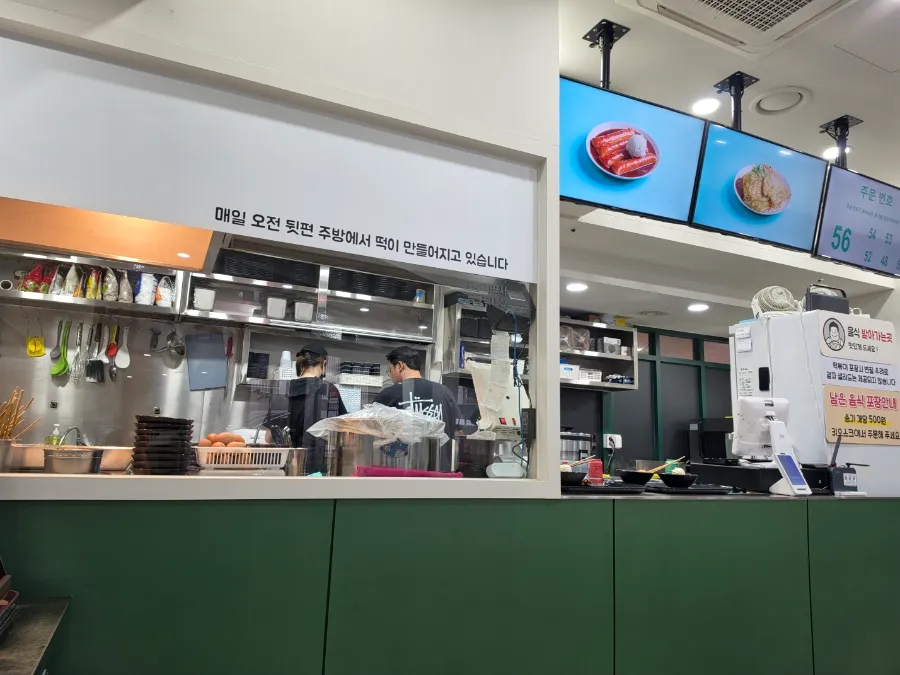
I arrived shortly after 1:00 p.m. on a Sunday. There were already several customers inside, but I was able to find a table without waiting.
A woman sitting near me told her friend that she had also visited the previous day. When I heard her say, “This place is really good,” I became even more curious about the food.
Utensils, scissors, pickled radish and extra sauce were available at the self-service station.
Deokjane Bangatgan Menu and Prices
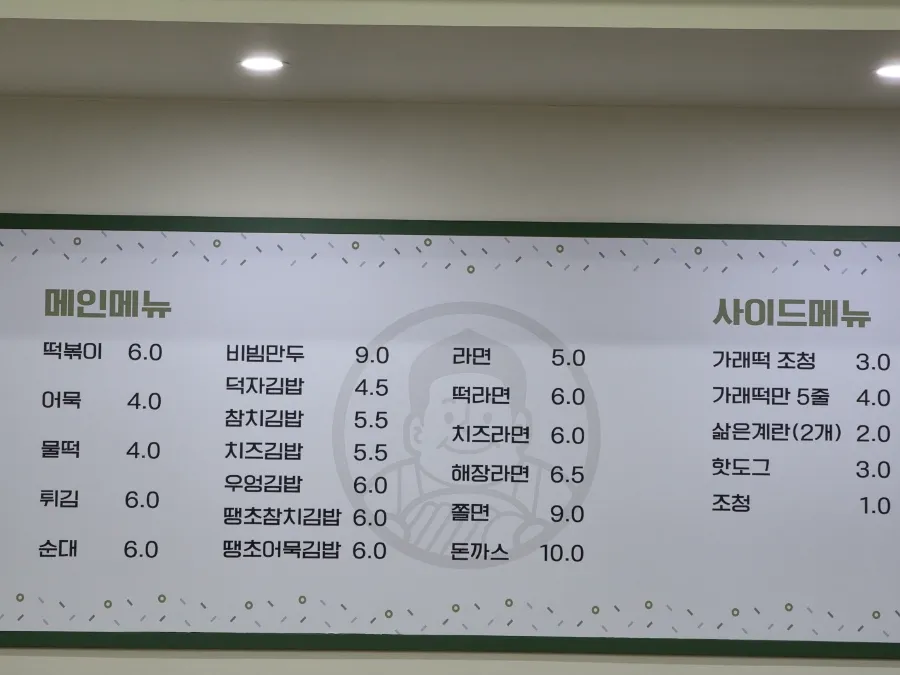
The restaurant offers both individual dishes and sets. Prices and menu items may change, but these were some of the prices displayed during my visit:
- Tteokbokki: 6,000 won
- Eomuk: 4,000 won
- Deokja gimbap: 4,500 won
- Tuna gimbap: 5,500 won
- Cheese gimbap: 5,500 won
- Spicy tuna gimbap: 6,000 won
- Spicy fish cake gimbap: 6,000 won
- Assorted fried snacks (twigim): 6,000 won
- Sundae (Korean blood sausage): 6,000 won
- Jjolmyeon: 9,000 won
- Pork cutlet: 10,000 won
Side dishes included garaetteok with jocheong, five plain garaetteok sticks, boiled eggs and extra jocheong.
I was dining alone but wanted to sample several items, so I ordered:
- One tteokbokki
- One eomuk
- One spicy tuna gimbap
This was more food than most solo diners would need. If you have an average appetite, tteokbokki with either gimbap or eomuk should be sufficient.
For two people, tteokbokki, gimbap, eomuk and one additional side dish would provide a good introduction to Korean bunsik.
My Korean Street Food Lunch in Gangnam
The three dishes arrived together on one tray. The dark red tteokbokki sauce immediately looked spicy, while the white potato salad created a strong contrast in the middle of the bowl.
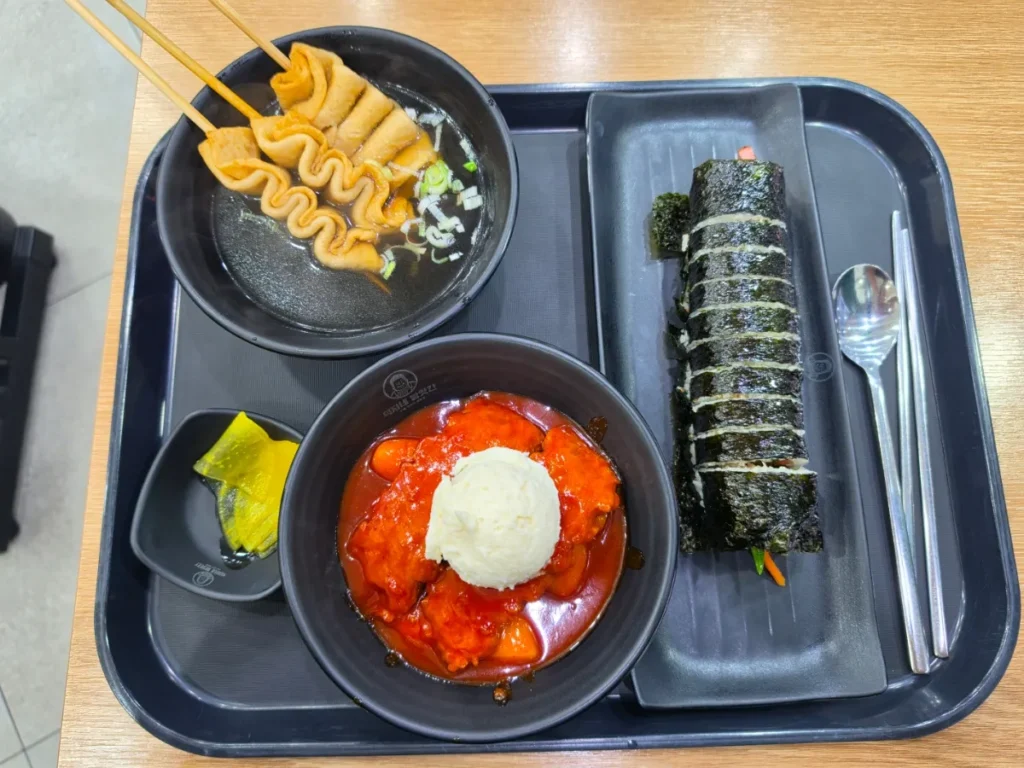
Although tteokbokki is widely known as Korean street food, many people in Seoul now eat it at casual restaurants rather than outdoor stalls. At Deokjane Bangatgan, the dishes were served in bowls and on trays in a clean indoor setting.
That makes the restaurant convenient on hot, rainy or cold days when eating outdoors may be uncomfortable.
Thick Garaetteok Tteokbokki with Potato Salad
Deokjane Bangatgan’s signature dish is made with long pieces of garaetteok.
Garaetteok is a cylindrical Korean rice cake traditionally made by steaming and pounding rice flour. It is also used to make the sliced rice cakes found in tteokguk, the soup commonly eaten during Korean New Year.
The garaetteok here was much thicker than the short rice cakes often used for tteokbokki. There were four long pieces in my serving.
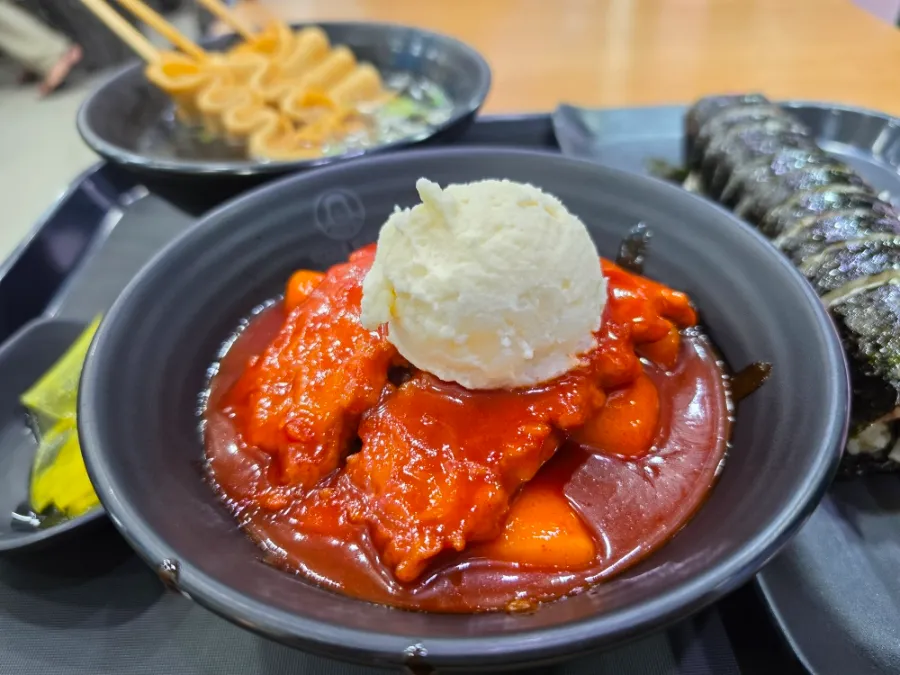
The unusual addition was the scoop of potato salad on top.
At first, I wondered why potato salad was served with tteokbokki. Once I tasted the sauce, the reason became clear. The tteokbokki was hotter than I expected.
I do not handle spicy food particularly well, and my nose started running as I ate. However, the sauce was flavorful rather than simply painful, so I kept reaching for another piece.
The potato salad added a mild, creamy flavor that softened the heat. Instead of mixing it into the entire bowl immediately, I ate small amounts between bites of spicy rice cake.
The restaurant states that potato salad may not be included with takeout orders because of food-safety concerns. If this combination is one of the reasons you want to visit, eating inside the restaurant would be the better choice.
Was the Garaetteok Too Chewy?
I had started orthodontic treatment about a month before this visit, so I was concerned that the thick rice cakes might be difficult to chew.
Fortunately, the garaetteok was softer than it looked. It was pleasantly springy without sticking heavily to my teeth.
I used scissors from the self-service station to cut each long rice cake into smaller pieces. Even while cutting it, I could feel its elasticity.
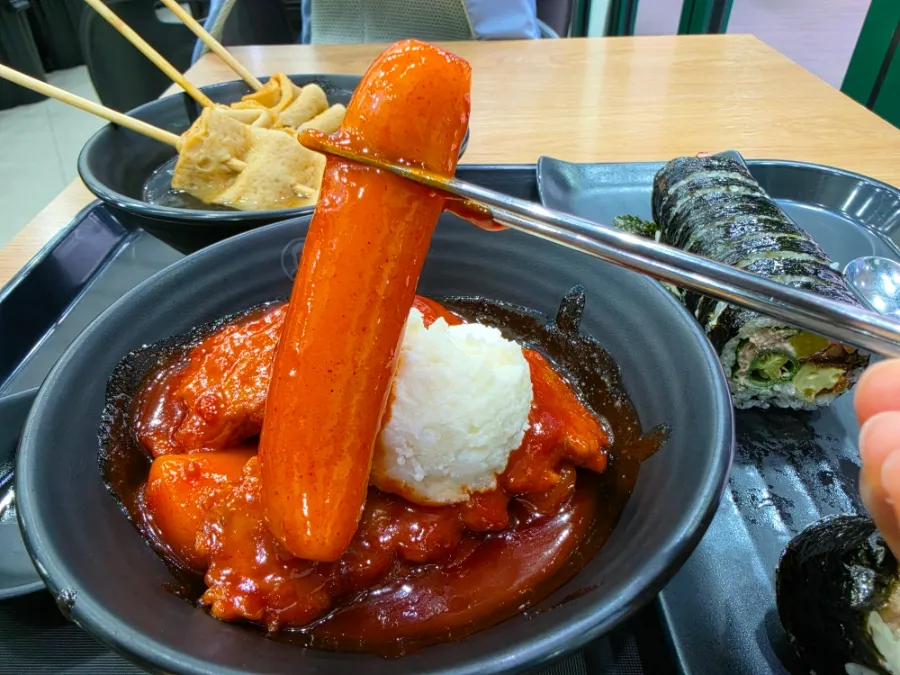
The rice cake tasted fresh and soft, almost as if it had recently come from a local rice mill. Its texture was the most memorable part of the meal.
If you enjoy chewy Korean food, this version may be more interesting than tteokbokki made with smaller, thinner rice cakes.
Spicy Tuna Gimbap
Gimbap is sometimes described as a Korean rice roll. Rice and fillings are wrapped in dried seaweed and cut into bite-sized pieces.
Unlike sushi, gimbap is generally seasoned with sesame oil and does not usually contain raw fish.
My spicy tuna gimbap contained tuna, green chili, vegetables and other familiar gimbap fillings. The tuna was rich but not overwhelming, while the chili gave each piece a cleaner, sharper finish.
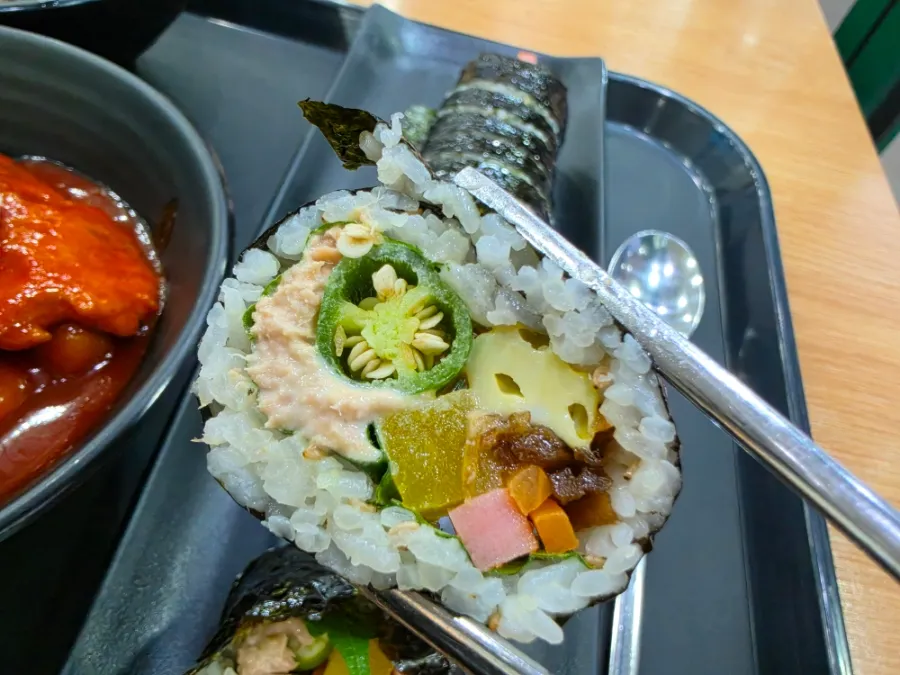
The combination worked particularly well with the tteokbokki. The rice provided a break from the spicy sauce, and I could also dip the gimbap lightly into the sauce.
Be careful if you are sensitive to spicy food. Both the tteokbokki and the green chili in the gimbap can be hot.
Eomuk and Fish Cake Broth
Eomuk is Korean fish cake made from processed fish paste. It is often folded onto wooden skewers and served in a hot broth.
The fish cake at Deokjane Bangatgan had not become overly soft in the soup. It retained a pleasantly springy texture, which I preferred.
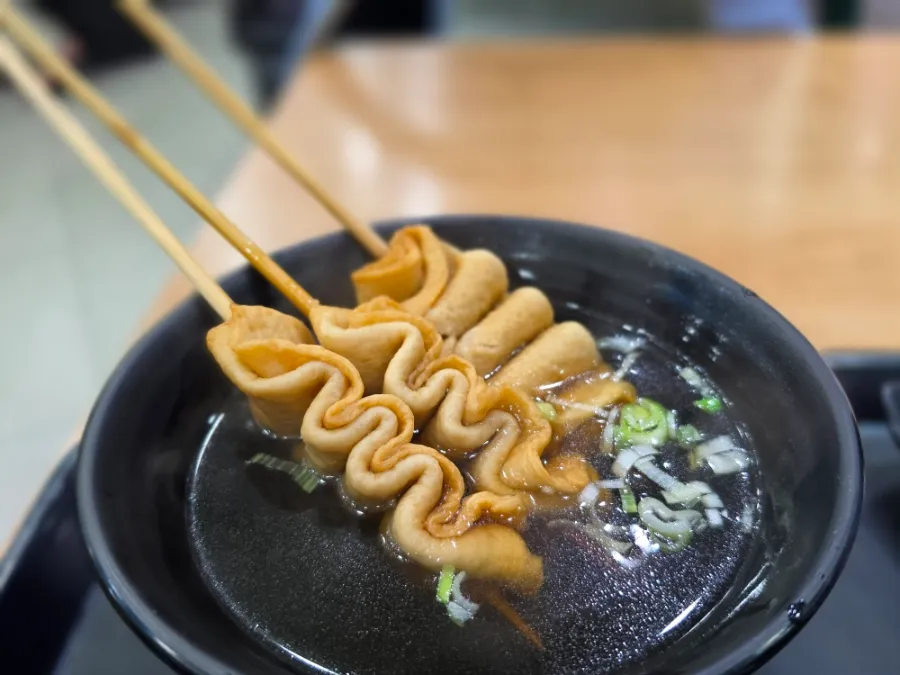
The light, warm broth was especially welcome between bites of spicy tteokbokki. Travelers trying Korean street food for the first time may also find eomuk relatively approachable because it is milder than the red rice-cake sauce.
What Should You Order at Deokjane Bangatgan?
For one person, I recommend one of these combinations:
If you want the signature dish
- Tteokbokki
- Eomuk
If you want a more filling meal
- Tteokbokki
- Gimbap
If you have a large appetite
- Tteokbokki
- Gimbap
- Eomuk
For two people, add fried food, mandu or jjolmyeon depending on your appetite.
The restaurant also sells garaetteok with jocheong, a traditional Korean grain syrup. Since I enjoyed the texture of the rice cakes, I would consider trying this simple side dish on my next visit.
Is Deokjane Bangatgan Worth Visiting?
Deokjane Bangatgan is a good option for travelers searching for Korean food near Gangnam Station or tteokbokki near Sinnonhyeon Station.
The main advantages are:
- Thick and soft garaetteok
- An unusual potato salad topping
- A casual setting suitable for solo diners
- A menu that combines several classic Korean snack dishes
- Walking access from both Sinnonhyeon and Gangnam stations
There are also a few points to consider:
- The tteokbokki may be too spicy for some visitors.
- The self-order kiosk may be difficult to use if an English-language option is unavailable, so a translation app can be helpful.
- Ordering three dishes can be too much food for one person.
- The potato salad may not be included with takeout orders.
My favorite part was the texture of the garaetteok. It was thick, soft and chewy without being uncomfortably sticky, even while I was adjusting to braces.
If you are looking for tteokbokki in Gangnam and prefer thick, chewy rice cakes, Deokjane Bangatgan is worth adding to your Seoul food itinerary.
More Seoul Food Guides
Continue exploring Seoul with these firsthand guides: