If you are looking for free things to do near Insadong, Jogyesa Temple (조계사) in central Seoul is worth adding to your itinerary.
I am not Buddhist, but I often visit temples while traveling around Korea. I like Bongeunsa Temple in southern Seoul, and I also visited Gilsangsa Temple in Seongbuk-dong this spring. Even a short walk through a temple usually helps me slow down and clear my mind.
Jogyesa is especially convenient because it is located in central Seoul, close to Jonggak, Insadong, and Anguk. I stopped by after lunch in Jongno and spent some time walking through the temple grounds before continuing to the Seoul Museum of Craft Art.
What Is Jogyesa Temple?
Jogyesa Temple is the main temple of the Jogye Order of Korean Buddhism (대한불교조계종), the largest Buddhist order in Korea. It is an important religious site rather than a temple created primarily for tourists.
The temple’s history can be traced to Gakhwangsa Temple, which was established in 1910. It later became known as Jogyesa and developed into one of the most symbolic Buddhist sites in modern Korea.
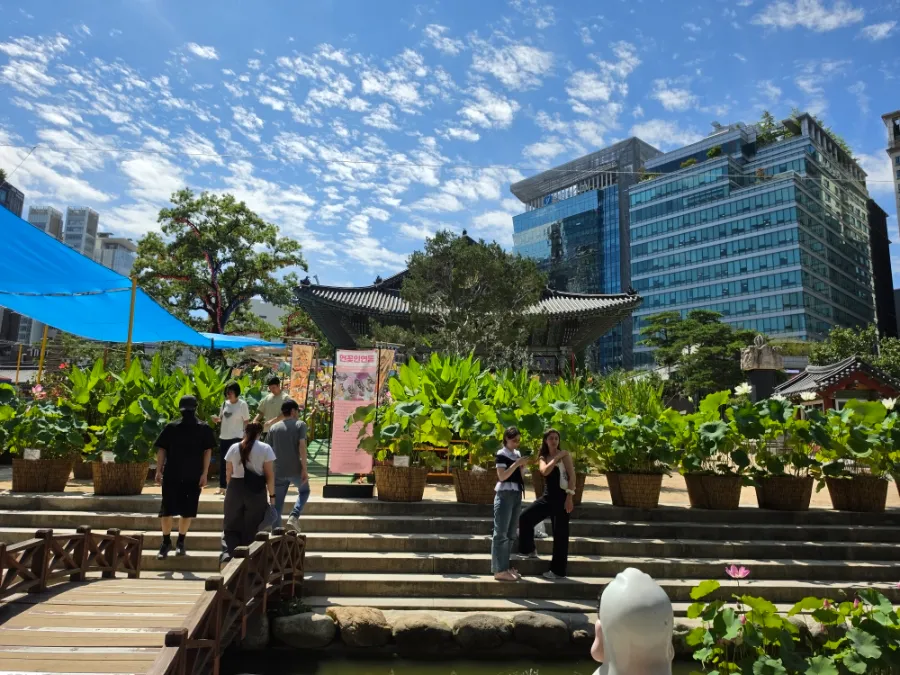
Unlike many Korean temples surrounded by mountains and forests, Jogyesa stands in the middle of Seoul’s business district. Office buildings, shops, cafés, and busy roads surround the temple grounds.
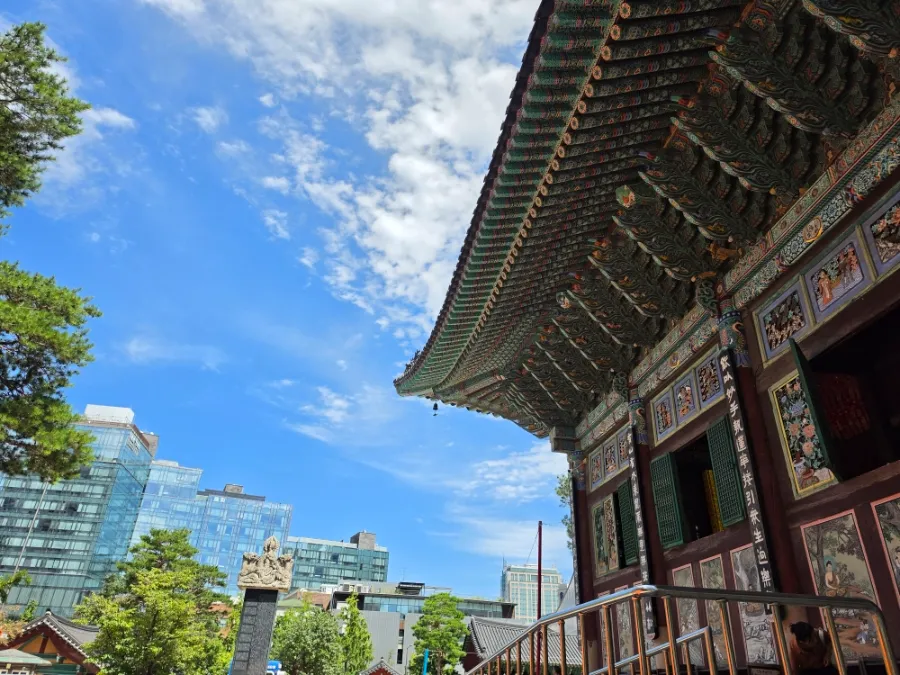
This contrast is one of the most memorable things about visiting Jogyesa. Traditional tiled roofs and Buddhist structures appear against glass buildings and the city skyline. Outside the gate, traffic moves constantly. Inside, visitors pray, sit quietly, or walk among flowers.
A Buddhist Temple in the Middle of Seoul
I have visited many temples during my travels around Korea, but Jogyesa feels different because of its urban surroundings.
The temple grounds are not very large, so you do not need to prepare for a long walk or a steep mountain trail. You can enter directly from the street and explore the main areas at a relaxed pace.
This makes Jogyesa an approachable stop for travelers who are curious about Korean Buddhist culture but do not have enough time to visit a temple outside Seoul.
It is also a useful place to include in a walking route through Jongno. Insadong, Anguk, Gyeongbokgung Palace, Bukchon Hanok Village, and the Seoul Museum of Craft Art are all located in the surrounding area.
Jogyesa is not completely silent. Ceremonies may be taking place, worshippers move in and out of the main hall, and city sounds can still be heard. Yet the atmosphere feels calmer than the streets outside.
For me, that brief change of pace was enough. I did not need to participate in a religious program. I simply walked around, looked at the buildings, and enjoyed having a peaceful place in the center of the city.
Daeungjeon Hall and Buddhist Worship
Daeungjeon Hall (대웅전) is the main worship hall at Jogyesa Temple. It is the most prominent traditional building on the grounds and one of the first places visitors notice after entering.
Its colorful dancheong (단청) patterns decorate the wooden structure beneath the roof. Dancheong refers to the traditional painted designs found on Korean temples and palaces. These colors are decorative, but they also help protect wooden buildings.
Inside the hall, worshippers bow, pray, and sit quietly. Visitors may enter when access is permitted, but it is important to remember that this is an active religious space.
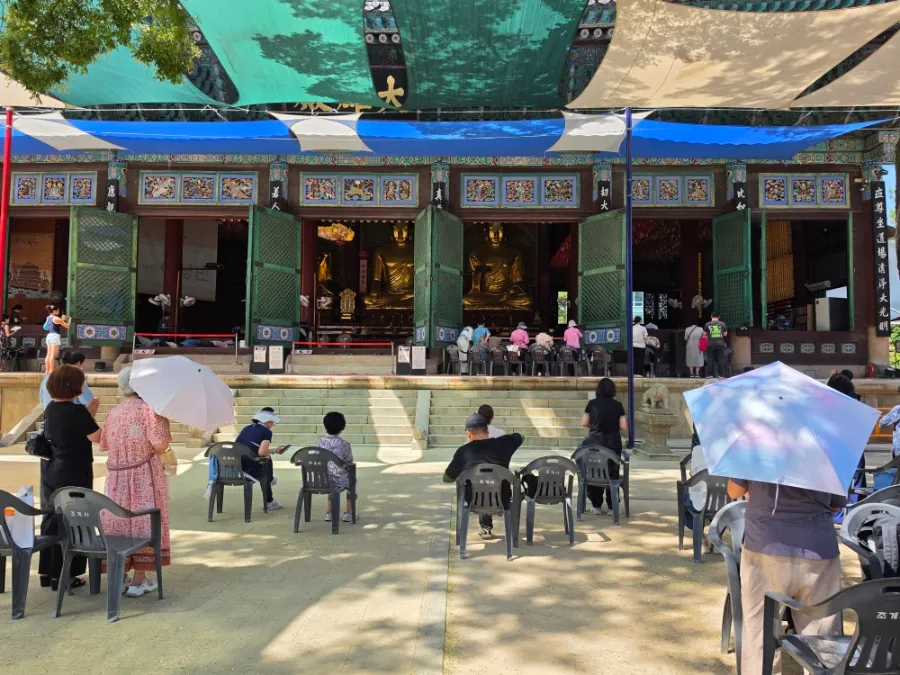
When visiting the hall, keep your voice low and avoid standing directly in front of people who are praying. Photography may be permitted in some areas, but taking close-up photographs of worshippers is inconsiderate.
Even if you do not enter the hall, the exterior is worth observing. The detailed roof, wooden columns, painted patterns, and open doors create a striking contrast with the surrounding city.
Summer Lotus Flowers at Jogyesa
The highlight of my visit was the lotus flowers (연꽃).
I visited Jogyesa on a clear summer day when the sky was blue and white clouds were moving above the temple. Large containers filled with lotus plants covered much of the courtyard.
Pink lotus buds and wide green leaves created a temporary garden in front of the traditional buildings. The flowers made the temple grounds feel livelier and gave visitors another reason to slow down.
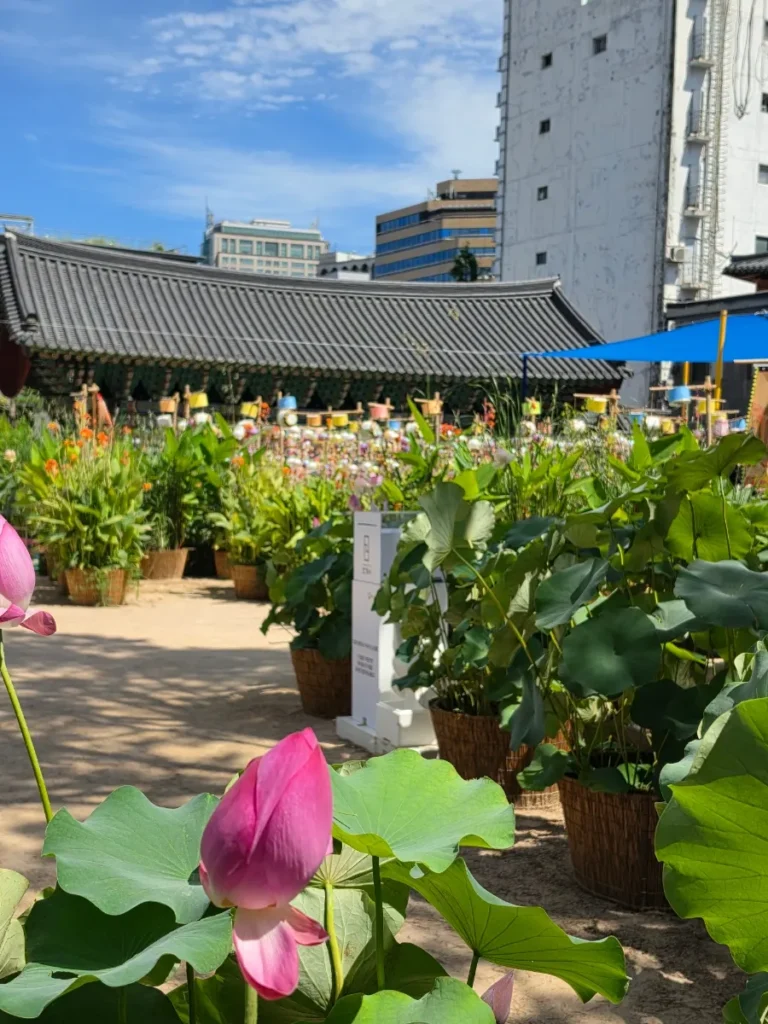
The lotus has an important meaning in Buddhism. It grows from muddy water but produces a clean flower, so it is often associated with purity, awakening, and spiritual growth.
You do not need to understand Buddhist symbolism to enjoy the scene. The combination of lotus flowers, tiled roofs, bright summer light, and modern buildings made the temple especially photogenic during my visit.
Flower displays are seasonal and may look different depending on the time of year. Jogyesa is also known for colorful lanterns during Buddhist celebrations, particularly around Buddha’s Birthday.
Because displays and events change throughout the year, each visit can offer a different view of the temple.
The Seven-Story Pagoda
Another structure that caught my attention was the seven-story stone pagoda standing in the temple grounds.
The pagoda was constructed in 1930 and contains Buddhist relics. Lotus plants surrounded it during my visit, while modern buildings rose behind it.
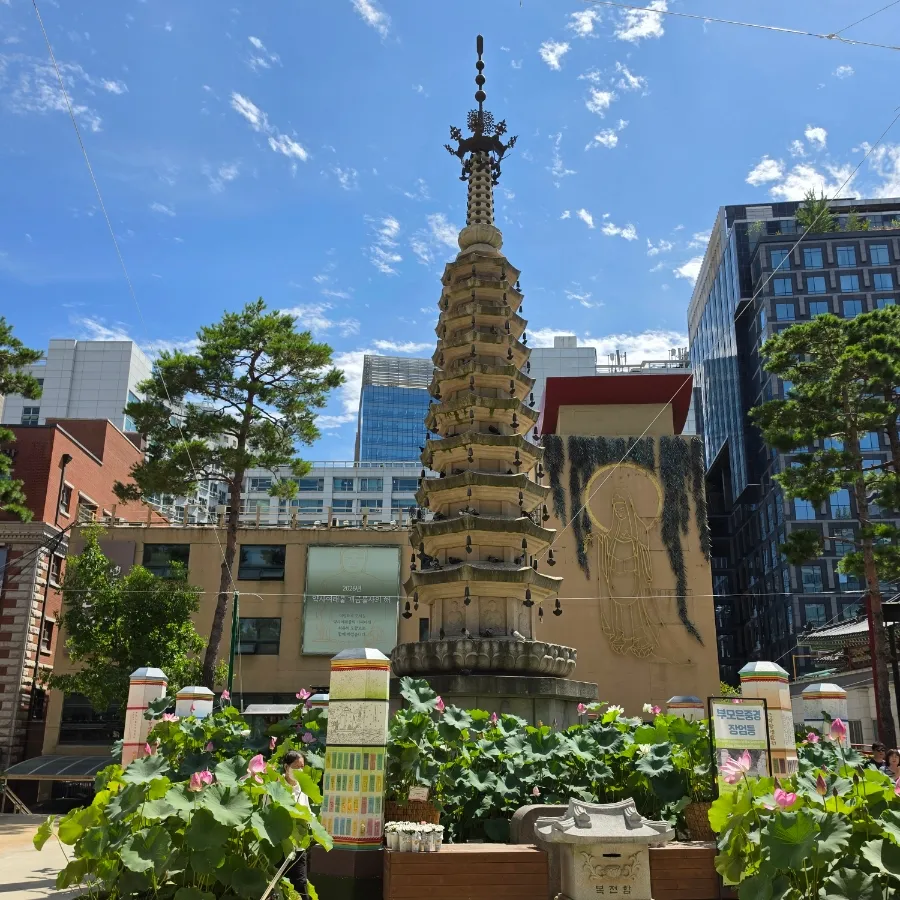
This view clearly showed what makes Jogyesa unusual. The pagoda, flowers, traditional architecture, and city skyline all appeared together in one place.
Jogyesa may not provide the forest scenery or mountain views associated with many Korean temples, but its location reveals another side of Korean Buddhist culture: a religious tradition continuing in the middle of a modern capital.
Jogyesa Temple Visitor Information
- Address: 55 Ujeongguk-ro, Jongno-gu, Seoul
- Admission: Free
- Closed: Open year-round
- Temple grounds: Generally accessible at all times
- Recommended visit: Approximately 20–30 minutes
- Nearest areas: Jonggak, Insadong, and Anguk
- Map: View Jogyesa Temple on Google Maps
- Official website: Visit the official Jogyesa Temple website
Religious ceremonies and special events may affect access to certain areas. Check the official website before visiting if you plan to attend a specific program.
Tips for Visiting Jogyesa Temple
Jogyesa is easy to visit, but a few basic points will make the experience more comfortable.
- Wear clothing appropriate for an active religious site.
- Speak quietly near the prayer hall.
- Do not photograph worshippers at close range.
- Remove hats before entering the main hall.
- Avoid blocking doors or walking directly in front of people who are praying.
- Check seasonal events if you want to see lotus flowers or lantern displays.
There is no required route through the temple. You can walk around the courtyard, observe Daeungjeon Hall, look at the pagoda, and sit quietly before continuing your Seoul itinerary.
What to Visit Near Jogyesa Temple
Jogyesa works well as part of a half-day walking route through Jongno and Anguk.
After visiting the temple, I walked to the Seoul Museum of Craft Art (서울공예박물관). The museum is also free and presents Korean craft, embroidery, and the history of its site.
You could also continue to Insadong for traditional souvenirs and tea, walk toward Gyeongbokgung Palace, or explore the streets around Anguk and Bukchon.
Combining Jogyesa with one or two nearby attractions makes more sense than traveling across Seoul for the temple alone. Its central location is one of its greatest advantages.
Try a Korean Temple Food Cooking Class
If visiting Jogyesa makes you curious about Korean Buddhist culture, you can continue the experience with a Korean temple food cooking class near Anguk Station.
Guided by a Buddhist monk, the class introduces the philosophy and mindful approach behind Korean temple cuisine. Participants prepare one seasonal temple food dish and taste an additional side dish made with natural ingredients.
Korean temple food is traditionally prepared without meat and focuses on simple flavors that highlight seasonal vegetables. The menu may change depending on the ingredients available on the day of the class.
Since the class takes place near Anguk, it can be combined with Jogyesa Temple, Insadong, Bukchon Hanok Village, or the Seoul Museum of Craft Art.
Check the Korean Temple Food Cooking Class on Klook
Class schedules, menus, and availability may change, so check the activity details before booking.
This post contains an affiliate link. If you make a booking through it, I may earn a small commission at no additional cost to you.
Is Jogyesa Temple Worth Visiting?
Jogyesa is worth visiting if you are interested in Korean culture, Buddhist architecture, or quiet places in central Seoul.
It is not a large tourist attraction filled with displays or organized activities. Its appeal comes from the contrast between the temple and the surrounding city.
I especially enjoyed seeing the lotus flowers beneath the blue summer sky. The traditional roofs, stone pagoda, worshippers, and office buildings created a view that could only exist in the center of Seoul.
A short visit was enough to change the pace of my afternoon. After walking through noisy streets, I found a place where I could pause before continuing toward Anguk.
For travelers looking for free things to do in Jongno, Jogyesa Temple offers a meaningful cultural stop without requiring a long journey outside the city.