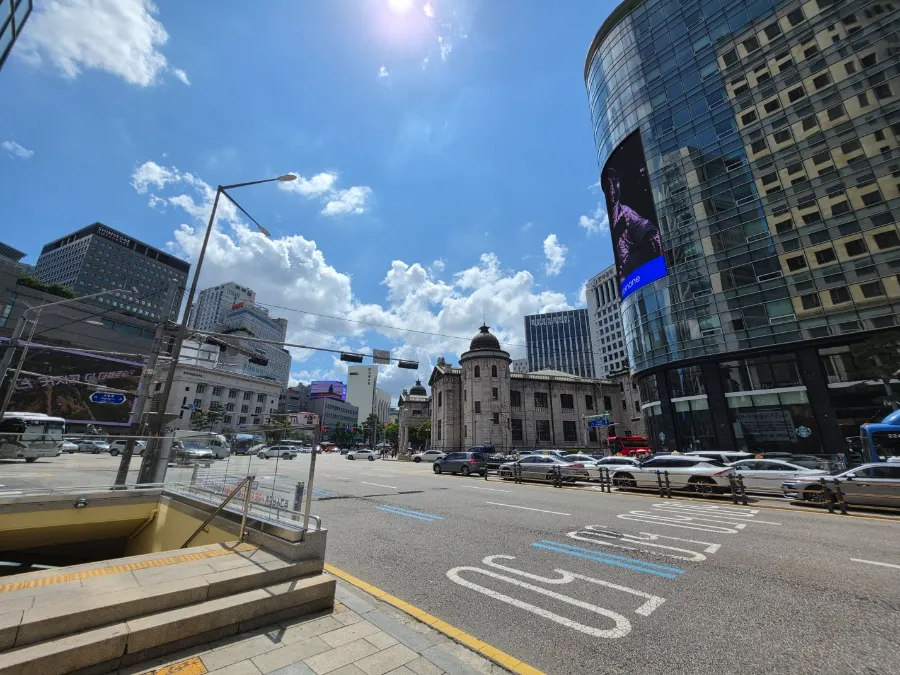
Myeongdong is best known for shopping, cosmetics and street food, but it also has several cultural attractions worth visiting. After lunch at Baekok, a Korean restaurant near Myeongdong Station, I walked to the Bank of Korea Money Museum.
I had passed this historic building many times while living in Seoul but had never considered going inside. After traveling around Southeast Asia for two years, I realized that I often visited historic buildings and museums abroad while overlooking similar places in my own city.
The Bank of Korea Money Museum turned out to be more than a museum about banknotes and coins. Inside the 1912 stone building, I found exhibits about Korea’s monetary history, a reconstructed bank vault, the former governor’s office, currencies from around the world and a small art gallery.
Admission is free, making it a useful addition to a Myeongdong itinerary for families, solo travelers and anyone looking for an indoor attraction in central Seoul.
Bank of Korea Money Museum Visitor Information
- Korean name: 한국은행 화폐박물관
- Address: 39 Namdaemun-ro, Jung-gu, Seoul
- Admission: Free
- Opening days: Tuesday to Sunday
- Opening hours: 10:00 a.m.–5:00 p.m.
- Last admission: 4:40 p.m.
- Closed: Mondays and designated holidays
- Individual visits: No advance reservation required
- Parking: Not available for general visitors
- Nearest areas: Myeongdong and Namdaemun Market
View the Bank of Korea Money Museum on Google Maps
The museum is located between Myeongdong’s shopping district and Namdaemun Market. It can be combined with a Korean lunch, shopping or a visit to another central Seoul attraction.
Free Lockers at the Museum
I found lockers near the entrance during my visit and was able to store my belongings without charge. This made it easier to walk through the galleries without carrying a heavy bag.
The signs included English instructions as well as Korean, so the lockers were easy to use. They are intended for museum visitors rather than long-term luggage storage.
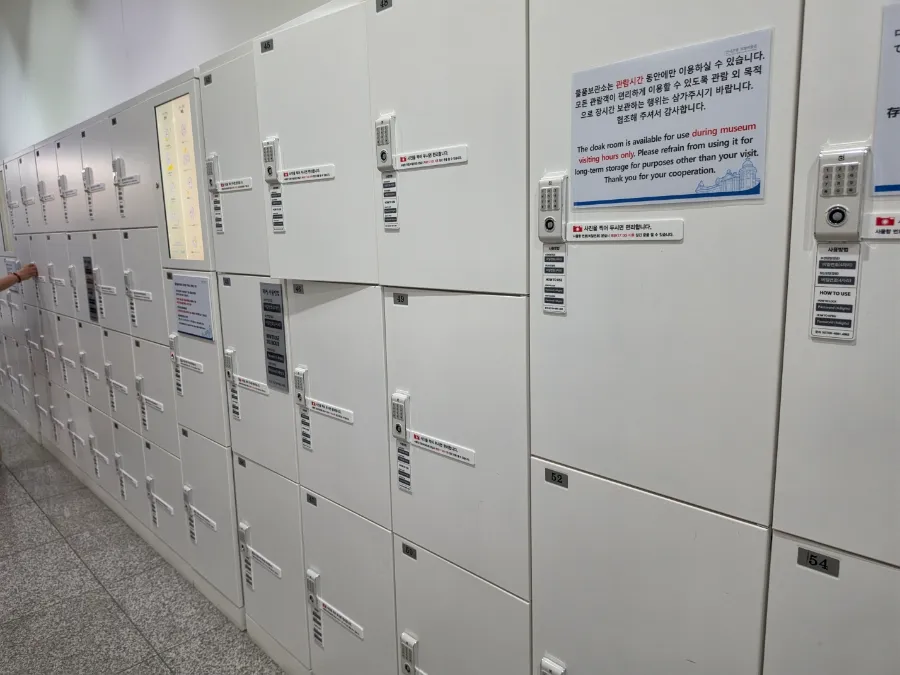
Locker availability and the method of use may depend on conditions at the museum, so check the instructions when you arrive.
A Historic Bank Building Completed in 1912
The building itself is one of the main reasons to visit the museum.
Construction began in 1907, and the stone building was completed in 1912. It was later used as the head office of the Bank of Korea after the central bank was established in 1950.
The structure was heavily damaged during the Korean War and repaired in the 1950s. After the Bank of Korea moved into a new building, the historic structure was restored and eventually opened as the Money Museum in 2001.
The symmetrical exterior, granite walls, high ceilings and broad staircases give the building a formal appearance that is very different from a modern exhibition hall.
A scale model inside the museum makes it easier to understand the building’s overall structure. Viewed from above, the building has an enclosed central layout that is difficult to see from the street.
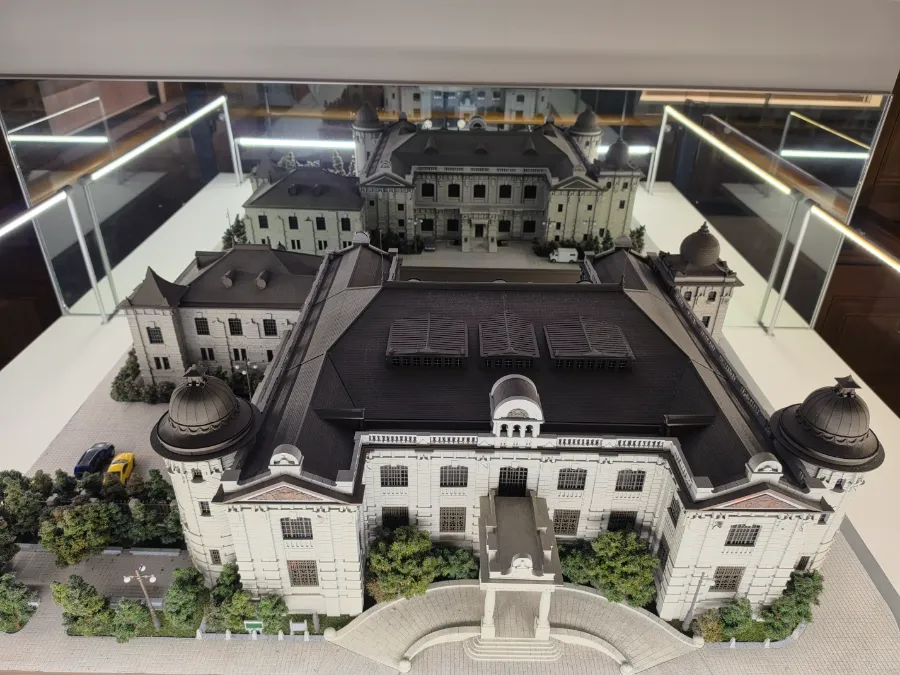
Even visitors who are not particularly interested in money may enjoy seeing how a historic banking building has been adapted into a museum.
What Can You See Inside?
The permanent exhibition is spread across two floors and 13 exhibition rooms. The displays cover the history of the Bank of Korea, the production and circulation of money, monetary policy, Korean coins and banknotes, currencies from other countries and the building’s architectural history.
Topics such as inflation, interest rates and central banking can sound complicated. However, the museum uses actual currency, models, videos and interactive displays to make the information easier to follow.
I visited on a Sunday and saw many families with children. The museum was active without feeling as crowded as Myeongdong’s main shopping streets.
For international visitors, the displays offer a useful introduction to how Korean money changed over time and how the country’s central bank operates.
The Former Governor’s Office
One of the most distinctive rooms is the former Bank of Korea governor’s office.
The room contains a large wooden desk, bookcases, flags and traditional wooden wall panels. It offers a glimpse of how the building looked when it was still used as the central bank’s headquarters.
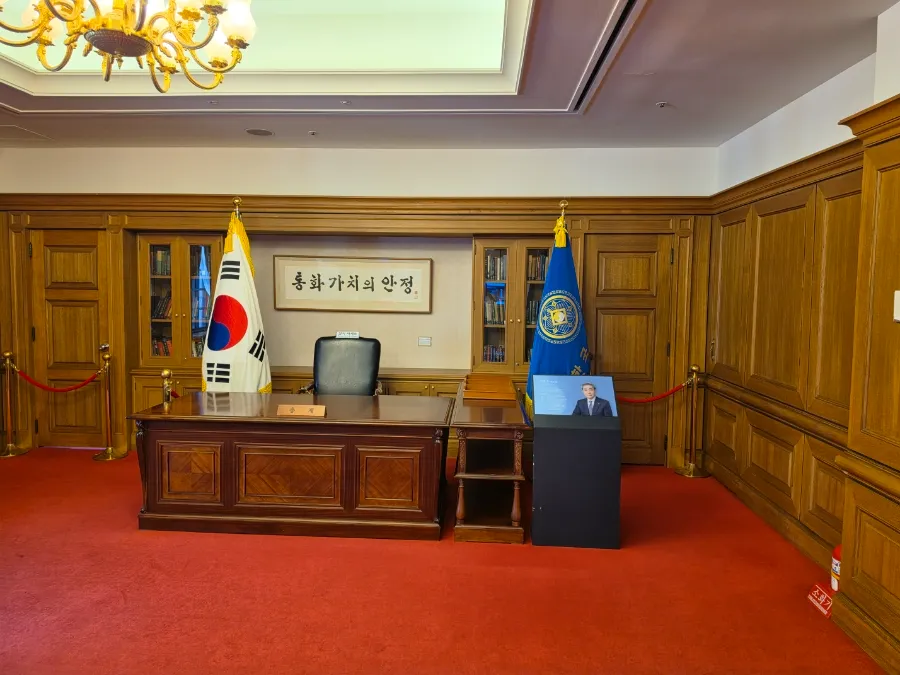
This part of the museum feels different from the modern currency galleries. Rather than reading about the institution through panels, visitors can step into a room associated with its working history.
The old office, broad staircases and high ceilings make the museum feel like a historic site as well as an economics museum.
Korean Banknote Bundles
The banknote displays were among the most memorable parts of my visit.
Two large blocks demonstrate what 100 million won and 500 million won look like when arranged as physical bundles of Korean banknotes. The bundles are secured with chains, allowing visitors to feel their weight without removing them.
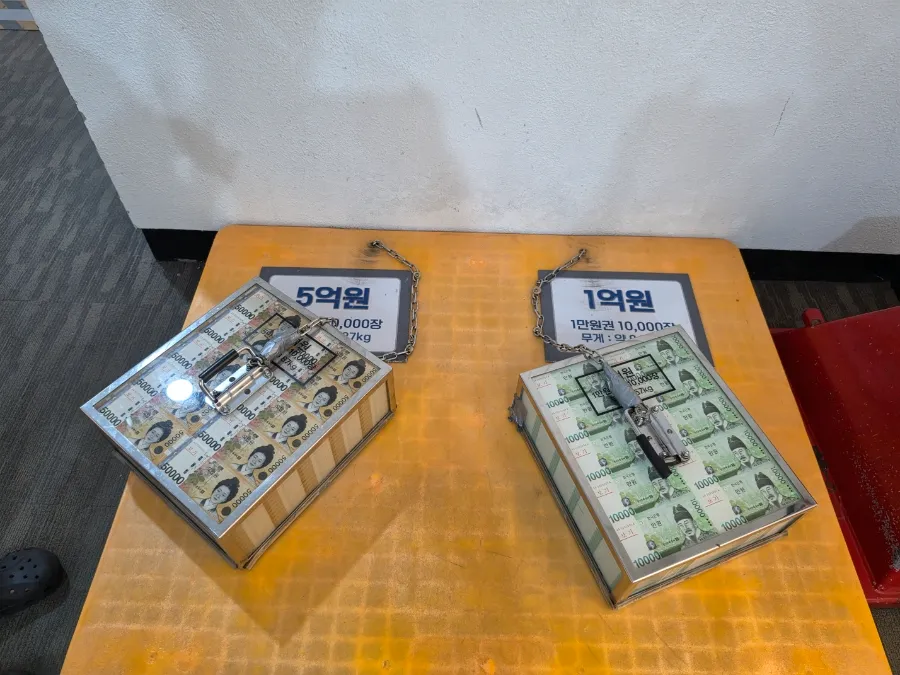
Large amounts of money usually exist only as numbers on a screen. Seeing the physical volume of the banknotes made those numbers feel more concrete.
This is also one of the exhibits that children and adults can understand immediately without reading a long explanation.
The Model Bank Vault and Coin Display
Another popular area on the second floor is the model bank vault.
It recreates a vault used to store large quantities of currency at the Bank of Korea. The money shown inside is not real, but the display helps visitors imagine how banknotes are stored and managed by a central bank.
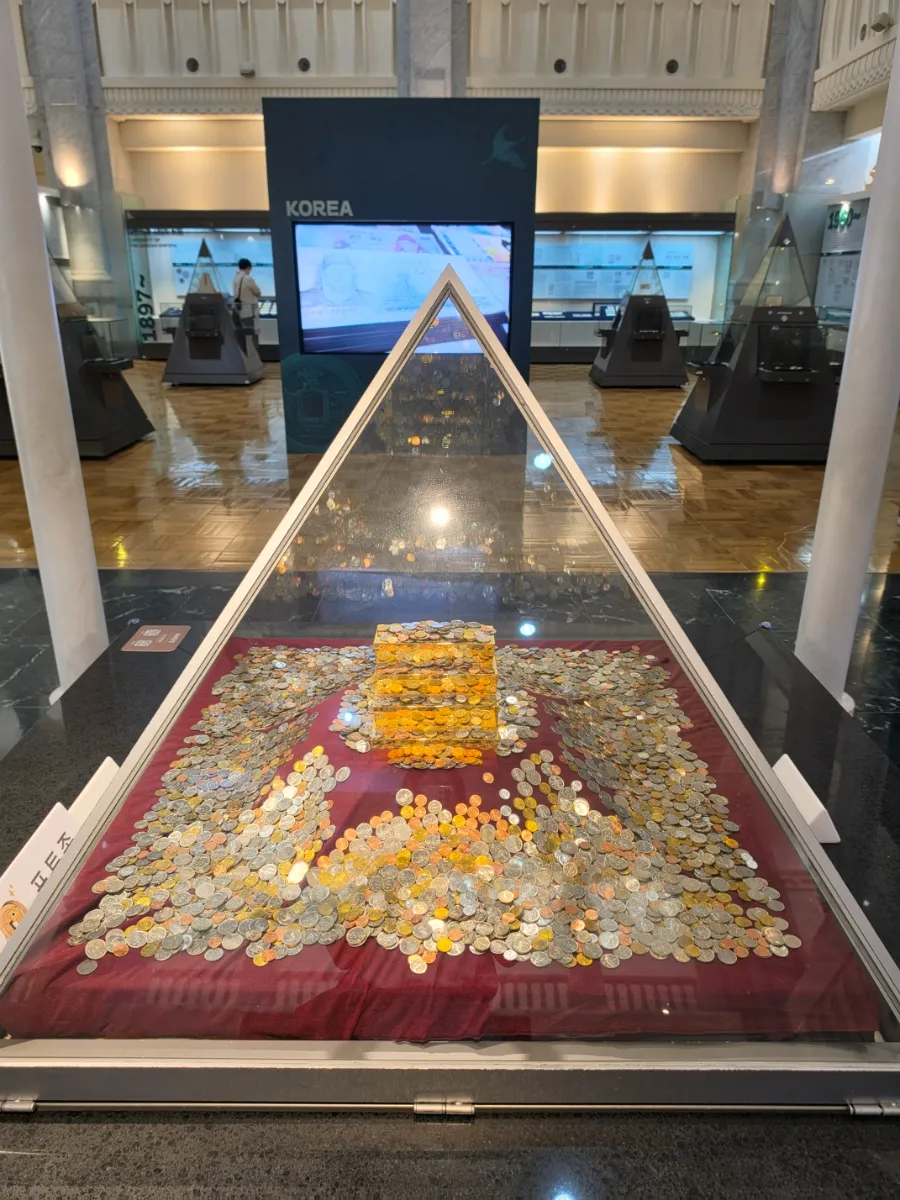
A triangular glass case filled with coins and currency-related objects stands in one of the main exhibition spaces. Its unusual shape makes it one of the most visually striking displays in the museum.
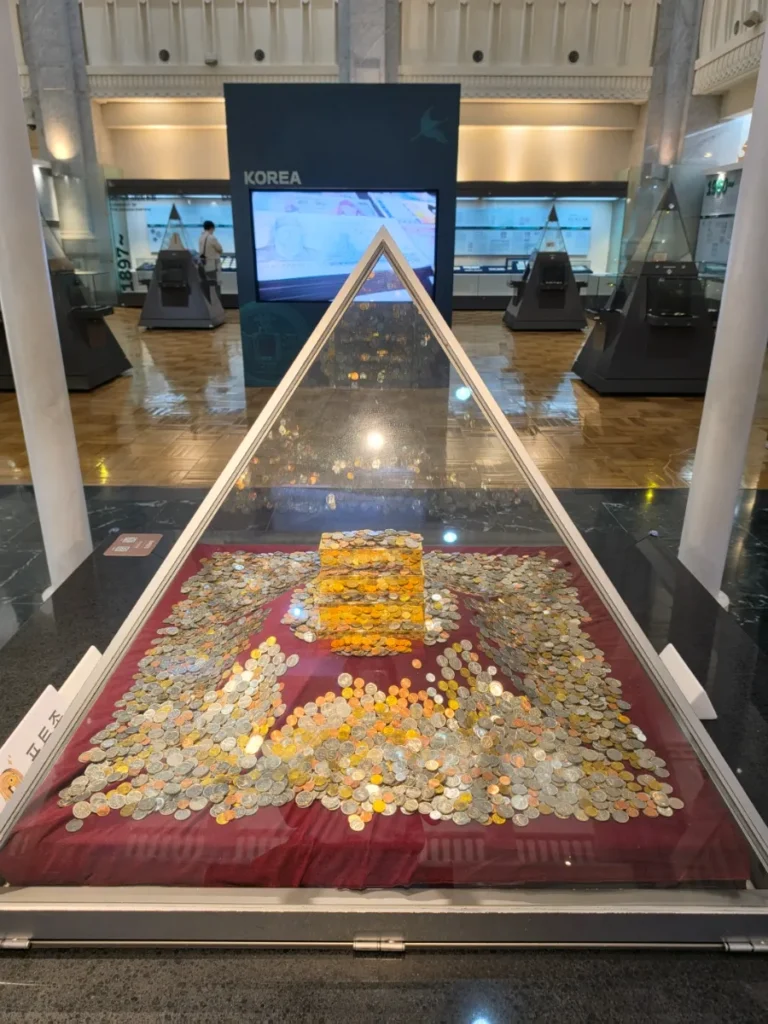
The surrounding galleries explain how money is designed, produced, circulated and eventually removed from use. There are also exhibits about detecting counterfeit currency and recycling damaged banknotes.
Banknotes and Coins From Around the World
The World Currency Room displays banknotes and coins from many countries.
Currency designs often feature political leaders, artists, writers, historic buildings, animals and natural landscapes. Comparing the designs reveals how countries use money to present their history and cultural identity.
Traveling through Southeast Asia made this section particularly interesting for me. I recognized currencies that I had used during my travels and enjoyed seeing them again in a museum in Seoul.
The exhibit about portraits on currency shows how different countries select people to represent their national stories.
Children can also enjoy searching for familiar countries, animals or famous figures on the banknotes.
Korean Figures Featured on Currency
Korean banknotes feature historical figures who made important contributions to the country’s culture and intellectual history.
Visitors may recognize King Sejong on the 10,000-won note. He is closely associated with the creation of Hangul, the Korean writing system.
Shin Saimdang appears on the 50,000-won note, while Yi Hwang and Yi I are featured on the 1,000-won and 5,000-won notes.
Learning who appears on Korean currency adds context to the banknotes that travelers use every day. It also provides a short introduction to Korean history before visiting palaces, museums and historic sites elsewhere in Seoul.
An Art Gallery Inside the Money Museum
The biggest surprise for me was the Bank of Korea Art Gallery.
I expected the museum to focus entirely on currency and economics, but one section displays artworks from the Bank of Korea’s collection. The exhibition was not large, yet it provided a quiet change of pace after the information-heavy currency galleries.
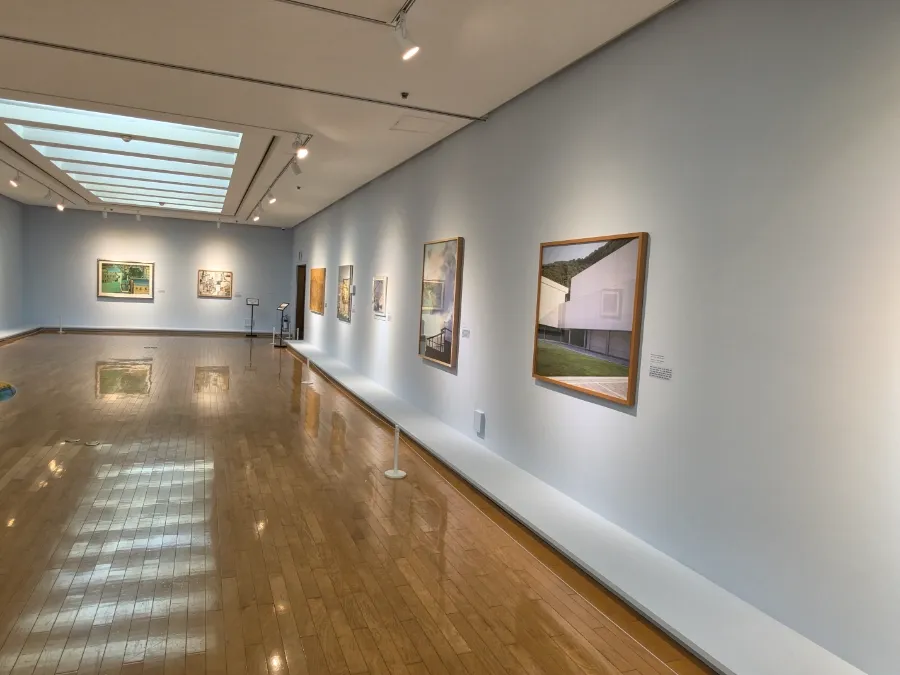
The gallery had polished wooden floors, simple gray walls and plenty of space between the artworks. It felt more like a small independent art museum than part of a financial institution.
Exhibitions may change, so the artworks on display may be different when you visit.
Is the Bank of Korea Money Museum Good for Children?
The museum can be a worthwhile educational stop for school-age children.
Some sections explain abstract subjects such as monetary policy and economic growth, which may be difficult for very young children. However, the coins, banknote bundles, model vault and currencies from around the world are easy to explore visually.
During my Sunday visit, I saw many parents walking through the galleries with their children. Families can turn the visit into a simple activity by asking children to find:
- The Korean banknote with King Sejong
- Currency from a country they have visited
- Animals or buildings printed on foreign money
- The difference between coins and banknotes from different periods
- The 100-million-won and 500-million-won bundles
It is an educational indoor attraction, but it does not feel like a classroom. Children can move between exhibits and focus on the displays that catch their attention.
Is It Worth Visiting Without Children?
Yes. I visited without children and found plenty to enjoy.
The museum is suitable for adults interested in Korean history, architecture, economics or currency design. The historic rooms and art gallery also broaden the experience beyond financial education.
It is not a flashy digital attraction or a museum designed mainly for photographs. Its strength is the combination of a historic setting, well-organized exhibitions and free admission.
Solo travelers can move through the museum at their own pace, while couples can include it in an inexpensive indoor date around Myeongdong.
Combining the Museum With Myeongdong
The Bank of Korea Money Museum works best as part of a wider Myeongdong or central Seoul itinerary.
I began with lunch at Baekok, a Korean restaurant hidden inside a narrow alley near Myeongdong Station. After eating pork gomtang, cold pork slices and cabbage-wrapped mandu, I walked to the museum.
Another option is to continue toward Namdaemun Market after the museum. The market is within walking distance and offers Korean street food, kitchenware, clothing and traditional market restaurants.
A simple route could be:
Myeongdong Station → Korean lunch → Bank of Korea Money Museum → Namdaemun Market
This route combines food, history, culture and a traditional market without requiring long subway journeys across the city.
Is the Bank of Korea Money Museum Worth Visiting?
The Bank of Korea Money Museum is worth visiting if you want to explore a quieter and more educational side of Myeongdong.
Admission is free, and the museum covers more than the history of Korean money. Visitors can enter a historic building completed in 1912, see the former governor’s office, compare currencies from around the world, explore a model bank vault and finish with a small art exhibition.
It may not be the first attraction that international travelers associate with Myeongdong, but that is part of its appeal. After walking through crowded shopping streets, I appreciated being able to slow down and look at Seoul’s financial and architectural history.
For families, it offers an approachable introduction to money and economics. For adults, it provides a free indoor attraction with enough variety to make the visit worthwhile.
More Things to Do in Seoul: Han River Yacht Tour
After exploring museums, markets and shopping streets in central Seoul, you may want to see the city from a different perspective.
The Han River Sevit Island Yacht Tour takes passengers around Sebitseom and Banpo Bridge aboard a shared yacht. The full program lasts approximately one hour, including safety instructions and boarding time, with about 40 minutes spent cruising on the river.
Daytime departures offer open views of the Han River, while sunset and evening tours provide a chance to see Seoul’s skyline as the city lights come on. Depending on the season, weather and operating schedule, passengers may also see the Banpo Bridge Moonlight Rainbow Fountain from the water.
The experience is available with Korean and English assistance, and pets are permitted under the operator’s conditions. Travelers planning to bring a dog should check the latest pet requirements before booking.
At the time of writing, the experience has a 4.8 rating from more than 450 Klook reviews and has been booked by over 10,000 travelers. Many reviewers particularly mention the river views, friendly crew and sunset departures.
👉 Check Han River Sevit Island Yacht Tour dates and tickets on Klook
This section contains an affiliate link. If you book through it, I may earn a small commission at no additional cost to you.