If you are looking for a Gwangju art exhibition or indoor things to do in Gwangju, the Asia Culture Center (ACC) is one of the city’s main cultural attractions to visit.
During my recent stay in Gwangju, I visited Masters of Impressionism: Monet, Renoir, Van Gogh and Cézanne, one of the major art exhibitions currently showing at the Asia Culture Center in Gwangju. It features original works from the collection of the Israel Museum in Jerusalem.
The exhibition brings together works by 11 Impressionist and Post-Impressionist artists, including Claude Monet, Pierre-Auguste Renoir, Vincent van Gogh, Paul Cézanne and Paul Gauguin. It runs from September 23, 2026 to February 21, 2027 at the Asia Culture Center in Gwangju.
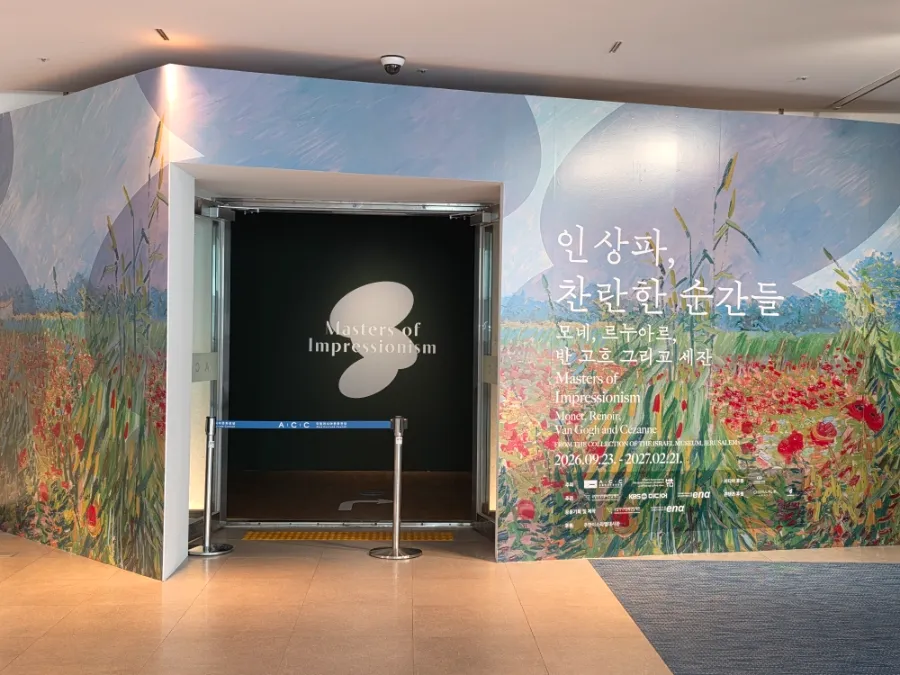
Masters of Impressionism at Asia Culture Center Gwangju
The official English title is Masters of Impressionism: Monet, Renoir, Van Gogh and Cézanne.
The exhibition presents original works by 11 artists associated with Impressionism and Post-Impressionism. The participating artists include Camille Pissarro, Alfred Sisley, Armand Guillaumin, Pierre-Auguste Renoir, Claude Monet, Childe Hassam, Paul Signac, Théo van Rysselberghe, Vincent van Gogh, Paul Gauguin and Paul Cézanne.
I had visited another exhibition at ACC earlier this year, so I was curious to see how this special exhibition would be presented.
One of the biggest reasons I wanted to visit was simple: it is not every day that you can see original Impressionist paintings in Gwangju.
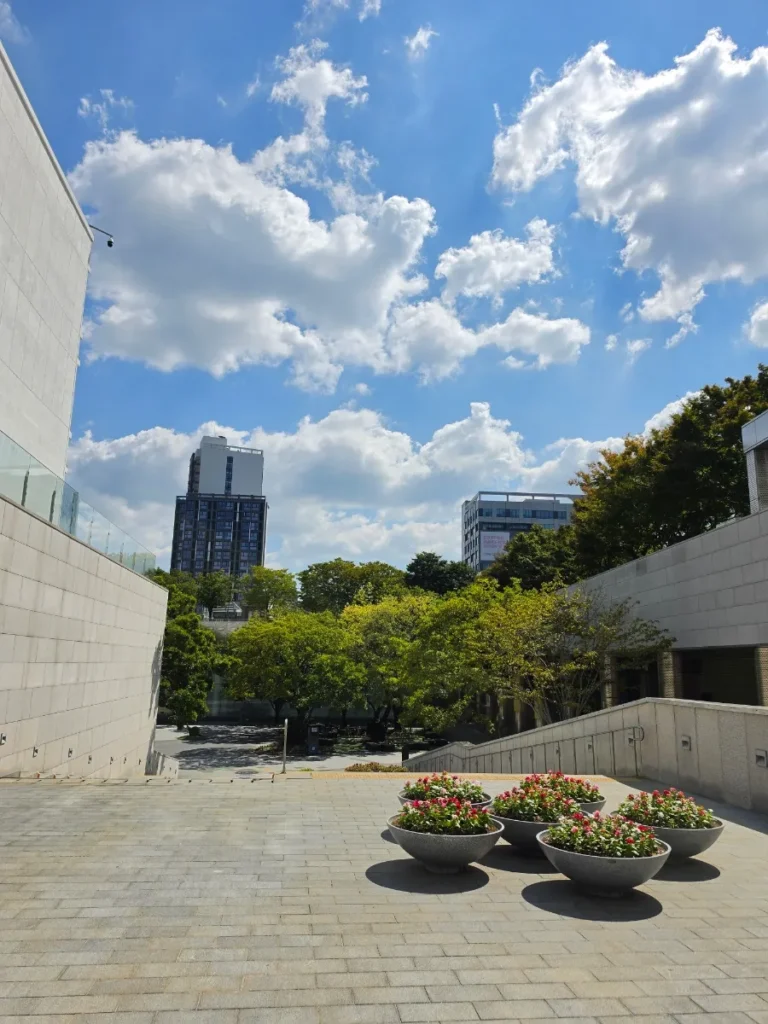
Asia Culture Center Gwangju: Tickets, Hours and Location
Exhibition: Masters of Impressionism: Monet, Renoir, Van Gogh and Cézanne
Venue: Asia Culture Center, Culture Creation Center, Galleries 6 and 7
Address: 38 Munhwajeondang-ro, Dong-gu, Gwangju, South Korea
Dates: September 23, 2026 – February 21, 2027
Hours:
Tuesday, Thursday, Friday and Sunday: 10:00–18:00
Wednesday and Saturday: 10:00–20:00
Monday: Closed
Last admission: One hour before closing
Admission: Adults KRW 13,000 / Children and teenagers KRW 10,000
The closest subway stop is Culture Center Station on Gwangju Metro Line 1, which provides convenient access to the ACC complex.
📍 View Asia Culture Center on Google Maps
What to See at the Gwangju Impressionism Exhibition
The exhibition is divided into three main themes.
The first section focuses on water landscapes and reflections, showing how Impressionist painters captured light changing across water.
The second explores urban landscapes, nature and figures, while the final section focuses on figures and still life.
This structure made it easier to compare how different artists approached light, color and landscape.
Rather than simply moving from one famous name to another, I found myself noticing how differently each painter used color.
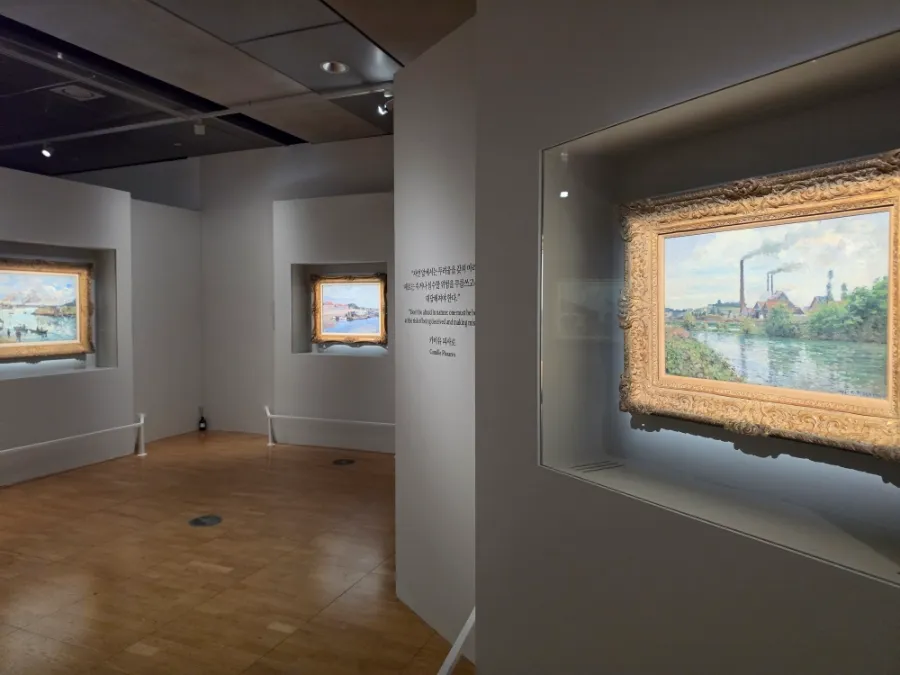
A Smaller Exhibition Than I Expected
One thing worth knowing before visiting is that this is not a huge blockbuster exhibition.
There are 21 original Impressionist and Post-Impressionist works from the Israel Museum collection.
Because Monet, Renoir, Van Gogh and Cézanne appear prominently in the exhibition title, I initially expected a much larger collection.
When I entered the galleries, I was slightly surprised by how quickly I reached the next section.
That was probably my biggest disappointment.
However, the smaller scale also had an advantage.
There was plenty of space between paintings, and I did not feel rushed when standing in front of a work. If you prefer looking carefully at a smaller number of paintings instead of moving quickly through dozens of works, you may actually enjoy the layout.
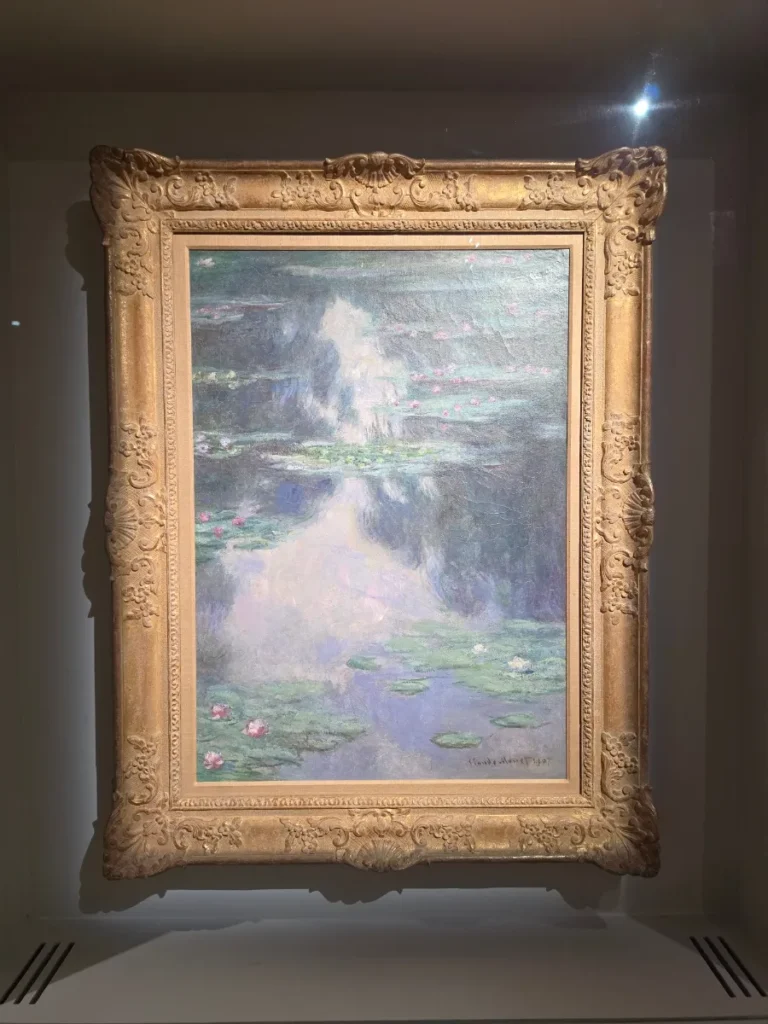
Seeing Monet’s Water Lilies in Gwangju
Claude Monet is one of the artists most strongly associated with Impressionism, so seeing one of his original paintings was one of the highlights for me.
Up close, the painting felt quite different from seeing the same image in an art book or online.
The colors, brushwork and surface were much easier to notice in person.
Helpful English and Korean Artwork Information
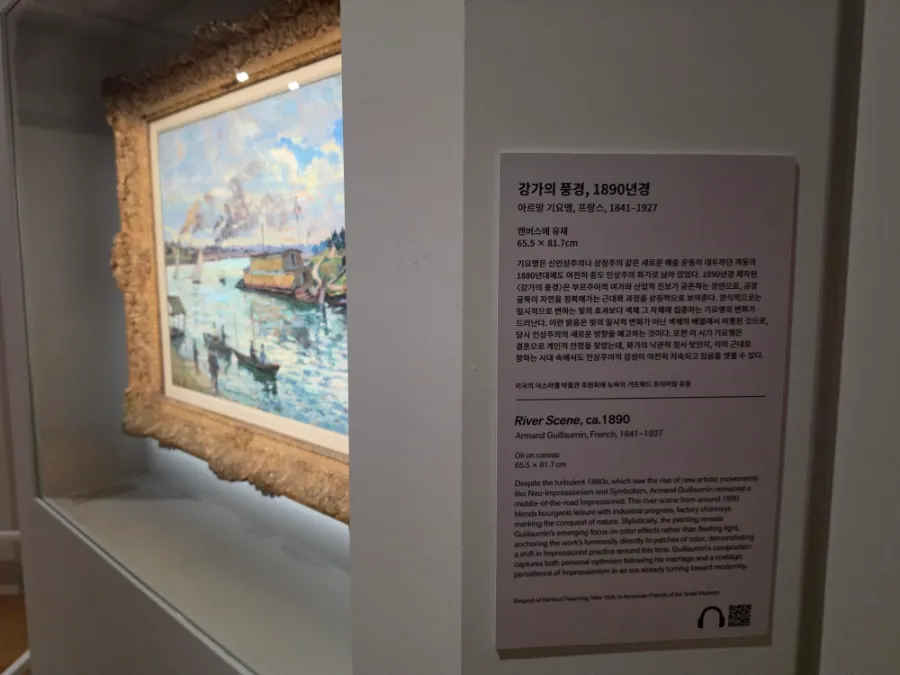
Another detail I appreciated was the placement of the artwork descriptions.
At some exhibitions, labels are positioned too low or the text is too small to read comfortably. Here, the information panels were relatively easy to read.
Descriptions are provided in Korean and English, which makes this exhibition much more accessible for international visitors.
There are also QR codes for an audio guide, so bringing your own earphones is useful if you want more background information while viewing the paintings.
Discovering Artists Beyond Monet and Renoir
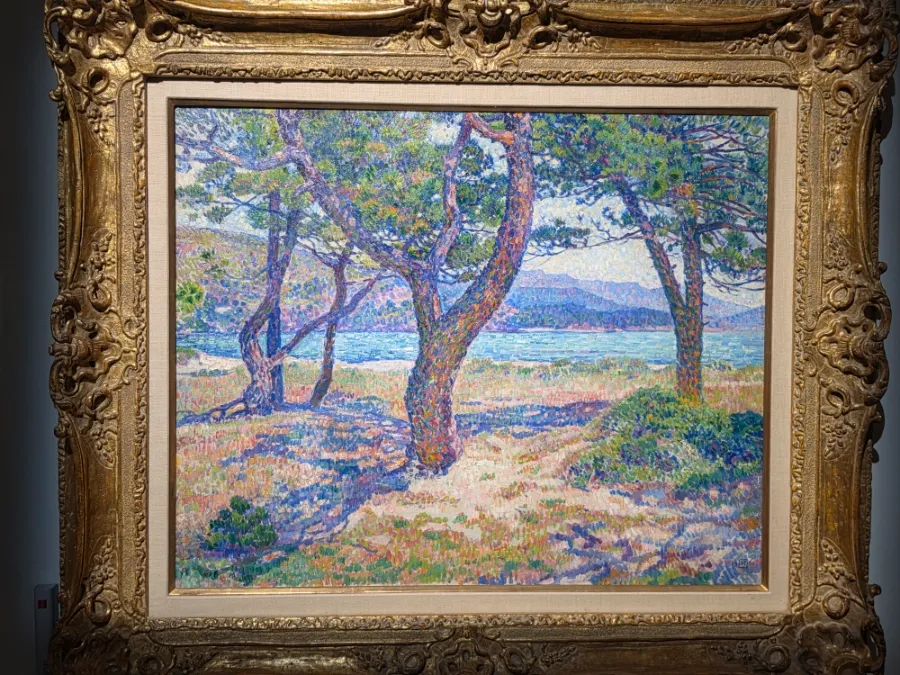
Famous names such as Monet, Renoir and Van Gogh naturally attract attention, but one of the most enjoyable parts of visiting an art exhibition is discovering an artist I had not expected to like.
For me, that was Théo van Rysselberghe.
The purple tones in one of his works initially seemed unusual, but the longer I looked at the painting, the more interesting the color combinations became.
It reminded me that exhibitions are often more enjoyable when you do not focus only on the best-known artists.
Impressionism Media Art After the Original Paintings
After the original artworks, the exhibition continues into a media-art section.
The atmosphere changes considerably here.
Instead of looking at framed paintings, visitors enter spaces that reinterpret Impressionist light and color through digital projections.
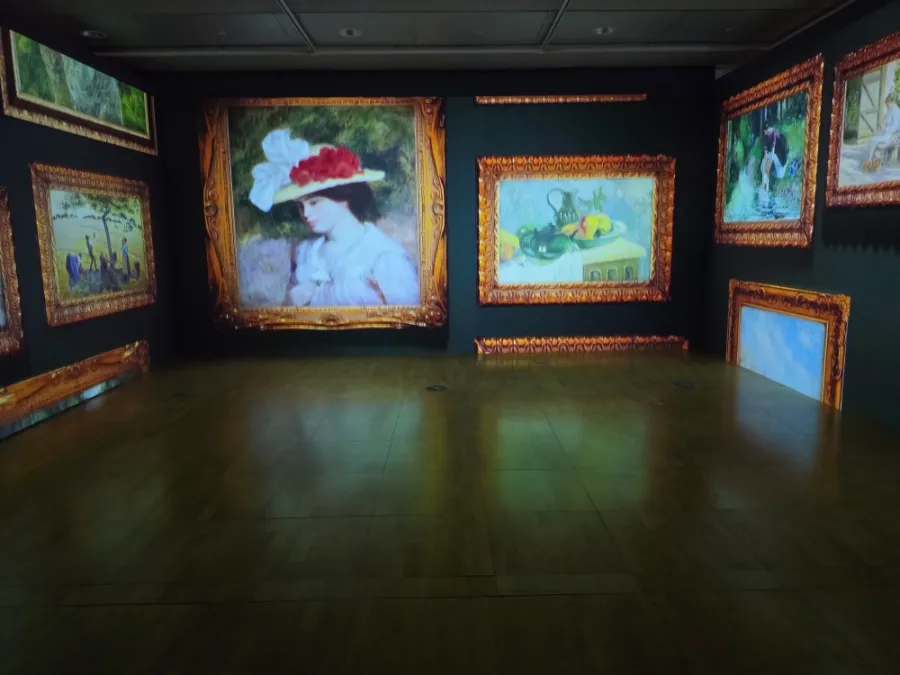
There are also spaces called Path of Light and Monet’s Garden.
I expected the Path of Light to be more immersive after seeing photos beforehand, but the actual installation felt quite simple.
If you are mainly interested in large-scale immersive digital art, this part may feel limited.
For me, the original paintings were clearly the stronger part of the exhibition.
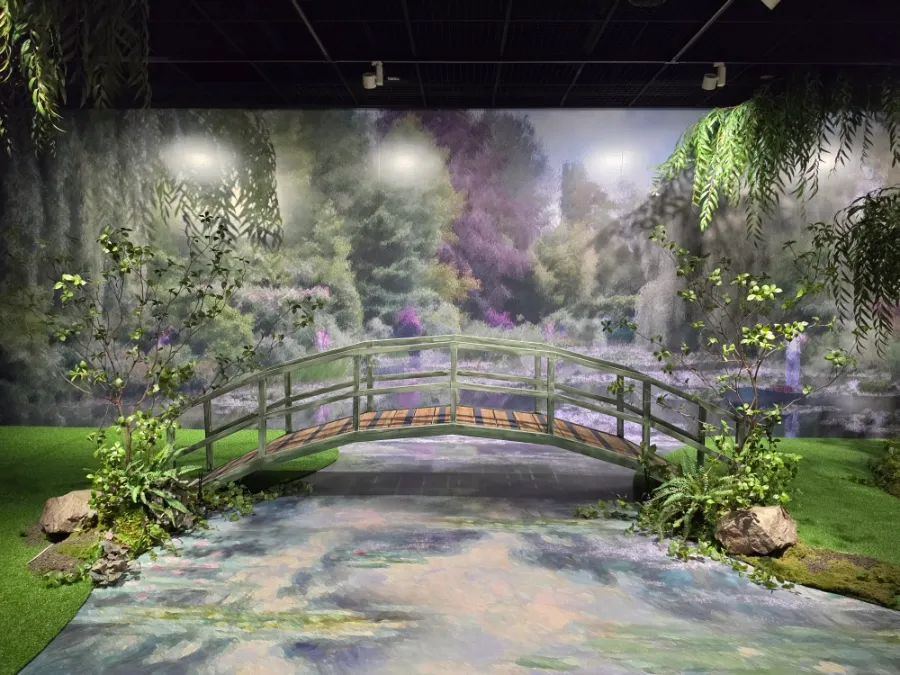
Monet’s Garden Photo Spot
The Monet’s Garden section recreates the atmosphere associated with Monet’s famous garden paintings.
A bridge, greenery and water-lily imagery create an easy photo spot at the end of the exhibition.
It is not a large installation, but it adds a lighter and more interactive ending after the gallery spaces.
Free Exhibition Talk
Visitors who want more context can also join a free special docent program.
According to the official exhibition information, the approximately 40-minute program introduces the background of Impressionism and the major artists included in the exhibition.
One important detail is that this is not a walking docent tour inside the gallery.
The program is held at the Bamboo Garden on B3 in a lecture-style format.
If you are unfamiliar with Impressionism, attending the talk before entering the exhibition could make the paintings easier to understand.
Photography Rules at the ACC Exhibition
Photography is allowed, but there are some restrictions.
Visitors may take photos using smartphones, while DSLR cameras, flash photography, tripods and selfie sticks are prohibited. Large bags and backpacks bigger than A4 size must also be stored outside the exhibition space.
This is useful to know before visiting, especially if you are carrying travel luggage or camera equipment.
Is the Masters of Impressionism Exhibition Worth Visiting?
My feelings about this exhibition were mixed.
The strongest reason to visit is the opportunity to see original paintings by major Impressionist and Post-Impressionist artists in Gwangju.
I also liked the spacious gallery layout, easy-to-read explanations and the chance to spend time with each work without rushing.
On the other hand, the exhibition was smaller than I expected, and the media-art section was fairly simple.
Considering the KRW 13,000 adult admission price, visitors expecting a very large international exhibition may find the scale disappointing.
However, if your main interest is seeing original Impressionist paintings rather than a large immersive show, the exhibition is much more worthwhile.
Who Should Visit This Gwangju Art Exhibition?
I would recommend this exhibition if you:
- enjoy Monet, Renoir, Van Gogh or Impressionist art
- prefer smaller exhibitions where you can view works slowly
- are looking for an indoor attraction in Gwangju
- want to visit a museum or art exhibition during a Gwangju trip
- are already planning to explore the Asia Culture Center
If you are visiting only for a large-scale media-art experience, I would lower your expectations.
Instead, think of this primarily as an opportunity to see original Impressionist paintings.
Final Thoughts
I originally visited expecting a larger exhibition, so the number of works surprised me.
Still, standing in front of paintings I had previously seen only in books or online was a completely different experience.
If you are searching for art museums, exhibitions or indoor things to do in Gwangju, the Asia Culture Center is worth checking because several exhibitions often run at the same time.
Rather than visiting ACC only for Masters of Impressionism, I recommend combining it with other free exhibitions and spaces inside the complex.
That makes the visit feel much more complete, especially if you are planning a half-day itinerary around the Asia Culture Center and other things to do in central Gwangju.
More Korea Art & Museum Guides
Continue exploring Korea’s art and museum scene with these firsthand guides: