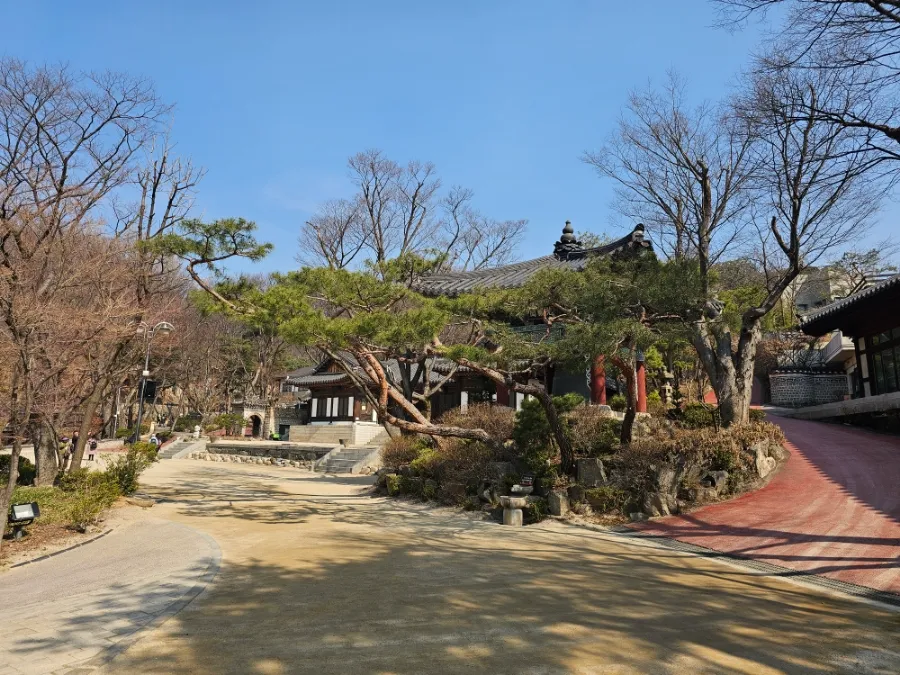
Gilsangsa Temple had been on my Seoul travel list for a long time. I kept thinking that I should visit someday, but its location in northern Seoul always felt a little far from where I lived.
One Saturday morning, I finally planned a day in Seongbuk-dong. After finding a local restaurant for lunch, I decided to begin with a quiet walk around Gilsangsa Temple.
Located in a residential neighborhood at the foot of the hills, Gilsangsa feels surprisingly peaceful for a Buddhist temple in Seoul. It is a good place to slow down, walk among the trees, and experience a quieter side of the city.
Gilsangsa Temple Quick Guide
- Korean name: 길상사
- Address: 68 Seonjam-ro 5-gil, Seongbuk-gu, Seoul
- Korean address: 서울특별시 성북구 선잠로5길 68
- Area: Seongbuk-dong
- Admission: No admission ticket required
- Recommended visit: Approximately 40–60 minutes
- Nearest subway station: Hansung University Station, Line 4
- Public transportation: Take Seongbuk 02 village bus from Exit 6 of Hansung University Station and get off at Gilsangsa Temple
- 📍 View Gilsangsa Temple on Google Maps
Opening hours and access to individual halls may change according to Buddhist services and temple events. Check the official Gilsangsa Temple website for current opening information and temple schedules before making a special trip.
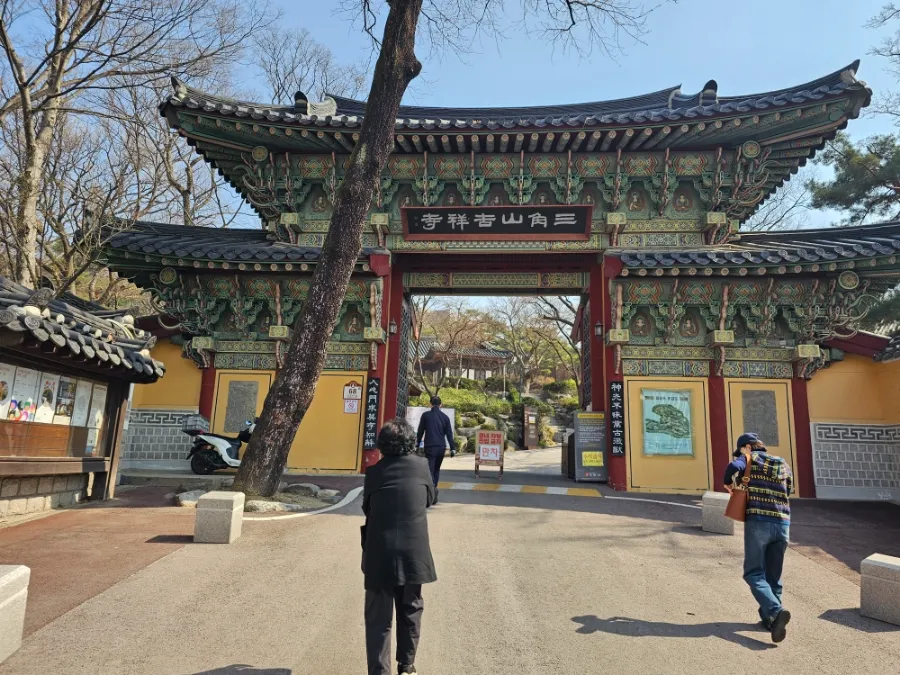
Arriving at Gilsangsa Temple in Seongbuk-dong
When the village bus stopped in front of the temple, most of the passengers got off and walked through the entrance together.
The grounds felt calm almost immediately. Unlike Seoul’s busy palace districts and shopping streets, there were no large tour groups or people rushing from one attraction to another.
Gilsangsa is not a large temple that requires several hours to explore. Its appeal lies in walking slowly between the halls, trees, stone walls, and small meditation spaces.
sychoi’s Tip: Seongbuk-dong has several slopes, so comfortable walking shoes are helpful. The village bus is more convenient than walking all the way from Hansung University Station.
The Meaning of “Clear and Fragrant”
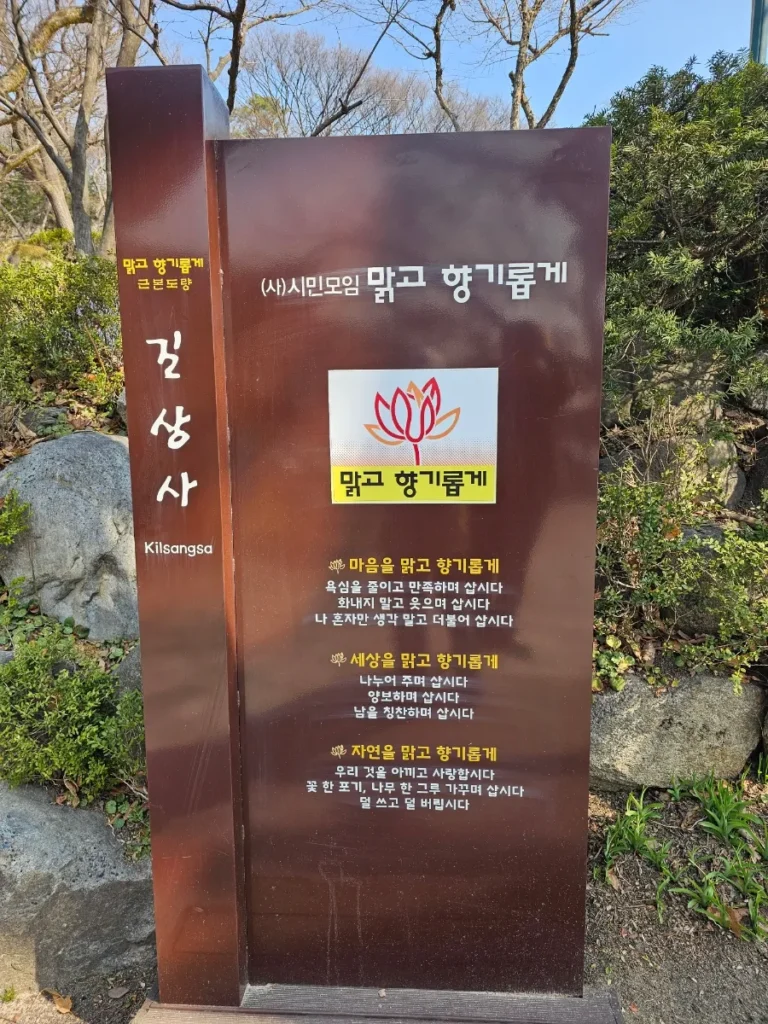
One of the first signs I noticed carried the phrase “Clear and Fragrant,” or Malgo Hyanggiropge (맑고 향기롭게) in Korean.
The words were simple, but reading them made me feel as though my thoughts were becoming a little clearer. I quietly repeated the phrase while walking around the temple.
“Clear and Fragrant” is closely associated with Venerable Beopjeong, one of Korea’s best-known Buddhist monks. His teachings emphasized simple living, inner reflection, and musoyu—the idea of non-possession.
The Unusual History of Gilsangsa Temple
Gilsangsa has a different history from many ancient Buddhist temples in Korea.
The site was once Daewongak, an exclusive traditional restaurant and entertainment venue. Its owner, Kim Yeong-han, donated the property to Venerable Beopjeong so that it could be transformed into a Buddhist temple.
Gilsangsa officially opened in 1997. Some of its buildings still feel different from the grand halls found at older mountain temples, which gives the grounds a distinctive atmosphere. The Seoul Metropolitan Government describes it as a temple created on the former Daewongak site and an important cultural attraction in Seongbuk-dong.
Knowing this history made the visit more meaningful. A place once associated with wealth and private entertainment had become a space devoted to reflection, meditation, and sharing.
Gilsangsa Seven-Story Stone Pagoda
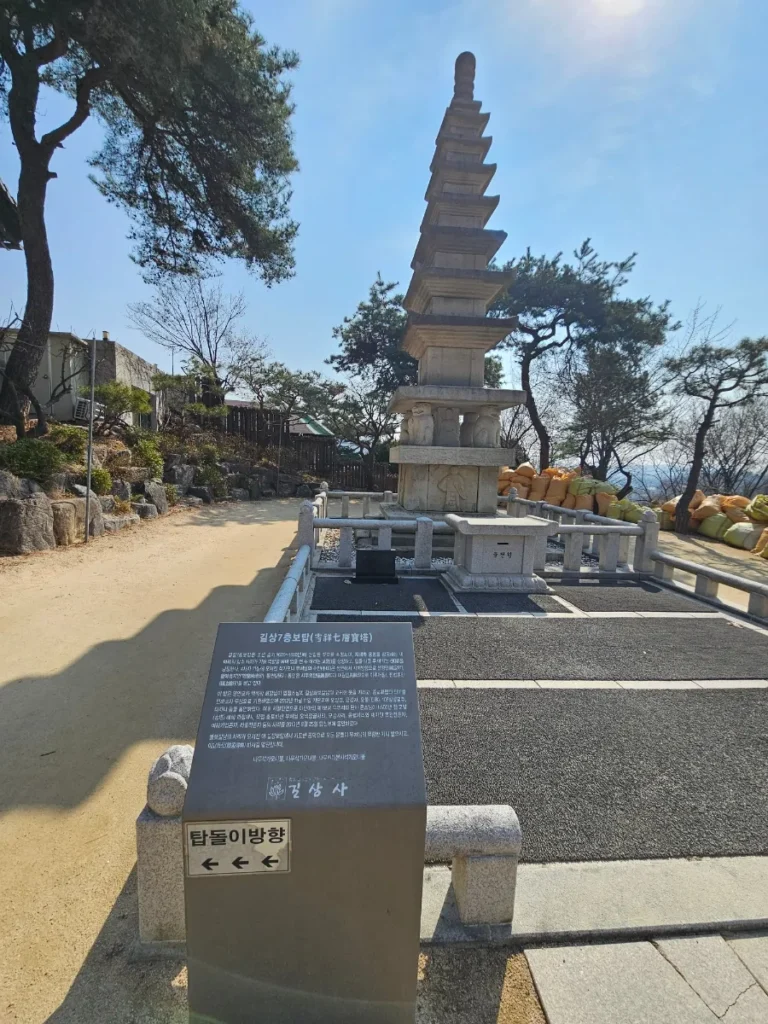
A seven-story stone pagoda stands on one side of the temple grounds.
The pagoda is known as Gilsang Chilcheung Botap (길상칠층보탑). Its tall, slender shape is different from the shorter stone pagodas commonly seen at many Korean temples.
I am not Buddhist, but I often visit temples when I want to walk somewhere quiet. I had recently visited Jeondeungsa and Bomunsa temples on Ganghwa Island, while Bongeunsa had previously been the Buddhist temple in Seoul I visited most often.
Each temple has a different atmosphere. Gilsangsa felt less monumental than some historic mountain temples, but it was more intimate and peaceful.
Geungnakjeon Hall
Geungnakjeon is one of the main Buddhist halls at Gilsangsa.
A Buddhist service was taking place when I visited, so I did not enter. I stayed outside, observed quietly, and continued walking around the grounds.
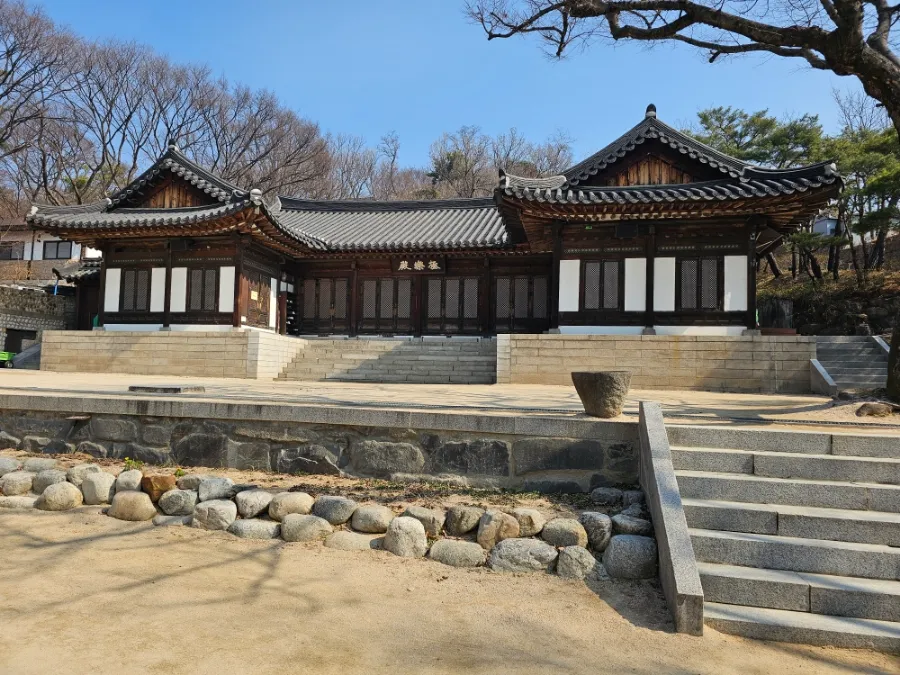
Gilsangsa is an active religious site rather than only a tourist attraction. Visitors should speak quietly, avoid photographing worshippers, and check whether a ceremony is taking place before entering a hall.
You should also remove your shoes when required and follow any signs or instructions from temple staff.
House of Silence
Another memorable place was the House of Silence.
This small meditation space allows visitors to sit quietly and spend time alone. I wanted to go inside, but another visitor was already meditating there, so I took a photograph from outside and left him undisturbed.
The House of Silence reflects what I enjoyed most about Gilsangsa. You do not need to follow a complicated sightseeing route. Simply walking, sitting, and listening to the sounds around you can become the main experience.
Gilsangsa is open to visitors regardless of their religion, and its meditation spaces are part of what makes it a relaxing place to visit in Seoul.
Jinyeonggak Hall and Venerable Beopjeong
Gilsangsa Temple is closely connected with Venerable Beopjeong, so I especially wanted to visit Jinyeonggak Hall.
I had read about Gilsangsa in his books several times, yet it had taken me years to finally come here.
“I’m finally here, Venerable Beopjeong.”
I said the words silently as I approached the hall.
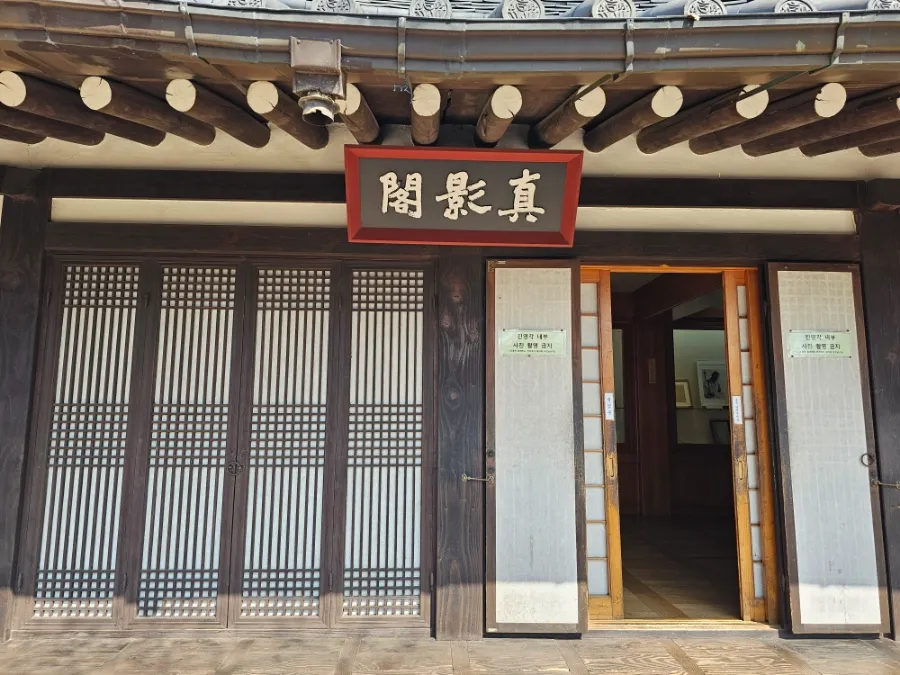
Inside Jinyeonggak, visitors can see a portrait of the monk and items connected with his life. It is not a large or elaborate exhibition, but the modest setting suits his teachings about simplicity and non-possession.
Even if you have not read his books, this small hall helps explain why Gilsangsa is more than an attractive Buddhist temple. It is also a place where visitors can encounter ideas about how to live with less and reflect more deeply.
Spring Plum Blossoms at Gilsangsa
I visited in early spring.
Although plum blossoms often bloom earlier at Bongeunsa Temple, the trees at Gilsangsa were only beginning to open during my visit. Bright red buds appeared between the bare branches against the blue sky.
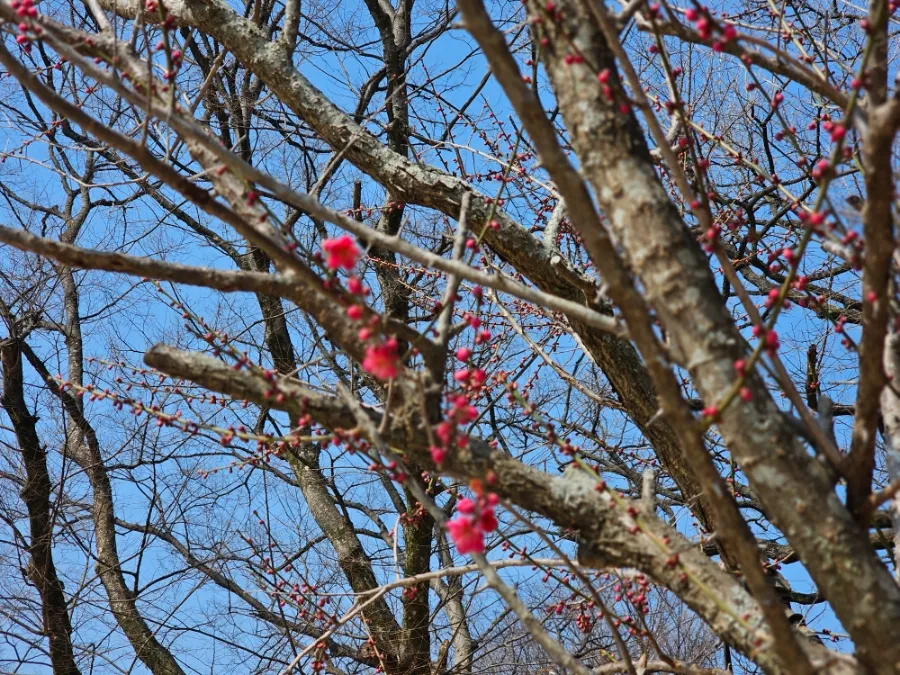
The flowers were not yet at their peak, but I enjoyed seeing the first signs of spring. The temple would look different in every season, with fresh leaves in spring, deep shade in summer, colorful foliage in autumn, and bare trees in winter.
For photographs, spring and autumn may be the most attractive seasons. However, the peaceful atmosphere is the main reason to visit, so Gilsangsa can still be worthwhile at other times of the year.
How to Get to Gilsangsa Temple
The easiest public transportation route is:
- Take Seoul Subway Line 4 to Hansung University Station.
- Leave through Exit 6.
- Transfer to the Seongbuk 02 village bus.
- Get off at the Gilsangsa Temple stop.
This route is also provided by Seoul’s official tourism information.
Many passengers got off at Gilsangsa when I visited on Saturday morning, so allow extra time when traveling on a weekend. If you prefer walking, check the route carefully because Seongbuk-dong is hilly.
Gilsangsa can be included in a two- to three-hour Seongbuk-dong walking itinerary with historic houses and cultural sites.
Try a Korean Calligraphy Class in Seoul
After visiting a Buddhist temple in Seoul, you may want to continue exploring traditional Korean culture through a hands-on activity.
This Korean calligraphy class in Seoul introduces Hangul brush writing and allows participants to create their own piece of Korean calligraphy.
It may appeal to travelers interested in Korean art, Hangul, meditation, or slow cultural experiences. Check the class location, language, schedule, included materials, and cancellation conditions on the booking page before reserving.
▶ Book the Korean Calligraphy Class in Seoul on Klook
Affiliate disclosure: This section contains an affiliate link. If you book through it, I may earn a small commission at no additional cost to you.
Is Gilsangsa Temple Worth Visiting?
Gilsangsa Temple is worth visiting if you are looking for a quiet place in Seoul away from crowded tourist attractions.
It may not suit travelers searching for a large ancient temple filled with national treasures. The grounds are relatively compact, and the experience is more reflective than dramatic.
However, Gilsangsa offers something that can be difficult to find in a busy city: room to walk slowly and think.
I enjoyed the wooded paths, the unusual history, the connection with Venerable Beopjeong, and the simple message “Clear and Fragrant.”
If you are planning a Seongbuk-dong itinerary, begin with Gilsangsa Temple and then continue to a nearby restaurant, traditional tea house, museum, or historic home. It is a gentle way to discover a quieter and more thoughtful side of Seoul.
More Seoul Culture Guides
Continue exploring Seoul’s quieter cultural attractions with these firsthand guides: