Tonguidong Gukbingwan is a Hanwoo Korean BBQ restaurant near Gyeongbokgung Palace in Seoul. Tucked down a small alley in Seochon, it offers tabletop grilling and dining tables overlooking a pine-tree courtyard. Here’s what my sister and I ordered, how much it cost, and what stood out during our visit.
I’m Choi, a Seoul-based travel writer. When my sister came to visit Seoul, we went here for a meal together. The beautifully marbled beef caught my attention first, but the pine-tree courtyard and the poached-egg dipping sauce were just as memorable.
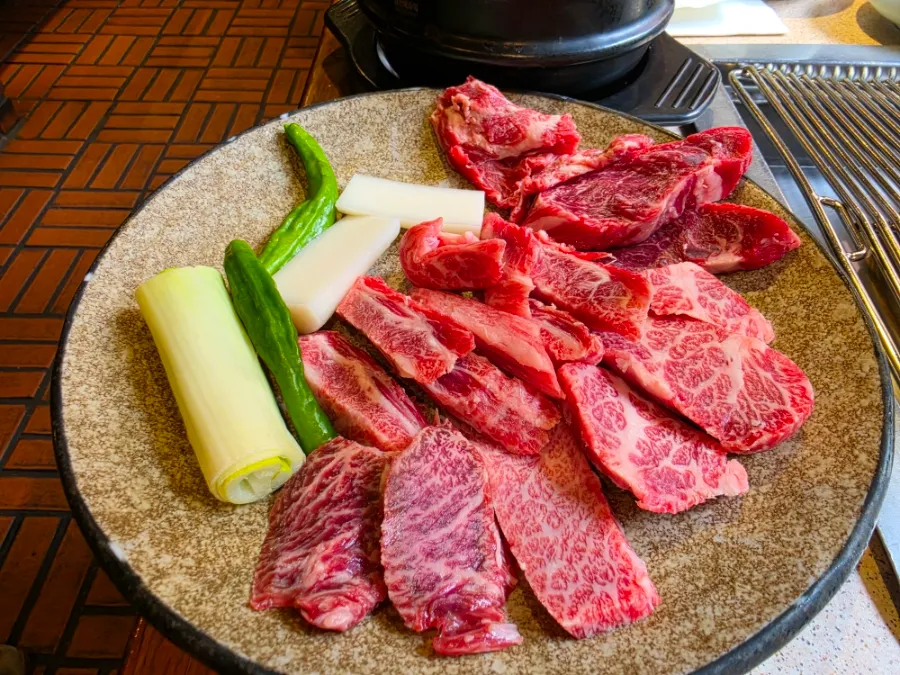
Tonguidong Gukbingwan: Location and Reservations
| Information | Details |
|---|---|
| Restaurant | Tonguidong Gukbingwan, Gyeongbokgung Station branch |
| Korean name | 통의동 국빈관 경복궁역점 |
| Address | 17-4 Jahamun-ro 2-gil, Jongno-gu, Seoul, 1st floor |
| Korean address | 서울특별시 종로구 자하문로2길 17-4, 1층 |
| Nearest subway | Gyeongbokgung Station, Line 3 |
| Walking time | Less than five minutes from the station during my visit |
| Main dish | Hanwoo beef grilled at the table |
| Reservation | I booked in advance through Naver |
| Our order | Two servings of Hanwoo, one noodle dish and one bowl of rice |
| Menu total | KRW 101,000 at the time of my visit |
Find Tonguidong Gukbingwan on Google Maps
Check the restaurant’s current opening hours and menu before visiting, as prices and operating arrangements may change.
Finding the Restaurant Near Gyeongbokgung Station
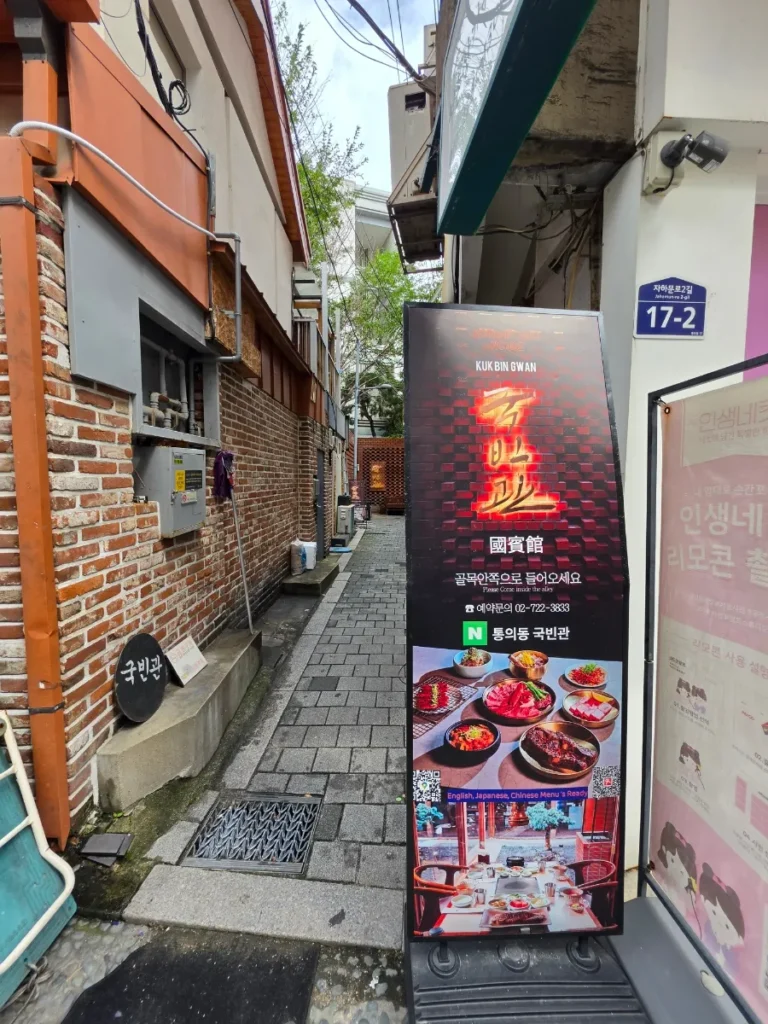
The walk from Gyeongbokgung Station took us less than five minutes. Along the way, we passed visitors wearing hanbok, Korea’s traditional clothing, as they explored the palace neighborhood.
The restaurant was set back from the main street. Once we entered the alley, the surroundings felt quieter.
I had reserved through Naver beforehand, and I was glad I did. During our visit, some people who arrived without reservations left because there were no available tables.
That was my experience on the day, but I would recommend booking ahead if you have a particular meal time in mind.
A Pine-Tree Courtyard and Window-Side Tables
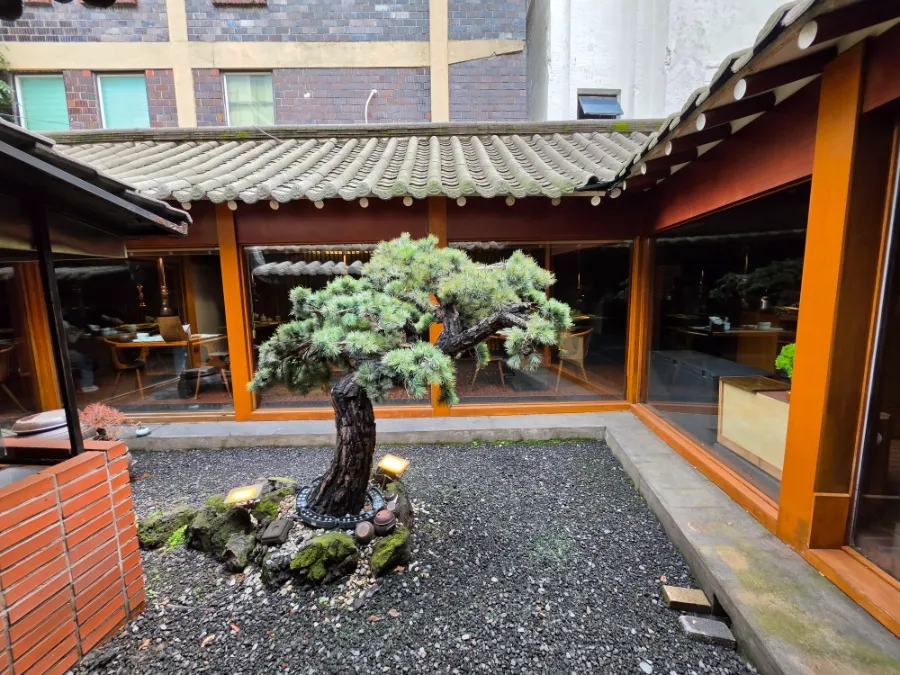
As soon as we entered, I noticed the pine tree in the courtyard. Its shape, the gravel below and the surrounding tiled roofs gave the space a calm atmosphere.
My sister and I were shown to a table beside the windows.
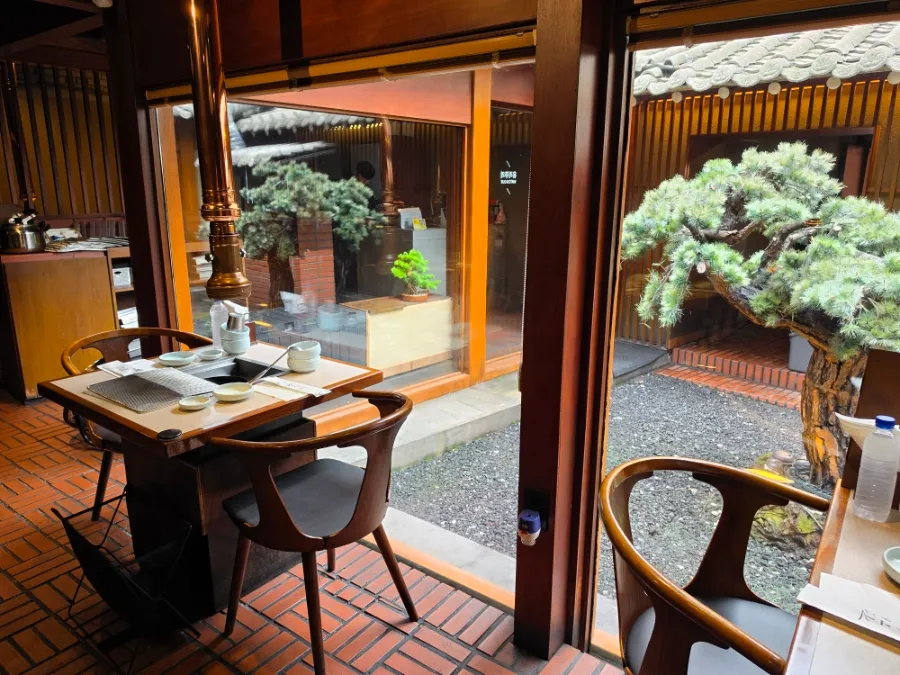
Being able to look outside made the meal feel more relaxed. It was a comfortable setting for catching up with my sister over food.
If you are choosing a restaurant for a family meal or a date near Gyeongbokgung, the setting is part of the appeal. Our table overlooked the courtyard, though seating will depend on availability.
Korean Side Dishes Before the Beef
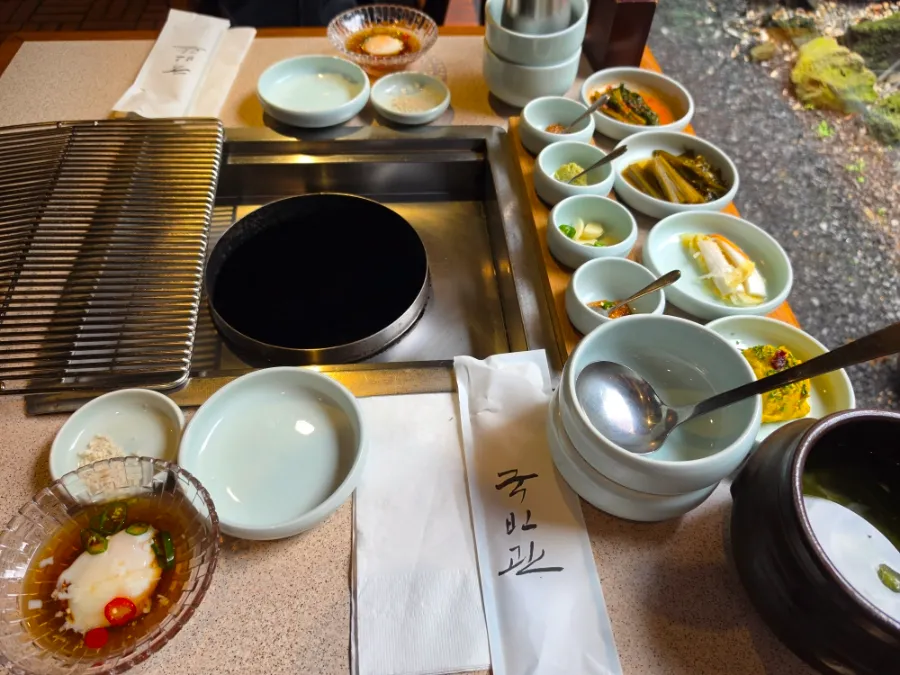
The table was already set with several small dishes, including kimchi, sweet pumpkin salad, water kimchi and soybean paste.
These small accompaniments are called banchan in Korean. They are eaten alongside the main dish, so you can alternate between bites of meat, vegetables and other flavors.
The water kimchi, or mul-kimchi, was especially good. Unlike the familiar red cabbage kimchi, this style is served in a light brine that you can sip as well as eat with the vegetables.
I grew up in Jeolla Province, where food is a frequent topic of conversation, and this water kimchi suited my taste.
There was also jeotgal, salted and fermented seafood served as a condiment. It has a concentrated savory flavor, so a little is enough. I liked adding a small amount to the beef or eating it with rice.
My sister and I were already enjoying the side dishes before the meat arrived.
Tonguidong Gukbingwan Menu and Prices
We started with two servings of the 1++ Hanwoo assorted beef platter, then added noodles and rice during the meal.
| Menu item | Quantity | Price during my visit |
|---|---|---|
| 1++ Hanwoo assorted platter, 130g per serving | 2 | KRW 90,000 |
| Hanwoo brisket bibim makguksu | 1 | KRW 10,000 |
| Steamed rice | 1 | KRW 1,000 |
| Total | KRW 101,000 |
The beef cost KRW 45,000 per 130-gram serving. Our two servings came to 260 grams in total.
If you are unfamiliar with Korean BBQ menus, the gram amount matters: one “serving” of meat does not necessarily mean a complete meal for one person. Rice and noodles may be ordered separately, as they were here.
What Is Hanwoo Beef?
Hanwoo is beef from native Korean cattle. It is prized for its flavor and marbling—the fine streaks of fat within the meat.
The platter we ordered was labeled 1++, the highest Korean beef quality grade. This is a Korean grading designation, rather than a direct equivalent of another country’s beef grades.
We ordered the assorted Hanwoo platter so we could try several cuts in one meal. If you are unfamiliar with Korean beef cuts, an assortment is a convenient place to start.
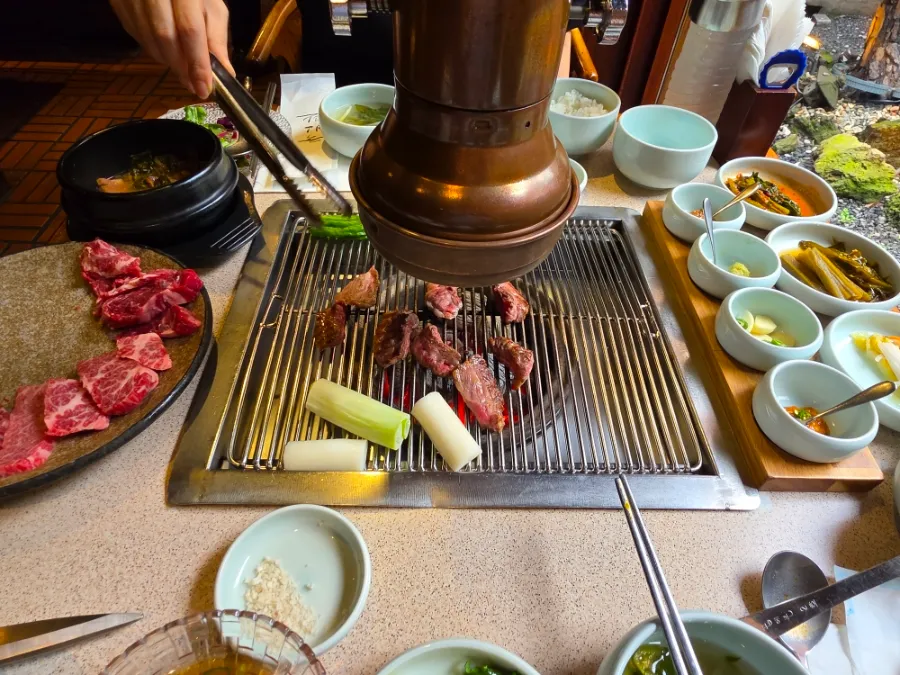
At first, I wondered whether 260 grams would be enough for the two of us. We ate slowly, and with the noodles, rice and soup, the overall meal worked for us.
If your priority is a generous amount of meat, you may want to budget for another serving.
The Poached-Egg Ponzu Sauce Was a Highlight
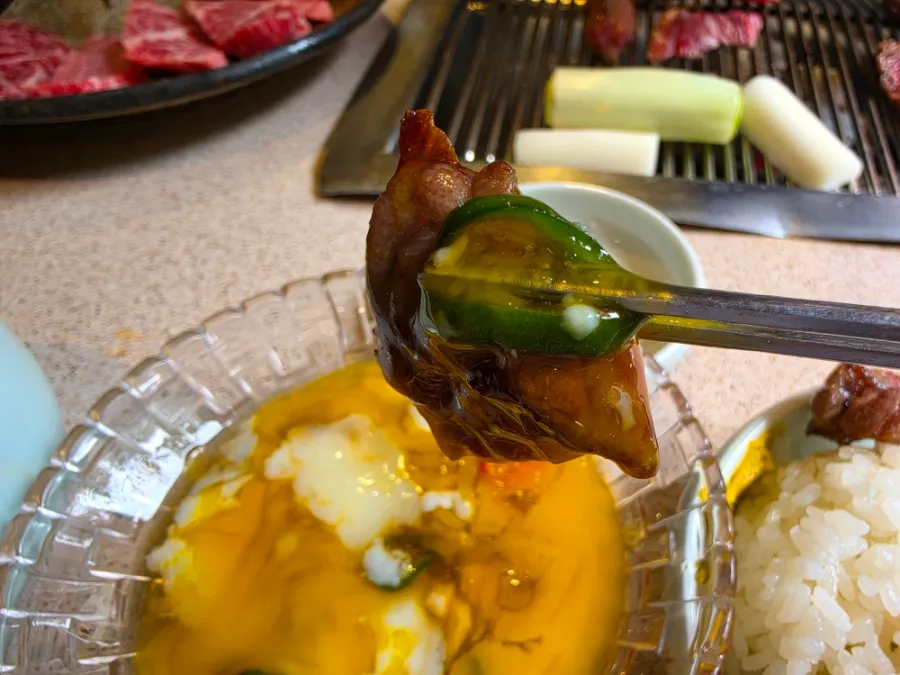
Good beef needs very little seasoning, so I tried it with salt first. Then I moved on to the sauce I had been curious about since we sat down.
It combined suran, a poached egg, with ponzu, a tangy citrus-based sauce, and sliced chili.
You break the egg into the sauce before dipping the cooked beef. The soft yolk coats the meat, while the ponzu and chili add a different flavor to each bite.
I had previously enjoyed dipping sukiyaki beef into raw egg at a restaurant in Hapjeong. This reminded me of that experience, but the poached egg and ponzu combination had its own character.
I kept switching between salt, the egg sauce and a little jeotgal. It was a simple way to enjoy the same beef in several different ways.
Siraegi Soup and Rice
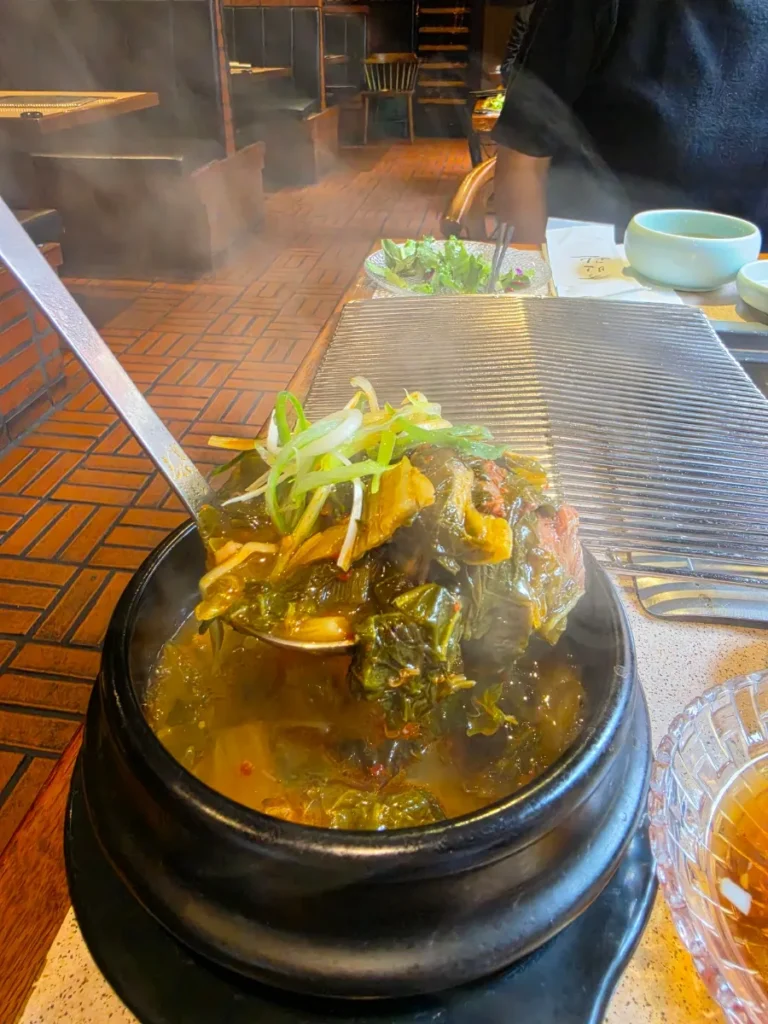
I had planned to order doenjang-jjigae, a Korean fermented soybean paste stew, toward the end of the meal. Before we did, the restaurant brought us a complimentary soup filled with siraegi.
Siraegi are dried radish greens, which are rehydrated and cooked in soups and other dishes. They have a pleasantly fibrous texture and absorb the flavor of the broth.
We added one bowl of steamed rice and ate it with the soup.
This soup was offered to us during our visit. I would treat it as a welcome extra we received that day, rather than something to assume is included with every order.
Spicy Buckwheat Noodles with Hanwoo Brisket
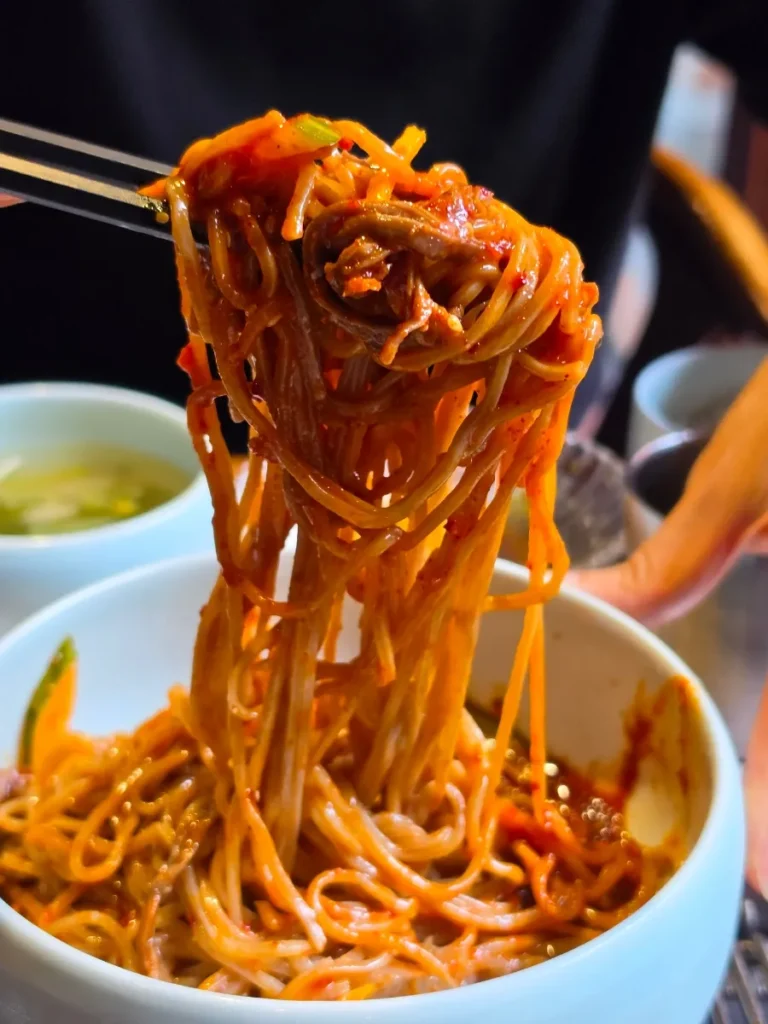
My sister wanted to try another dish, so we added the Hanwoo brisket bibim makguksu.
Makguksu is a Korean buckwheat noodle dish, usually served cold. Bibim means mixed: you toss the noodles with the sauce and toppings before eating.
This version came with Hanwoo brisket, a cut from the breast or lower chest of the animal.
The noodles were chewy, and the sauce left a moderately spicy finish for my palate. I liked alternating between the noodles and the beef.
If you are sensitive to chili, keep in mind that this is a spicy mixed noodle dish. For us, one bowl was a good addition to share.
Is Tonguidong Gukbingwan Worth Visiting?
I would consider Tonguidong Gukbingwan for a planned meal near Gyeongbokgung, especially if you want to try Hanwoo in a setting that feels a little more special.
Our order came to around KRW 50,500 per person, based on the menu prices during the visit. It is a higher-budget meal than a casual bowl of soup or noodles, and the meat portions are worth checking before ordering.
What I remember most is the combination: the pine tree outside our window, the different beef cuts, and the poached-egg sauce that made us keep trying another bite.
It was a lovely place to spend time with my sister while she was in Seoul.
Explore Gyeongbokgung Palace and Ikseondong With a Private Tour
If you are planning a day around Seoul’s historic neighborhoods, Klook lists a Gyeongbokgung Palace and Ikseondong Hanok Village private tour.
Gyeongbokgung is a royal palace, while Ikseondong is known for its lanes of hanok, traditional Korean houses, many of which now accommodate cafés, shops and restaurants.
The tour listing describes an approximately 10-hour experience with an English-speaking guide, hotel pickup and a private group of one to eight people.
I did not take this tour during my restaurant visit. It is an option for readers who would prefer a guided day exploring these areas.
The restaurant meal described in this post is separate. If you want to include Tonguidong Gukbingwan in your day, ask the tour operator whether the schedule can accommodate your reservation before booking both.
Check the Seoul Gyeongbokgung Palace & Ikseondong Hanok Village Private Tour on Klook
Affiliate disclosure: This section contains an affiliate link. If you book through it, I may earn a commission at no additional cost to you.