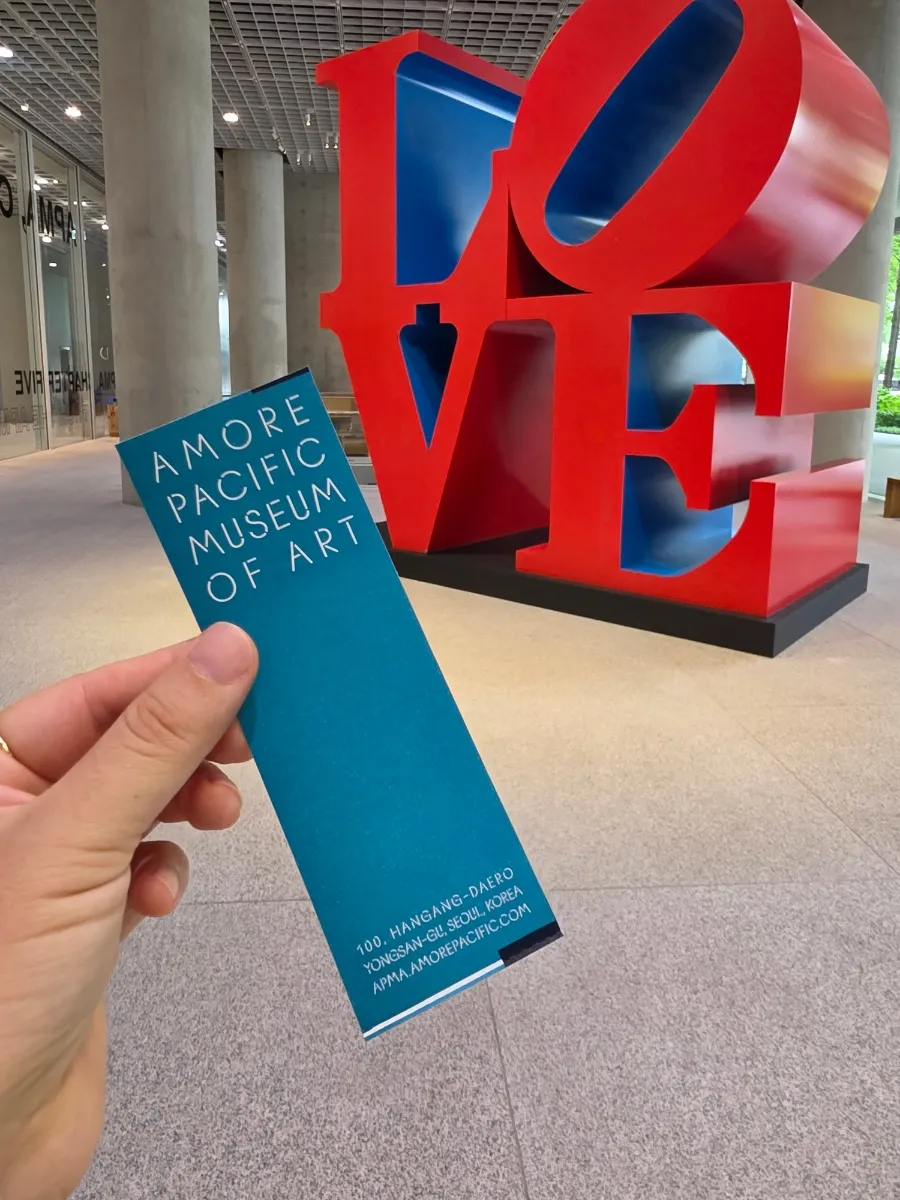
The Amorepacific Museum of Art in Seoul is located inside the company’s headquarters near Sinyongsan Station in Yongsan. I visited in July 2026 and spent about an hour and a half exploring a collection exhibition with an audio guide.
I’m Choi, a Seoul-based travel writer. After starting orthodontic treatment, I took a break from my usual trips to Southeast Asia and began exploring more museums closer to home. This was one of the places I discovered along the way.
This review includes practical visitor information and photographs from that visit. Exhibitions and admission prices change, so check the museum’s current program before you go.
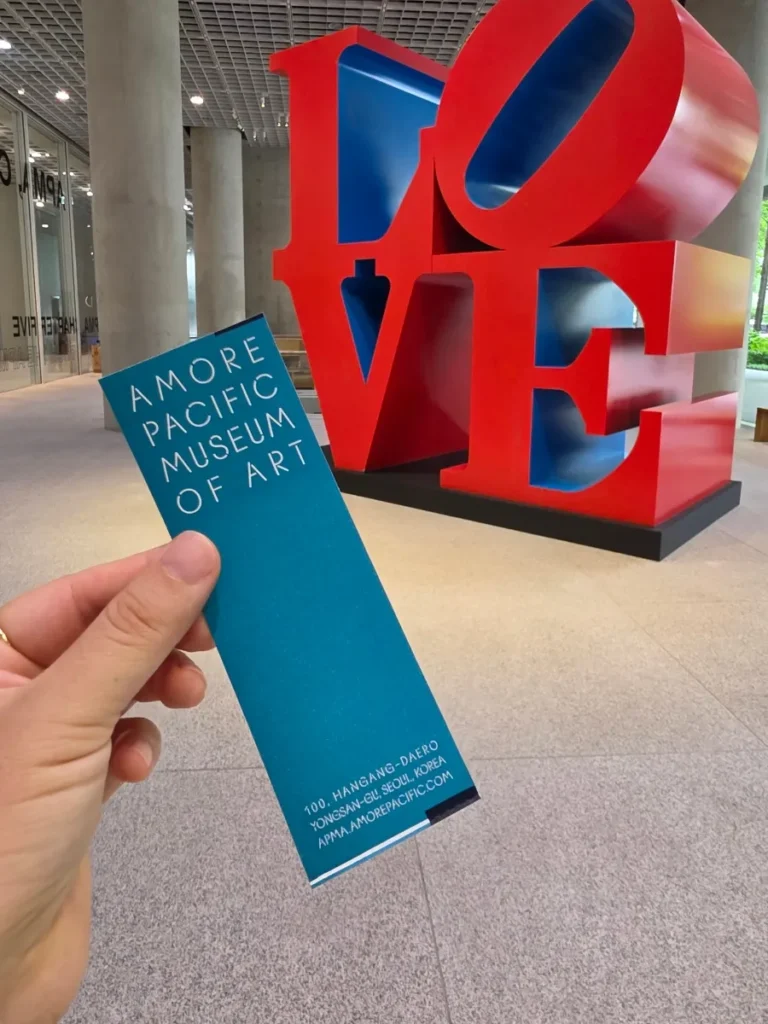
Amorepacific Museum of Art: Visitor Information
| Information | Details |
|---|---|
| Museum | Amorepacific Museum of Art, also known as APMA |
| Korean name | 아모레퍼시픽미술관 |
| Address | 100 Hangang-daero, Yongsan-gu, Seoul |
| Korean address | 서울특별시 용산구 한강대로 100 |
| Location | Inside Amorepacific headquarters; exhibition galleries on B1 |
| Nearest subway | Sinyongsan Station, Line 4 |
| Regular opening hours | 10:00 a.m.–6:00 p.m. |
| Last admission | 5:30 p.m. |
| Regular closing day | Monday; check additional holiday and exhibition-change closures |
| Admission during my visit | KRW 13,000 |
| Suggested visit length | Around 1.5–2 hours |
| Audio guide | A free app-based guide was available during my visit |
| Phone | +82-2-6040-2345 |
📍 Find Amorepacific Museum of Art on Google Maps
The admission price and artworks described below reflect my visit. Check the current exhibition, ticket price, and booking requirements before going.
About this review: I visited the Amorepacific Museum of Art in July 2026. The photographs and artwork descriptions below are from the collection exhibition I saw at that time. Exhibitions change, so these works may not be on display when you visit. Please check the museum’s official website for the current exhibition.
Getting to Amorepacific Museum of Art
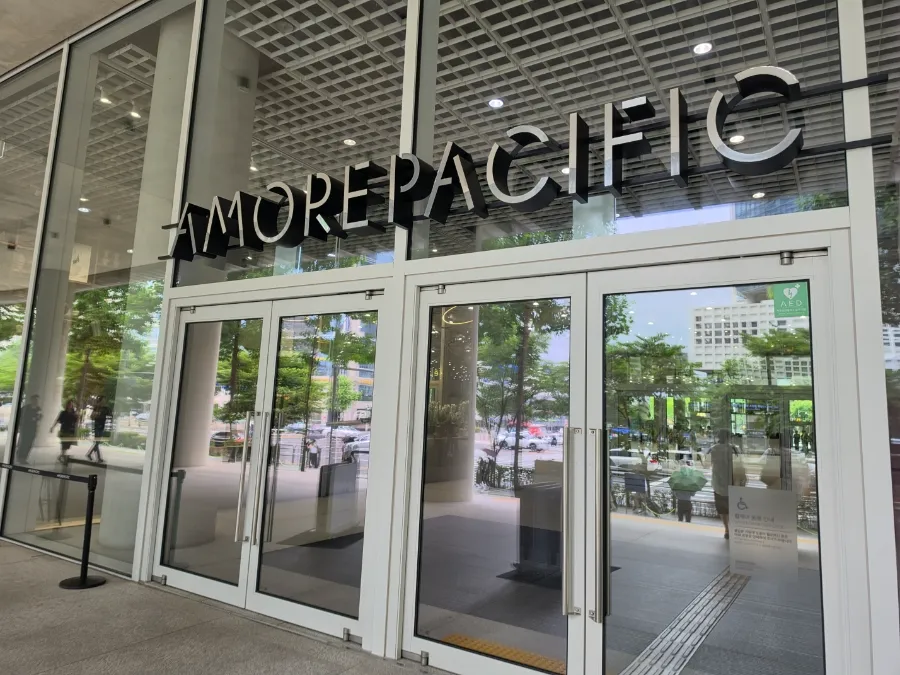
The museum is close to Sinyongsan Station on Subway Line 4, making it convenient to reach by public transport.
If you use a Korean map app, search for 아모레퍼시픽미술관. The museum is inside the Amorepacific headquarters building at 100 Hangang-daero.
During my visit, I bought my ticket at the ground-floor counter and then went down to the B1 exhibition galleries.
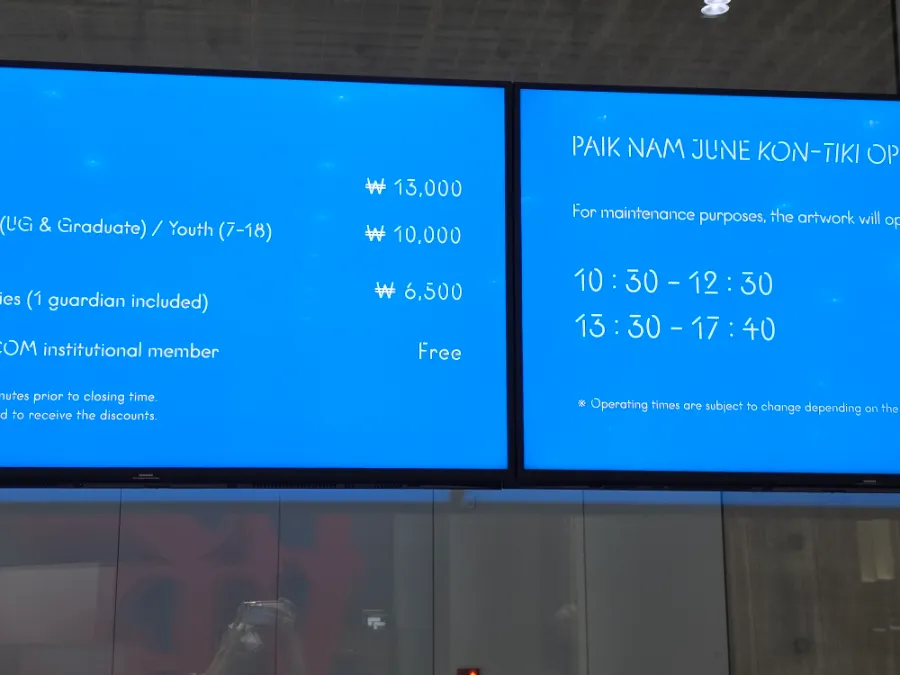
I was able to purchase a ticket on arrival, but booking arrangements can differ between exhibitions. It is worth checking the current ticket page before making a special trip.
The Building Was Part of the Experience
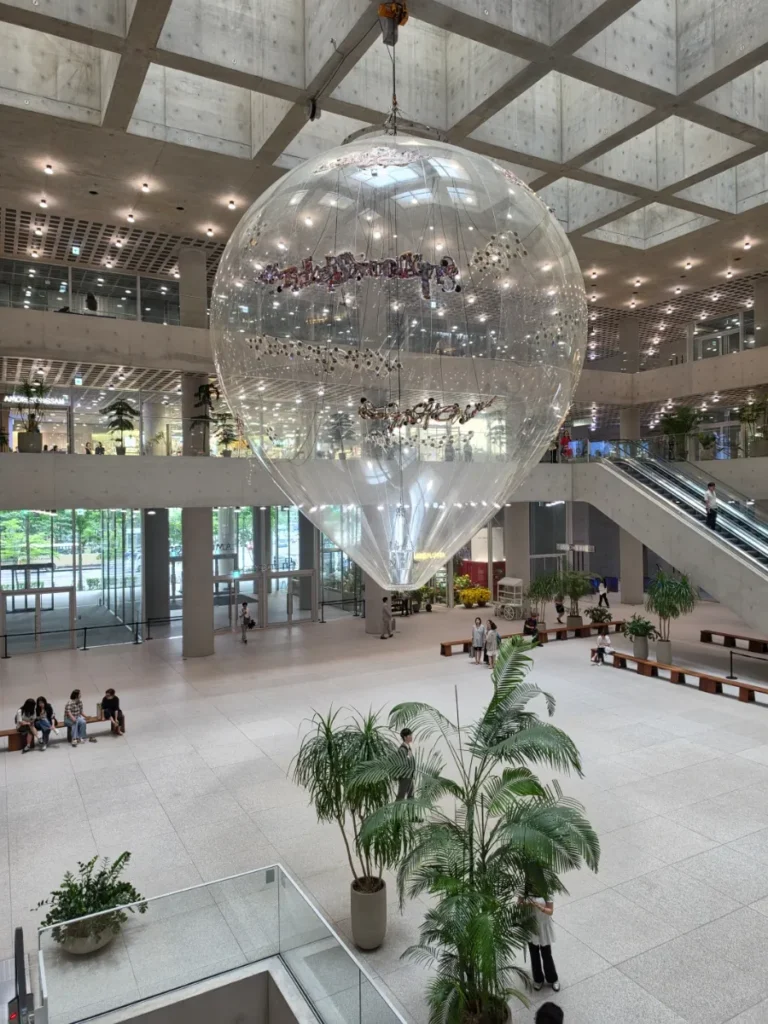
Before entering the exhibition, I spent some time looking around the building.
A huge transparent installation hung in the atrium. Beneath it, people sat on benches or walked through the open space. Plants softened the gray interior, while the concrete ceiling formed a grid overhead.
I had come to see an exhibition, but I found myself taking photographs of the building, too.
Would I ever have walked inside if I hadn’t been looking for museums to visit in Seoul? Probably not. Exploring my own city has been giving me reasons to enter places I would otherwise pass by.
Exploring the Collection With a Free Audio Guide
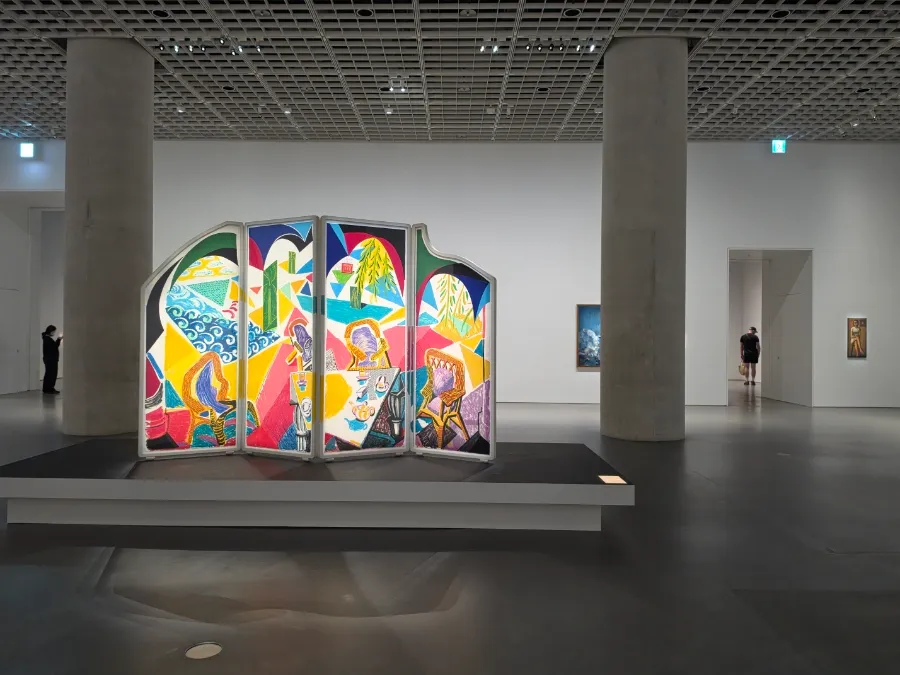
The exhibition I visited featured works from the museum’s collection, including paintings, sculptures, and video installations.
What I appreciated most was the free audio guide. After installing the app, I could listen to explanations while looking at the works.
I enjoy visiting museums, but I don’t always know what to make of contemporary art. Without any explanation, my response might be, “That’s metal,” or “That’s very orange,” before moving on.
A short commentary gives me a reason to look again.
Instead of only noticing the material or color, I began looking more closely at the shape, arrangement, and smaller details. I listened through to the end of the guide and spent about an hour and a half exploring the exhibition.
Choi’s tip: Bring your earphones if you plan to use an audio guide. Check which languages are available for your exhibition, as Bring your earphones if you plan to use the audio guide, and check which languages are available for the current exhibition.
Visiting an Art Museum Alone in Seoul
One of the things I enjoy about visiting a museum alone is being able to stay with a work for as long as I like.
I don’t have to match anyone else’s pace. If an explanation interests me, I can finish listening. If a piece leaves me puzzled, I can stand in front of it a little longer.
I noticed a young couple looking at the art together and thought it looked like a lovely date. I would enjoy sharing that kind of afternoon with someone, too.
But on this visit, I was happy to wander on my own.
For anyone looking for things to do alone in Seoul, a museum visit can be a comfortable way to spend an afternoon without needing a packed itinerary.
Paik Nam June’s Video Art I Saw During My Visit
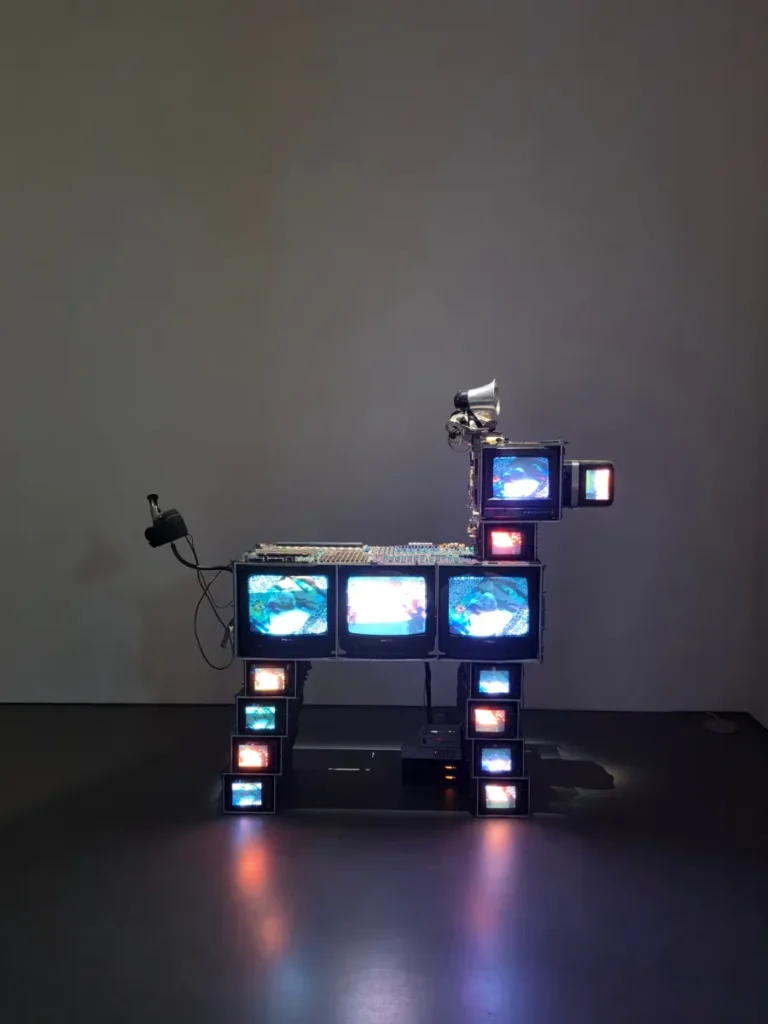
I also came across works by Paik Nam June.
One sculpture used small television screens as parts of a figure. A much larger installation brought together rows of old monitors and colorful neon lights.
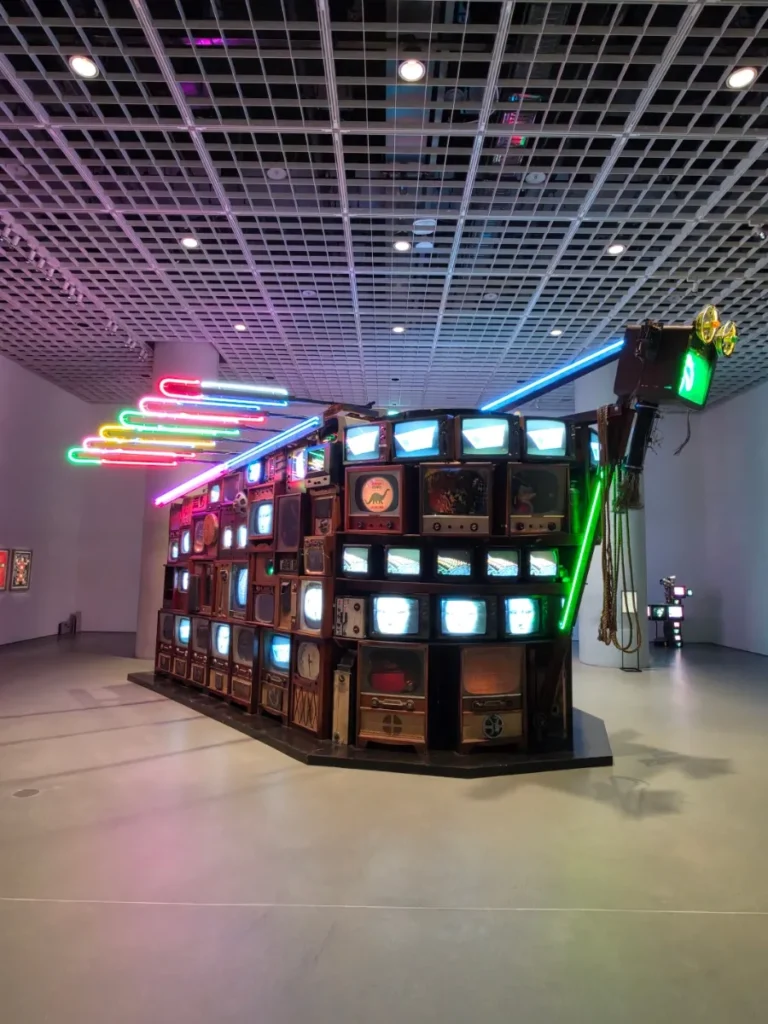
I vaguely remember seeing his work when I was young, perhaps at the Gwangju Biennale, although I can’t be certain.
Seeing these works brought that memory back. They also reminded me how differently artists can look at familiar objects.
An old television is something most of us would replace or throw away. Here, it became part of a figure or a much larger structure. I admire the imagination—and persistence—it takes to develop such a distinctive way of working.
The Pink Sequin-Covered Figure That Stayed With Me
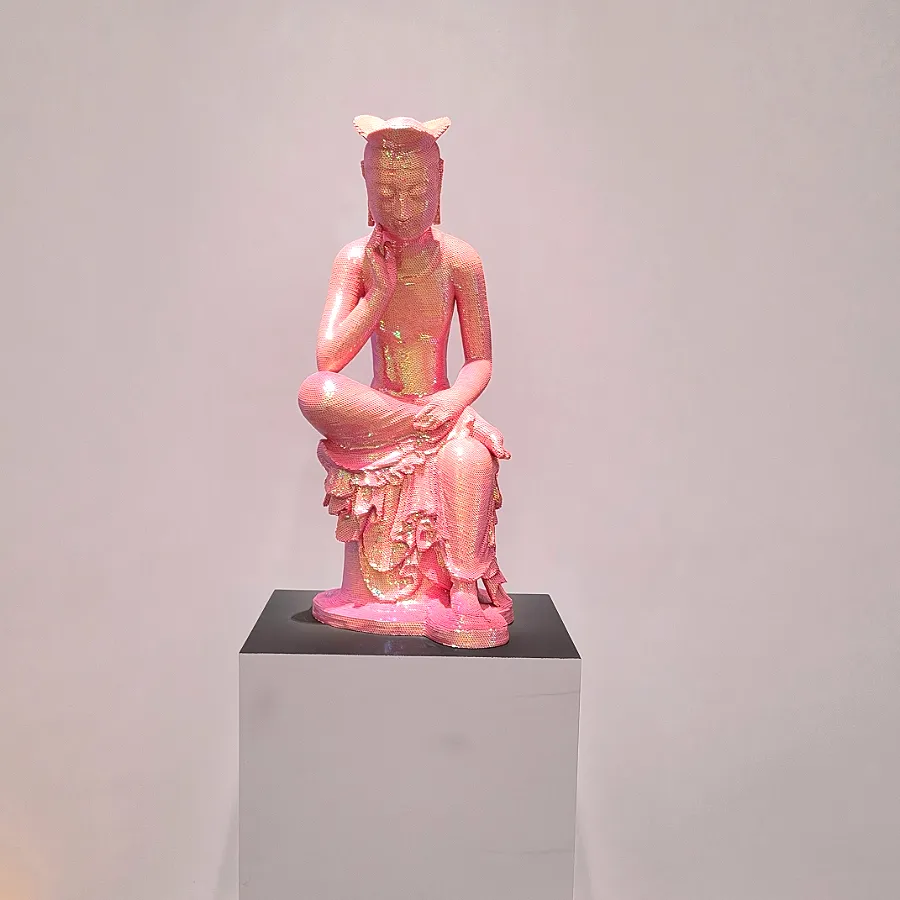
The work I lingered over most was a seated Buddhist figure covered in pink sequins.
One leg was raised, and a hand rested near its cheek. The quiet pose contrasted with the sparkling surface, which made me want to look more closely.
Its location was unexpected, too. It stood between the lockers and the restrooms.
Tiny sequins covered the figure so densely that I started thinking about the time needed to complete it. How long would it take to cover that entire surface? How do you keep working through so much repetition?
As someone who writes and publishes books, I often notice the effort behind a finished piece. I know how different a completed book feels from the long stretch of days spent making it.
I stayed near this work for quite a while. The shine caught my eye, but the process I imagined behind it was what stayed with me.
Is Amorepacific Museum of Art Worth Visiting?
I enjoyed the combination of the building, the exhibition, and the audio guide.
It worked well for a solo afternoon: I could take my time, listen to the explanations, and spend longer with the pieces that interested me.
If you are looking for indoor things to do in Seoul, especially on a rainy or very hot day, consider checking what is showing at the Amorepacific Museum of Art.
The exhibition matters when deciding whether to visit. The works in my photographs may not be on display when you go, so look at the current program first.
For me, it was an afternoon that started with curiosity about a building and ended with a few artworks I was still thinking about on the way home.
Try Vegan Kimchi Making and Traditional Bojagi Wrapping
If you would like to add a hands-on cultural activity to your Seoul itinerary, Klook offers a vegan kimchi-making and traditional bojagi-wrapping experience.
The listing describes an approximately 2.5-hour class near Gwangheungchang Station, with English instruction. Participants make kimchi using vegan ingredients, learn to wrap it in bojagi, a traditional Korean wrapping cloth, and enjoy a meal featuring kimchi.
The wrapping element makes this an interesting option if you enjoy Korean crafts as well as food. You get to make something yourself and learn a way to present it.
I haven’t taken this class personally. It is a separate activity to consider for your trip, and it takes place in a different neighborhood from the museum. Check the class schedule and allow travel time if you plan to do both on the same day.
Check Vegan Kimchi Making & Traditional Bojagi Wrapping on Klook
Affiliate disclosure: This section contains an affiliate link. If you book through it, I may earn a commission at no additional cost to you.
More Seoul Art and Museum Guides
Continue exploring Seoul’s museums with these firsthand guides: