If you are looking for free museums in Seoul, the Seoul Museum of Craft Art is a great place to add to your itinerary.
Located near Anguk Station, the museum is within walking distance of some of Seoul’s most popular attractions, including Insadong, Bukchon Hanok Village, and Gyeongbokgung Palace.
I first visited the museum a few years ago while traveling around Seoul with my sisters. I had good memories of the place, so I decided to visit again.
The Seoul Museum of Craft Art (서울공예박물관) opened in 2021 and is Korea’s first public museum dedicated to crafts. Its collections and exhibitions cover both traditional and contemporary Korean craft, and admission to the permanent exhibitions is free.
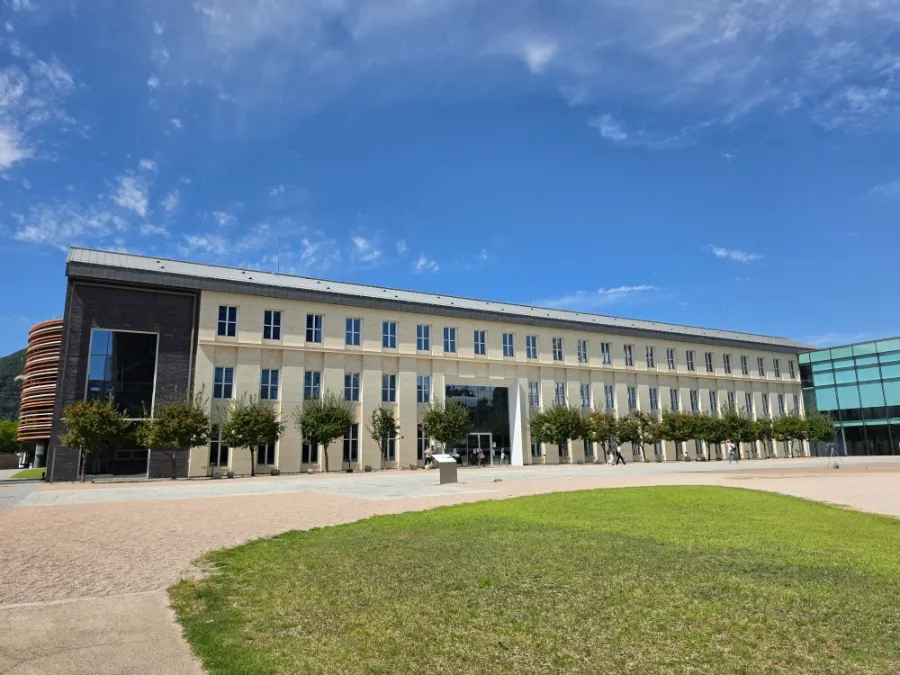
Seoul Museum of Craft Art Near Anguk Station
The museum is conveniently located near Anguk Station, making it easy to include in a day of sightseeing in central Seoul.
Insadong, Bukchon Hanok Village, Gyeongbokgung Palace, and several other museums and galleries are nearby.
The Seoul Museum of Craft Art consists of several buildings, so it is larger than it may initially appear. In addition to the exhibitions, there are outdoor areas and historic buildings to explore.
Seoul Museum of Craft Art (서울공예박물관)
Address: 4 Yulgok-ro 3-gil, Jongno-gu, Seoul
Nearest subway: Anguk Station, Line 3
Admission: Free
Closed: Mondays
📍 Google Maps: Seoul Museum of Craft Art (서울공예박물관)
Opening hours and exhibitions may change, so check the latest information before visiting.
I Only Visited Exhibition Building 3
There is one important thing to know about the photos and exhibitions in this article.
When I visited, Exhibition Buildings 1 and 2 were temporarily closed while new exhibitions were being prepared. I was therefore only able to visit Exhibition Building 3.
Since my visit, Buildings 1 and 2 have reopened with new exhibitions, so there is now more to see than what appears in this article.
Exhibitions at the museum change, so I recommend checking the current exhibition schedule before your visit.
Free lockers are available, which is useful if you are carrying a backpack or shopping bags.
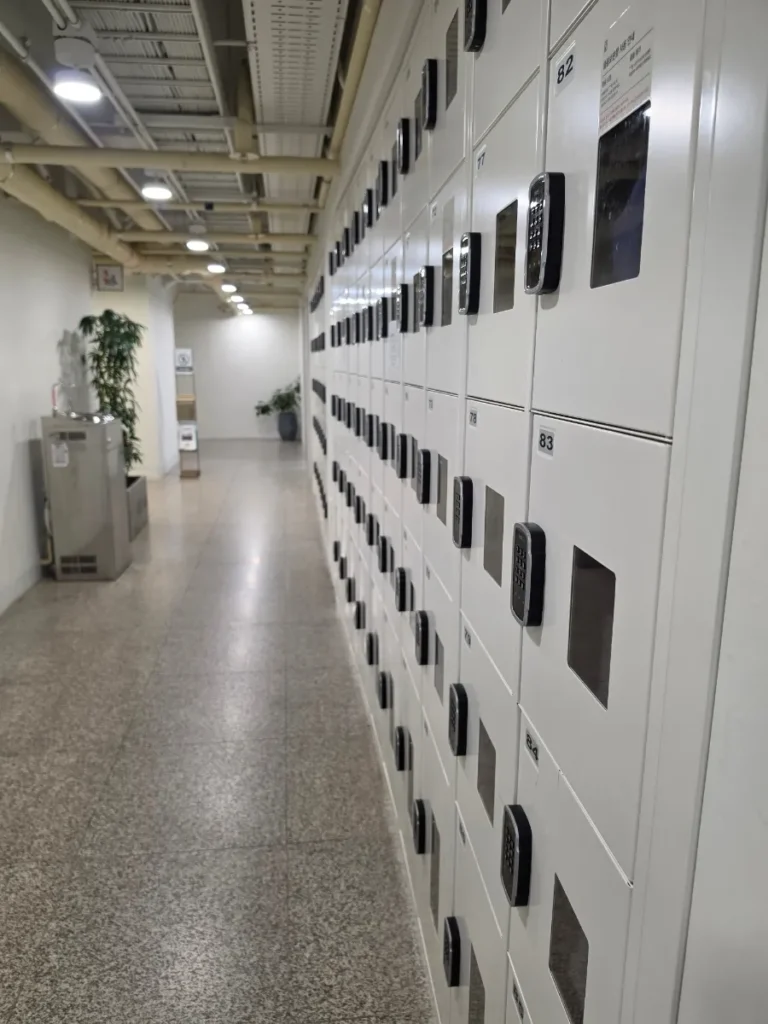
Traditional Korean Embroidery in Exhibition Building 3
During my visit, I spent most of my time exploring the museum’s collection of traditional Korean embroidery and textiles.
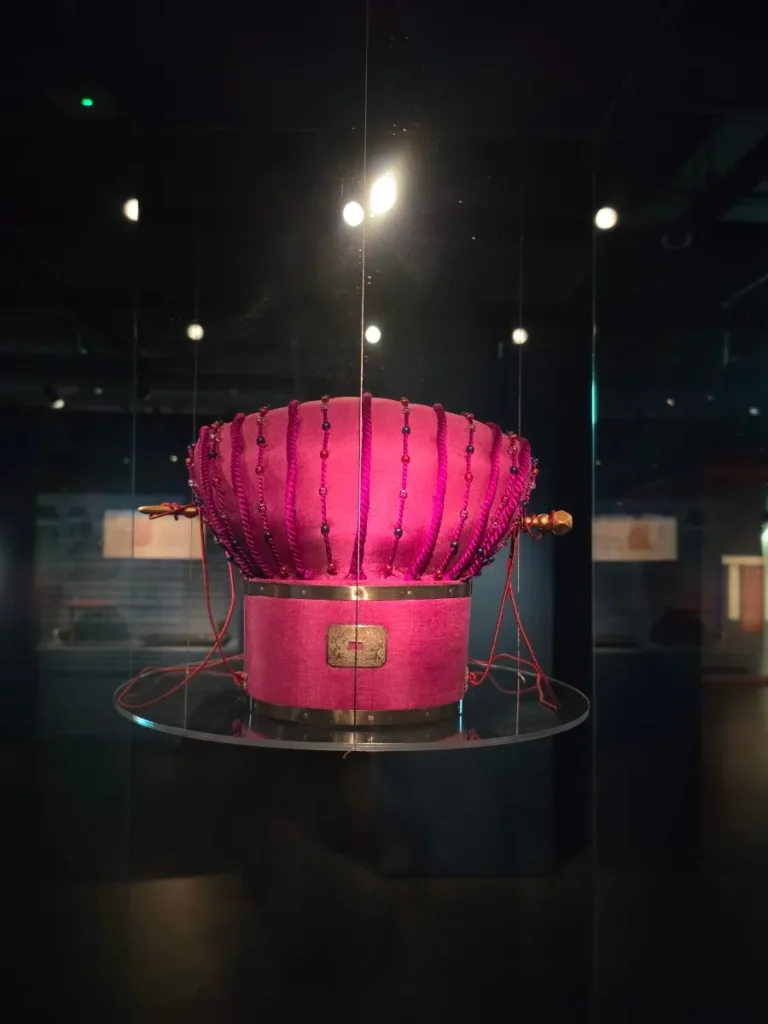
The exhibition rooms were darker than I expected. This may help protect delicate textiles and embroidered works from prolonged exposure to light.
Once my eyes adjusted, however, the darker space made it easier to focus on the intricate colors, patterns, and details.
I saw embroidered clothing, textiles, folding screens, and objects decorated with remarkably detailed needlework.
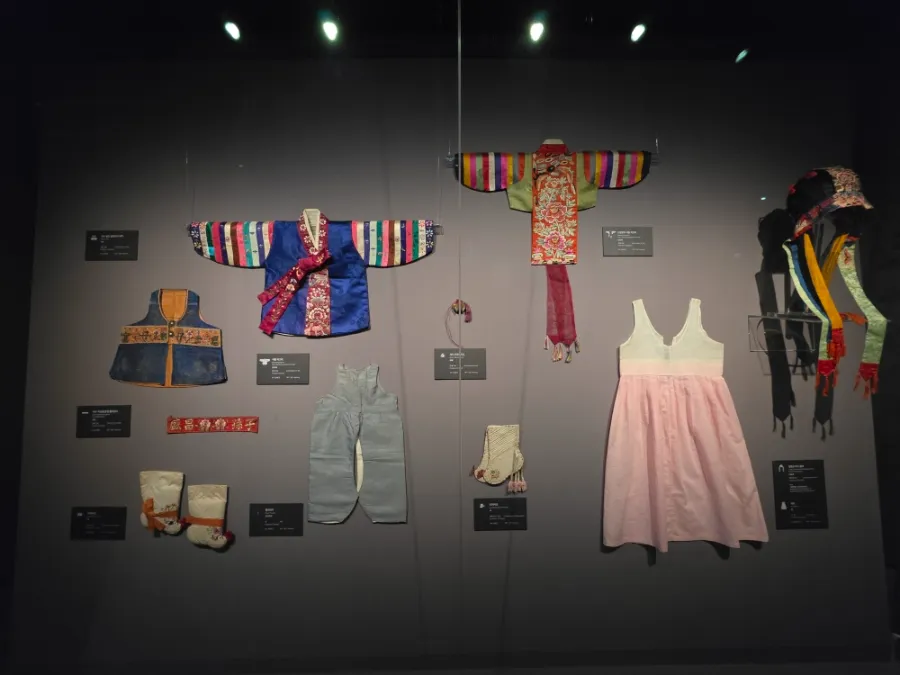
One of the works that caught my attention was a large embroidered folding screen.
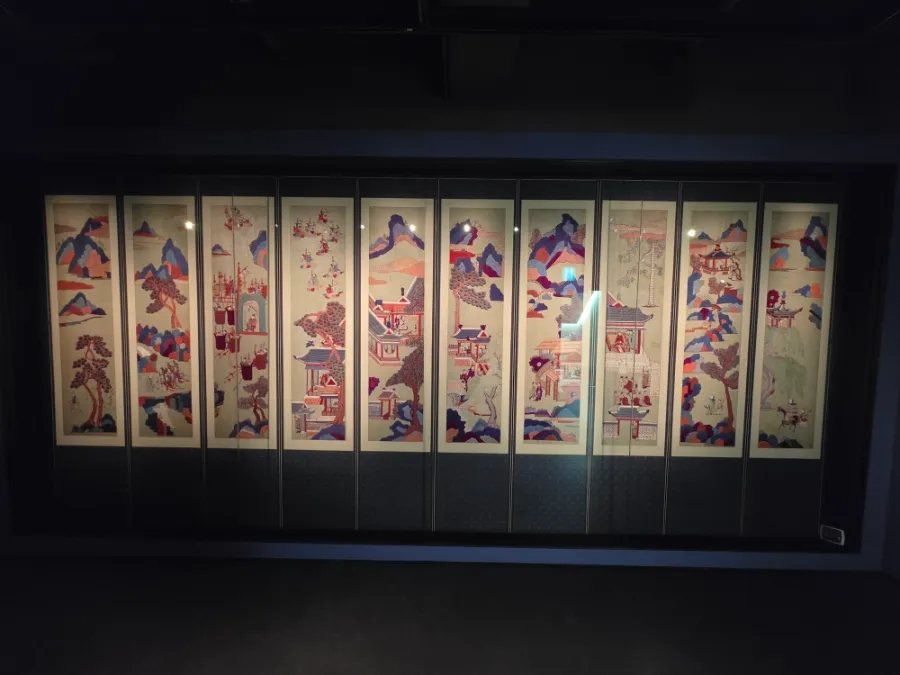
What fascinated me was not only the embroidery itself but also the amount of time and labor that must have gone into creating these works.
I spend many hours working on my laptop, and even that can leave my hands, eyes, and shoulders tired. Looking closely at the tiny stitches made me wonder how much patience and physical effort was required to complete such elaborate pieces by hand.
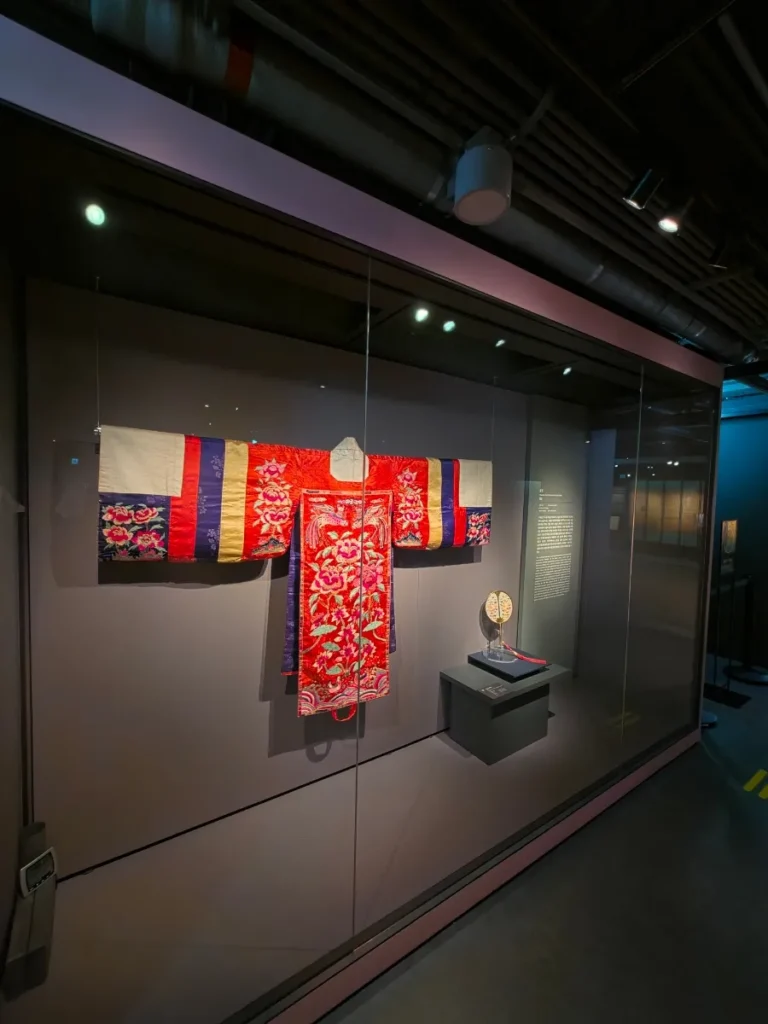
The closer you look, the more details you notice—from the direction of the stitches to the small patterns and combinations of colors.
If you enjoy Korean traditional art, it is worth slowing down rather than simply walking from display to display.
Easy to Explore Even If You Know Little About Korean Crafts
You do not need to know much about Korean crafts before visiting.
The exhibition information helps explain the materials, techniques, and uses of the objects, making the museum accessible even to visitors who are unfamiliar with traditional Korean craft.
Some exhibits also provide QR codes for additional information. I found the information inside the exhibition sufficient, so I did not use them during my visit.
Learning how an object was made or used makes the experience more interesting than simply looking at something beautiful behind glass.
For international visitors in particular, the museum offers another way to understand Korean culture beyond palaces, hanbok, and traditional architecture.
From a Joseon Royal Residence to a School and Museum
The history of the site itself is another reason the Seoul Museum of Craft Art is interesting.
The area was once home to Andong Byeolgung (안동별궁), a detached royal palace of the Joseon Dynasty.
The site was associated with members of the royal family, including Prince Yeongeung, a son of King Sejong. In 1882, it was also used for the royal wedding of the future Emperor Sunjong and Empress Sunmyeonghyo.
Later, the site became home to Poongmoon Girls’ High School, which remained here for decades.
After the school relocated to Gangnam, some of the former school buildings were renovated and incorporated into the Seoul Museum of Craft Art, which opened in 2021.
Knowing this history changed the way I looked at the museum.
This one site has evolved from a royal space to a school and finally into a public museum dedicated to Korean craft.
The buildings and outdoor spaces therefore become part of the experience rather than simply containers for the exhibitions.
Things to Do Nearby: Make a Traditional Korean Notebook in Insadong
If you want to experience Korean craft yourself after visiting the museum, there is a hands-on activity nearby in Insadong.
Instead of simply looking at traditional crafts in a museum, you can make your own traditional Korean handmade notebook and add your name in Hangul.
It fits particularly well with a visit to the Seoul Museum of Craft Art because you can spend the first part of your day learning about Korean craft and then try making something yourself.
A simple itinerary could be:
Seoul Museum of Craft Art → Insadong → Traditional Korean Notebook Making
Make a Traditional Korean Notebook in Insadong on Klook
Affiliate disclosure: This section contains an affiliate link. If you book through this link, I may earn a small commission at no additional cost to you.
Is the Seoul Museum of Craft Art Worth Visiting?
I think it is particularly worth visiting if you are already exploring Anguk, Insadong, Bukchon, or Gyeongbokgung Palace.
Admission is free, and the museum offers a closer look at Korean culture through embroidery, textiles, ceramics, woodwork, and other forms of craft.
I only saw Exhibition Building 3 because Buildings 1 and 2 were being prepared for new exhibitions during my visit. Those buildings have since reopened with new exhibitions, which means there is now even more to explore.
If you enjoy museums, I would allow more than an hour rather than trying to rush through the entire complex.
The Seoul Museum of Craft Art is a good choice for travelers looking for a free museum in Seoul, especially if you want to discover Korean traditional culture beyond the city’s better-known palaces and hanok villages.